Citizen Development
Citizen Integrators in 2026: How to Scale Integration, Automation, and AI Across the Enterprise

TL;DR
- Citizen integrators help organizations reduce IT backlogs by enabling trained business users to build approved integrations, workflows, and automations, allowing professional developers to focus on higher-risk and more complex enterprise initiatives.
- Citizen integration has evolved beyond connecting applications. In 2026, organizations increasingly need to orchestrate applications, APIs, enterprise data, intelligent automation, AI agents, and human workflows as part of connected end-to-end business processes.
- Enterprise integration and orchestration provide critical infrastructure for AI agents, giving them governed ways to access information, interact with approved systems, initiate workflows, and perform business actions while maintaining security and human oversight.
- Governance is essential for scaling citizen integration securely. Risk-based controls, approved connectors, reusable integrations, observability, AI governance, and Centers of Excellence can help organizations accelerate innovation while reducing shadow IT and shadow AI.
- The goal of citizen integration is measurable business improvement, not simply more integrations. Organizations should prioritize initiatives that reduce manual work, improve data quality, accelerate processes, lower costs, improve customer or employee experiences, and create a stronger foundation for enterprise AI.
Enterprise technology environments have become increasingly complex. Organizations rely on CRM platforms, ERP systems, financial applications, HR platforms, data warehouses, communication tools, industry-specific software, low-code applications, automation platforms, and now a rapidly expanding ecosystem of AI copilots and AI agents.
Each platform may solve an important business problem. However, when those systems cannot communicate effectively, organizations are left with fragmented data and disconnected workflows.
Employees fill the gaps manually by:
- They copy information between applications.
- They maintain spreadsheets outside systems of record
- They send emails to move approvals forward
- They download and upload files between platforms
- They reconcile conflicting records
- Repeatedly search multiple applications for the information they need
Meanwhile, IT teams are responsible for cybersecurity, enterprise architecture, cloud infrastructure, data governance, application management, integrations, AI governance, and a growing backlog of technology requests.
The result is a familiar enterprise challenge: Business teams need integration and automation faster than centralized IT teams can deliver every request.
Citizen integration can help close that gap.
In 2026, however, citizen integration means more than allowing business users to connect two applications with a low-code tool. Modern citizen integrators can help build integrations, automated workflows, data orchestration, low-code applications, reusable business services, and AI-enabled processes within an enterprise governance framework.
When implemented correctly, citizen integration allows organizations to distribute innovation across the business while IT maintains the security, architecture, governance, and oversight required to scale.
What Is a Citizen Integrator?
A citizen integrator is an employee outside a traditional software development role who uses approved low-code, no-code, integration, and automation platforms to connect systems and improve business processes.
Citizen integrators typically possess more business-process expertise than traditional programming expertise.
- A finance employee may understand exactly why invoice approvals stall.
- An operations manager may know where production information gets trapped between field and back-office systems.
- A healthcare operations employee may understand why referral information repeatedly requires manual intervention.
- A customer service leader may know which CRM and contact center handoffs create unnecessary work.
Citizen integrators combine this operational knowledge with approved technology to help solve those problems. Depending on organizational policies and the technology available, citizen integrators may:
- Connect approved enterprise applications
- Build automated workflows
- Synchronize data between systems
- Eliminate repetitive data entry
- Automate approvals and notifications
- Create reusable integrations
- Build departmental applications
- Trigger workflows from business events
- Incorporate approved AI capabilities into workflows
- Connect AI agents to governed enterprise actions
The objective is to give qualified business users safe, governed ways to solve operational problems without requiring IT to build every solution from scratch.
Why Citizen Integration Matters More in 2026
The integration challenge has changed considerably. Organizations are no longer connecting only SaaS applications and databases, they increasingly need to orchestrate work across applications, APIs, data platforms, automation, AI models, AI agents, and human teams.
At the same time, low-code and AI-assisted development have dramatically reduced the technical barriers to creating new solutions. Employees can increasingly describe what they want to accomplish in natural language and use AI to help generate workflows, application components, integration logic, and automations.
That creates tremendous potential, but it also creates a new governance challenge.
- The question is no longer simply: “How do we connect our applications?”
- Organizations increasingly need to ask: “How do we securely orchestrate people, applications, data, automation, and AI across the enterprise?”
Citizen integrators can become an important part of that strategy, provided they operate within clearly defined enterprise guardrails.
The Enterprise Integration Problem Has Become an Orchestration Problem
Many organizations have spent years solving individual business problems by purchasing individual applications. A department identifies a need. A new platform is implemented. The immediate problem improves, but another data repository and another set of workflows enter the technology environment; and, over time, organizations accumulate disconnected applications.
A single business process may eventually require employees to move between a CRM, ERP, spreadsheet, email inbox, document management system, messaging platform, and reporting tool simply to complete one workflow.
The individual applications may work perfectly well; however, the process between them does not.
This creates:
- Duplicate data entry
- Manual reconciliation
- Inconsistent records
- Slow approvals
- Broken handoffs
- Limited real-time visibility
- Reporting challenges
- Higher administrative costs
- Integration backlogs
- Shadow IT
- Shadow AI
- Technical debt
The problem becomes even more significant when organizations introduce AI. An AI agent cannot reliably coordinate enterprise work if the systems, data, APIs, permissions, and workflows surrounding it remain disconnected or poorly governed.
That is why integration and orchestration have become foundational to enterprise AI readiness.
From Point-to-Point Integration to Enterprise Orchestration
Traditional integration strategies frequently relied on point-to-point connections.
System A needed information from System B, so an integration was built between them. When System C required the same information, another integration was created; and , as environments expanded, organizations accumulated increasingly complex webs of integrations that became difficult to maintain, monitor, and change.
Modern integration strategies take a broader approach.
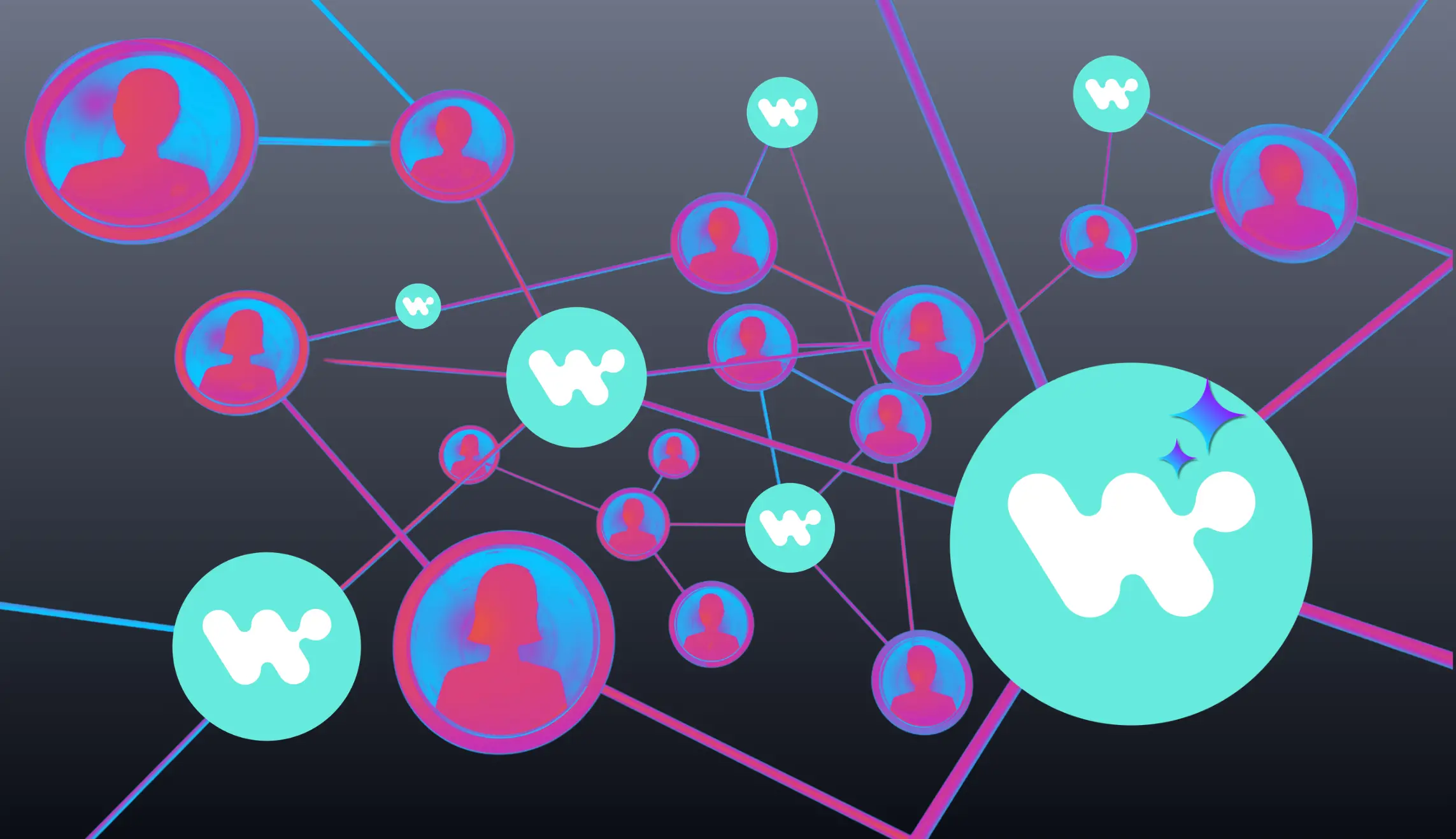
An enterprise integration and automation platform can provide a governed orchestration layer between applications, APIs, data, workflows, and AI.
Platforms such as Workato allow organizations to build reusable integrations and automated processes while establishing centralized controls around access, permissions, monitoring, and governance.
This allows organizations to move from isolated integrations toward enterprise orchestration. Instead of asking how two applications should communicate, teams can design the entire business process: Trigger → Data → Business Rules → Systems → Automation → AI → Human Review → Outcome
Citizen integrators can participate in building and improving those workflows while IT maintains control over the underlying architecture.
How Citizen Integrators Help Reduce IT Backlogs
Citizen integration does not eliminate the need for professional developers, integration architects, or IT teams, it changes where their expertise is used. Centralized IT teams should remain focused on high-risk and high-complexity responsibilities such as:
- Enterprise architecture
- Cybersecurity
- Identity and access management
- Mission-critical integrations
- Core data architecture
- API strategy
- Enterprise governance
- Regulatory compliance
- AI governance
- Complex engineering
- Platform administration
Citizen integrators can handle appropriate lower-risk integration and automation opportunities within established guardrails.
For example, a trained business user may be able to automate a routine departmental approval process without waiting months for custom development. IT can establish the approved connectors, permissions, data access policies, environments, reusable components, and deployment standards.
The citizen integrator builds within those boundaries and this creates a federated development model where innovation can happen closer to the business while IT retains enterprise oversight.
Citizen Integrators and AI Agents
AI agents introduce an important new dimension to citizen integration. Traditional automation follows predefined rules. An AI agent can potentially interpret context, determine an appropriate next action, use tools, interact with applications, and coordinate multi-step work - this makes integration even more important.
For an enterprise AI agent to create meaningful business value, it may need governed access to systems such as:
- Salesforce
- Microsoft Dynamics 365
- ServiceNow
- Workday
- SAP
- Oracle
- Quickbase
- Microsoft 365
- Data warehouses
- Industry-specific applications
However, organizations should not give AI agents unrestricted access to enterprise systems simply because the technology makes it possible. Agents need defined permissions, approved actions, authentication, audit trails, monitoring, escalation paths, and human oversight.
Citizen integrators can help design AI-enabled workflows, but the same principle that applies to traditional citizen integration becomes even more important with AI: The more consequential the action, the stronger the governance should be.
Citizen Integration, Shadow IT, and Shadow AI
One of the greatest arguments for citizen integration is that employees are already finding ways to solve their technology problems.
When approved systems cannot meet their needs quickly enough, employees may turn to spreadsheets, unauthorized SaaS applications, personal automation tools, external AI services, or other technology outside IT oversight.
This creates shadow IT and AI has expanded the problem from Shadow IT to shadow AI.
Employees may submit enterprise information to unapproved AI models, build agents with unauthorized access, connect external AI tools to business systems, or create AI-enabled workflows without appropriate security and governance.
A governed citizen integration program provides an alternative, instead of telling employees they cannot innovate, organizations give them approved platforms, training, integrations, AI tools, and development environments.
IT maintains visibility while employees gain a legitimate path for solving business problems. The goal is to make the governed path easier than the shadow path.
How to Build a Citizen Integration Program in 2026
Citizen integration requires more than purchasing an automation platform and giving employees access. Organizations need a structured program that balances innovation with enterprise control.
1. Start With Business Processes, Not Technology
Before building an integration, understand the process; map how work happens today, including:
- Systems involved
- Data sources
- Manual steps
- Decisions
- Approvals
- Exceptions
- Process owners
- Bottlenecks
- Workarounds
- Compliance requirements
Business process analysis helps organizations avoid automating inefficient processes. We recommend asking the following questions to help get you started:
- What should be eliminated?
- What should be simplified?
- What should be standardized?
- What should be integrated?
- What should be automated?
- Where could AI add value?
- What should remain human-led?
Integration should support an improved business process rather than preserve unnecessary complexity.
2. Establish an Integration and Automation Governance Model
Citizen integrators need clear boundaries; therefore, organizations should define:
- Who can become a citizen integrator
- Which platforms are approved
- Which connectors can be used
- Which systems can be accessed
- What data can be processed
- Which environments are available
- How credentials are managed
- What testing is required
- How solutions move into production
- What documentation is required
- Who owns each integration
- How integrations are monitored
- When IT approval is required
- How solutions are retired
Governance should make safe development easier, not make innovation impossible.
3. Create Risk-Based Development Tiers
Not every integration carries the same level of risk, which is why organizations should classify projects according to their impact in three very easy-to-define tiers:
- Low-risk: Departmental productivity workflows using non-sensitive data.
- Moderate-risk: Cross-functional workflows, integrations with enterprise applications, or processes involving customer or operational information.
- High-risk: Financial transactions, regulated data, mission-critical processes, sensitive APIs, production AI agents, or workflows capable of materially affecting customers or the business.
Higher-risk projects should receive greater IT, security, compliance, and professional development involvement. This allows organizations to move quickly where appropriate without applying the same level of governance to every project.
4. Build Reusable Enterprise Connections
Citizen integrators should not independently create new connections to critical enterprise systems every time they need data. IT and integration teams can create approved reusable connectors, APIs, recipes, workflows, and business services that citizen integrators can safely use.
This approach improves consistency and reduces duplication and it also allows IT to control how critical systems are accessed without becoming responsible for building every downstream workflow.
5. Establish an Automation Center of Excellence
A centralized Automation Center of Excellence (CoE) or similar governance team can provide the structure required to scale citizen integration.
The CoE can define:
- Architecture standards
- Governance policies
- Training requirements
- Security controls
- Reusable components
- Development patterns
- Documentation standards
- Monitoring requirements
- Performance benchmarks
- AI governance policies
The CoE should enable citizen integrators rather than become another bottleneck; the CoE role is to create a paved road that makes secure development easier.
6. Integrate AI Governance From the Beginning
In 2026, citizen integration programs need to account for AI, therefore, organizations should define:
- Which AI models are approved
- Which AI development tools employees can use
- What enterprise data AI can access
- Which systems agents can interact with
- What actions agents can perform
- Which actions require human approval
- How agent activity is logged
- How AI-generated workflows are tested
- How agents are monitored
- How permissions can be revoked
AI governance should not be added after agents have already proliferated across the organization, it needs (and should) be built into the architecture from the beginning.
7. Secure Agent-to-System Connectivity
AI agents need tools to interact with enterprise applications.
Technologies such as Model Context Protocol (MCP) are expanding how agents discover and use tools, but connectivity alone does not provide enterprise governance.
Organizations need to control identity, permissions, available tools, data access, logging, and execution. An orchestration layer can mediate between AI agents and enterprise systems so agents invoke approved business actions instead of receiving unrestricted access to backend applications or APIs.
This creates a more secure foundation for scaling agentic automation.
8. Measure Business Outcomes, Not Integration Volume
The goal of citizen integration is not to build as many integrations as possible; success should be measured according to business outcomes.
Before implementation, establish baseline metrics such as:
- Process cycle time
- Manual hours
- Error rates
- Cost per transaction
- Approval time
- Customer response time
- Data quality
- Application usage
- Integration failures
Then measure how these metrics change after automation, because a successful integration should improve a measurable business outcome.
9. Build Observability Into Every Workflow
Integrations and automations should not become invisible infrastructure.
Organizations need visibility into:
- Workflow execution
- Integration failures
- API errors
- Processing latency
- Data quality issues
- Exceptions
- AI agent actions
- User activity
- System dependencies
Observability allows teams to identify problems before they significantly affect employees or customers.
As AI agents become part of enterprise workflows, this visibility becomes even more important because organizations need to understand what an agent did, why a workflow was triggered, which systems were affected, and whether human intervention is required.
10. Train Citizen Integrators Continuously
Citizen integrators need more than platform training, they need to understand the fundamentals of:
- Business process analysis
- Data governance
- Integration architecture
- API security
- Identity and permissions
- Testing
- Documentation
- Change management
- Automation design
- AI governance
- Responsible AI
- Human-in-the-loop workflows
Technology will continue to evolve, so citizen integration programs need ongoing education rather than one-time certification.
11. Create a Culture of Continuous Improvement
Citizen integration works best when employees are encouraged to identify operational friction. Organizations that want to foster this type of culture within their company need to create mechanisms for employees to surface:
- Repetitive tasks
- Manual data entry
- Broken handoffs
- Spreadsheet-dependent workflows
- Duplicate applications
- Disconnected systems
- Reporting gaps
- Customer experience problems
- Opportunities for automation
- Potential AI use cases
Successful projects need to be documented and shared so other teams can reuse the lessons, patterns, and components. Failures should be treated as opportunities to improve governance, architecture, training, or process design.
The Citizen Integrator Is Evolving
Citizen integration started with a relatively simple idea: give business users tools that allow them to connect applications without waiting for professional developers.
That idea is becoming considerably more powerful.
Citizen integrators can now participate in building connected applications, intelligent workflows, enterprise automations, data orchestration, AI-enabled processes, and agentic workflows.
This opportunity is enormous, but so is the need for governance.
Organizations need to balance distributed innovation with centralized control and business teams bring deep knowledge of how work actually happens. IT brings architecture, security, governance, integration, and engineering expertise. AI introduces an entirely new layer of intelligence and execution.
The strongest operating model combines all three.
How Quandary Helps Organizations Scale Integration, Automation, and AI
At Quandary Consulting Group, we help organizations move beyond disconnected applications and isolated automation toward a more connected enterprise architecture.
We work with business and technology teams to analyze processes, modernize integrations, orchestrate data and workflows, establish governance frameworks, and identify where intelligent automation and AI agents can create measurable business value.
Using platforms such as Workato, along with the systems organizations already rely on, we can help build a governed integration layer that connects applications, data, automation, and AI without requiring businesses to replace their entire technology environment.
Our approach can include:
- Business process analysis and optimization
- Enterprise integration strategy
- Data and workflow orchestration
- Workato implementation and development
- API integration
- Intelligent automation
- Citizen integration governance
- Automation Centers of Excellence
- AI governance
- AI agent orchestration
- MCP architecture and governance
- Application modernization
- Continuous optimization
The objective is not simply to connect more applications, it is to create an enterprise environment where people, processes, data, systems, automation, and AI work together securely and at scale.
In 2026, that is the real opportunity behind citizen integration.
Additional Resources:
- What is citizen automation and development? (Quickbase)
- Automation Governance Model: Secure Innovation at Scale (Workato)
- Enterprise iPaaS vs traditional integration: Which is right for you? (SAP)
- Point-to-Point Integration: Pros, Cons and When to Use It (Workato)
- Dataiku x BARC: Build Guardrails to Scale AI Agents (Dataiku)
- Citizen Integrators Explained: Benefits & How to Enable Them (Workato)
- How Enterprise Orchestration Unlocks AI Agent’s Potential (Workato)
- Introducing the Model Context Protocol (Anthropic Claude)
- What is Shadow IT? (Cisco)
- What Is Shadow AI? How It Happens and What to Do About It (Palo Alto Networks)
Top FAQs About Citizen Integration, Automation, and AI
1. What is a citizen integrator?
A citizen integrator is a business user outside a traditional software development role who uses approved low-code, no-code, integration, or automation platforms to connect applications, automate workflows, and improve business processes.
Citizen integrators combine operational knowledge with technology to solve problems closer to where the work happens. In a governed enterprise environment, they can help build integrations, automate repetitive tasks, synchronize data, create workflows, and incorporate approved AI capabilities without requiring IT to develop every solution from scratch.
2. What is the difference between a citizen integrator and a citizen developer?
A citizen developer typically builds business applications using low-code, no-code, or AI-assisted development tools, while a citizen integrator focuses more specifically on connecting systems, data, workflows, APIs, and automation.
The roles increasingly overlap. In 2026, business users may build an application, connect it to enterprise systems, automate the surrounding workflow, and incorporate AI into the same solution. Organizations therefore need governance frameworks that address the entire ecosystem rather than treating application development, integration, automation, and AI as completely separate disciplines.
3. How do citizen integrators help reduce IT backlogs?
Citizen integrators help reduce IT backlogs by allowing trained business users to build appropriate lower-risk integrations and automations within IT-approved guardrails.
Instead of requiring professional developers to handle every departmental workflow or integration request, IT can establish approved platforms, connectors, APIs, permissions, reusable components, development environments, and security standards. Citizen integrators can then build within those boundaries while professional developers remain focused on enterprise architecture, cybersecurity, complex engineering, mission-critical integrations, data architecture, and other higher-risk initiatives.
4. How can citizen integrators support enterprise AI?
Citizen integrators can help support enterprise AI by connecting approved AI capabilities and AI agents to the applications, data, APIs, and workflows required to complete business processes.
For example, an AI agent may need to retrieve information from a CRM, analyze a document, update a record, initiate an approval workflow, or escalate an exception to an employee. Integration and orchestration provide the connections that allow these actions to happen across enterprise systems.
However, AI agents should operate within clearly defined permissions, security policies, audit requirements, and human oversight controls.
5. Why is integration important for AI agents?
Integration is essential for enterprise AI agents because agents need secure access to business data, applications, APIs, and workflows to move from generating information to completing useful work.
Without integration, an AI agent may be able to answer questions but remain disconnected from the systems where business processes actually happen. Enterprise integration and orchestration allow agents to retrieve approved information, invoke business actions, update systems, initiate workflows, and coordinate processes while maintaining governance and auditability.
6. What is the difference between integration, automation, and orchestration?
Integration connects applications and allows data to move between systems. Automation uses technology to perform tasks or workflows with less manual effort. Orchestration coordinates multiple systems, integrations, automated tasks, data sources, AI capabilities, and human actions as part of an end-to-end business process.
For example, integration might connect a CRM and ERP. Automation could automatically create an ERP record when an opportunity closes. Orchestration could coordinate the entire order-to-cash process across the CRM, ERP, financial systems, communications, AI services, approvals, and employees.
7. How does Workato support citizen integration?
Workato provides an enterprise integration and automation platform that can help organizations connect applications, orchestrate workflows, manage APIs, automate business processes, and incorporate AI capabilities.
Within a governed citizen integration program, organizations can provide business teams with approved connections, reusable components, permissions, development environments, and automation patterns. This allows citizen integrators to solve appropriate business problems while IT maintains greater visibility and control over enterprise architecture, security, and governance.
8. How can organizations govern citizen integrators?
Organizations can govern citizen integrators by establishing clear policies around who can build, which platforms they can use, what data they can access, which systems they can connect to, how credentials are managed, what testing is required, and how solutions move into production.
A mature citizen integration governance framework should also include risk-based development tiers, application and automation ownership, documentation standards, monitoring, auditability, lifecycle management, reusable integrations, security controls, and escalation criteria for projects that require professional developers or IT involvement.
9. Can citizen integration help reduce shadow IT and shadow AI?
Yes. A governed citizen integration program can help reduce shadow IT and shadow AI by giving employees approved ways to solve technology problems without turning to unauthorized applications, integrations, automation tools, or AI services.
Organizations can provide approved platforms, connectors, AI models, APIs, data sources, development environments, and security controls while maintaining visibility into what employees are building. The objective is to make the governed path faster and easier than creating solutions outside IT oversight.
10. What is a Citizen Integration Center of Excellence?
A Citizen Integration Center of Excellence (CoE) is a centralized governance and enablement program that establishes standards for business-led integration and automation.
A CoE can define architecture standards, approved platforms, security requirements, development patterns, reusable components, training, documentation, monitoring, risk classifications, and AI governance policies. The goal is to help citizen integrators innovate independently where appropriate while providing a clear path to IT involvement for more complex or higher-risk projects.
11. How should organizations govern AI agents connected to enterprise systems?
Organizations should govern AI agents according to what data they can access, which systems they can interact with, what tools they can use, and which actions they are authorized to perform.
Enterprise AI agent governance should include identity and access controls, least-privilege permissions, approved tools and models, audit logging, monitoring, testing, escalation procedures, and human approval for consequential actions. Organizations should also maintain visibility into agent activity so they can understand what actions occurred across connected systems.
12. How do you build a successful citizen integration program?
A successful citizen integration program starts with business process analysis and enterprise governance, rather than simply giving employees access to a low-code automation platform.
Organizations should identify high-value processes, establish approved platforms and integrations, classify projects according to risk, create reusable enterprise connections, define security and AI governance policies, train citizen integrators, monitor production workflows, and measure business outcomes.
The most successful programs combine business-process expertise with IT architecture and governance, allowing innovation to happen closer to the business without sacrificing enterprise security or scalability.