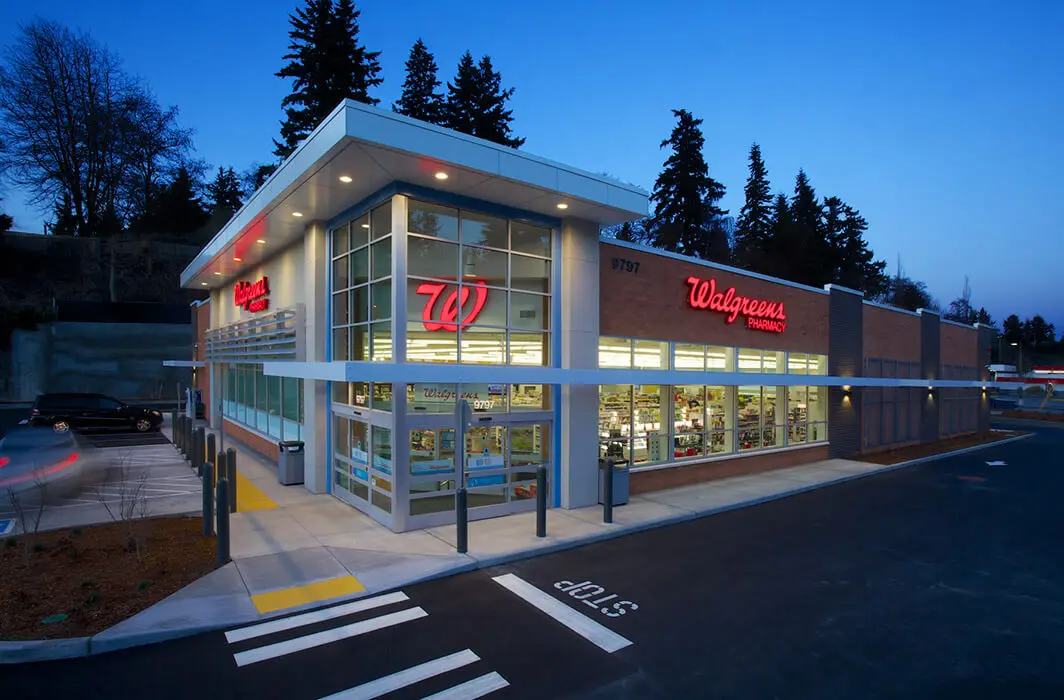
A Structured Data Lake Strategy Turned Walgreens' Fragmented Data Into The Data Foundation for Future Technology Advancements
The Company Profile: Walgreens
- Industry: Retail, Real Estate, Construction & Facilities Management
- Use Case: Enterprise Data Cleanup, Data Migration & Data Lake Architecture
- Programs: New Store Development & Existing Store Refresh
Walgreens operates one of the largest retail pharmacy networks in the United States, creating a significant and ongoing need to manage information surrounding new-store development, existing-store renovations, capital improvements, facilities projects, construction, vendors, budgets, schedules, and property-level activity.
At that scale, data is more than a reporting asset. It becomes part of the operational infrastructure required to develop and maintain the physical retail portfolio. Walgreens was already using ProTrack (Bureau Veritas North America's Quickbase-powered construction project management environment, to support facilities and construction programs.) The platform was designed for multi-site management and could centralize project schedules, site history, resource allocation, quality control, performance metrics, budgets, vendor information, field data, documents, and integrations.
However, improving the application was only part of the larger transformation, Walgreens also needed to address the data behind the operation. Quandary Consulting Group and BVNA worked with Walgreens and JLL to understand what information existed, what information teams actually needed, how that information should be structured, and how years of operational data could be cleaned and reorganized into a more scalable data architecture.
The Challenges
Clean, Trusted Data Had to Come First
For Walgreens, the challenge extended far beyond moving information from one system or environment to another. Before the organization could improve reporting, strengthen operational visibility, connect systems, or create a more scalable data environment, it needed confidence in the information supporting those capabilities.
- Store and project data needed to be accurate, structured, accessible, and consistently defined and construction activity, capital investments, budgets, schedules, milestones, vendors, and projects needed clear relationships so employees could understand how individual pieces of information connected to the larger operation.
Walgreens also needed a reliable way to connect each physical location with the projects, improvements, vendors, documents, budgets, milestones, and other activity associated with that store over time; before the team could determine how that information should be structured, they needed to understand how Walgreens departments actually worked, what information employees relied on, and how that information moved throughout the organization.
Phase One therefore became much more than a traditional data cleanup or migration initiative, it was about creating a trusted, structured, and connected enterprise data foundation capable of supporting Walgreens' evolving operational and reporting requirements.
Six Weeks of Discovery Across Walgreens and JLL
Quandary Consulting Group and Bureau Veritas North America (BVNA) began Phase One with an intensive six-week stakeholder discovery initiative involving JLL and the departments supporting Walgreens' new-store development and existing-store refresh programs. This meant that rather than designing the future architecture exclusively from an IT or systems perspective, the team started with the business; they worked across departments to understand how Walgreens planned, developed, constructed, refreshed, maintained, and improved locations throughout its retail portfolio.
The discovery centered on two major operational lifecycles:
- New-Store Development: New-store development involved the teams, processes, and information required to move a Walgreens location through planning, real estate development, design, permitting, construction, project management, completion, and eventual store opening. Each stage generated information that could remain valuable long after an individual project was completed. Project records, approvals, schedules, vendors, budgets, documents, and milestones could support future reporting, historical analysis, portfolio planning, and ongoing store operations.
- Existing-Store Refresh/Capital Improvements: Existing-store programs presented a different set of requirements. These teams managed improvements across active Walgreens locations through capital projects involving signage, flooring replacement, interior and exterior painting, facility improvements, renovations, repairs, equipment upgrades, and other physical store improvements. Unlike a new location progressing toward an opening date, an existing store could accumulate years of project and investment history.
Understanding this history—and preserving the relationships between the store and the work performed there—was critical to creating a useful long-term data architecture. The discovery process went beyond traditional stakeholder interviews. It became the requirements-gathering process for Walgreens' future operational data environment.
Understanding the Business Context Behind the Data
Quandary was not simply asking stakeholders which reports they used or which fields existed within their systems, the team needed to understand the business meaning behind the data.
Across departments, discovery examined questions such as:
- What information does each team create and consume?
- Where does that information originate, and who owns it?
- What does a particular project status or milestone actually mean?
- Which information determines what happens next?
- Which records need to be connected?
- What information is required to make operational decisions?
- Which historical information remains valuable after a project is completed?
- Where are employees manually searching for information?
- Where are teams combining information from multiple systems to understand what is happening?
- Which definitions, identifiers, or naming conventions differ across departments?
- What context does an employee need to understand a record without already knowing the project?
Those questions were essential because data becomes significantly more valuable when its business context is preserved.
- A field labeled "Completion Date," for example, has limited value if different programs define completion differently.
- A project record becomes harder to analyze if it cannot be reliably connected to the correct Walgreens location.
- Vendor reporting becomes less reliable when the same contractor appears under several naming conventions.
And years of capital project history become significantly more difficult to use when individual projects cannot be consistently connected to the appropriate store, program, budget, schedule, milestone, or scope of work. The challenge was therefore not simply organizing Walgreens' information, it was preserving and structuring the business context that gave that information meaning.
Designing for the Questions Walgreens Needed Its Data to Answer
The discovery process also required Quandary and BVNA to think beyond Walgreens' immediate reporting requirements. The data architecture needed to support the operational and strategic questions employees could need to answer across the organization, including:
- Which Walgreens refresh projects are currently behind schedule?
- Which stores have outstanding signage projects?
- Which projects are approaching their scheduled completion dates with critical milestones still unfinished?
- Which contractors are associated with projects experiencing the greatest schedule delays?
- What capital improvements have been completed at a particular Walgreens location during the past five years?
- How does planned spending compare with actual spending across active store refresh programs?
- Which locations have undergone repeated capital improvements within the same scope of work?
Behind each of these, seemingly straightforward, questions is a network of connected enterprise information: Store + Site + Project + Program + Scope + Vendor + Budget + Schedule + Milestone + Status + Completion + History.
If those relationships were incomplete, inconsistent, or poorly defined, employees would continue spending time finding, reconciling, and interpreting information before they could confidently use it; Phase One was designed to address those structural challenges at the source.
Mapping Departmental Requirements Into a Connected Data Model
The six-week stakeholder process also revealed that different departments viewed the same Walgreens location through very different operational lenses.
- Construction teams needed visibility into projects, schedules, milestones, contractors, issues, dependencies, and completion.
- Facilities teams needed information about existing conditions, repairs, improvements, assets, and ongoing store requirements.
- Financial stakeholders needed visibility into budgets, commitments, spending, forecasts, and variances.
- Project managers needed ownership, dependencies, deadlines, risks, issues, documentation, and status.
- Executive leadership needed portfolio-level visibility across programs, regions, stores, capital investments, schedules, risks, and overall performance.
None of these perspectives existed independently, they all represented different ways of understanding and managing the same physical store portfolio. Which meant that rather than forcing those requirements into a single generic dataset, Quandary and BVNA documented how each stakeholder group created, consumed, and interpreted information. Those requirements could then inform how data was organized and how relationships were established across the broader environment.
This approach helped ensure that the architecture was not simply optimized for storing historical records, but that it was designed to make information more consistent, accessible, understandable, and useful across employees, departments, operational applications, reporting platforms, and analytics environments.
This created a deliberate progression: Stakeholder → Business Requirement → Data Requirement → Data Relationship → Data Structure → Operational Use
Turning Fragmented Information Into Connected Enterprise Knowledge
Ultimately, the challenge facing Walgreens was not a lack of data, it was the organization already had extensive information about its stores, development programs, construction projects, capital improvements, vendors, schedules, budgets, milestones, documents, and historical activity; thus, the real challenge was transforming that information into structured, connected enterprise knowledge.
Years of operational information needed to be evaluated, cleaned, standardized, and organized without losing the business context that made it valuable. That is why Phase One began with people.
JLL, BVNA, and Quandary first needed to understand how Walgreens operated. From there, the team could determine which information mattered, how different records related to one another, where definitions needed to be standardized, and how the resulting architecture should support Walgreens' long-term operational requirements.
The objective was not simply to prepare Walgreens' data for migration. It was to establish a more reliable and scalable enterprise data foundation capable of supporting stronger reporting, improved operational visibility, historical analysis, portfolio planning, system integration, workflow automation, and continued modernization. The challenge was never about moving the data, it was transforming years of fragmented operational information into a connected resource Walgreens could continue building on.
The Solutions
Phase One: Cleaning and Strengthening the Data Foundation
With the business requirements established, Quandary Consulting Group and BVNA began addressing Walgreens' existing data.
Years of construction, facilities, real estate development, and capital improvement activity had created a significant amount of valuable operational information. However, like many large enterprise data environments, that information had evolved alongside changing systems, processes, teams, and business requirements. Before Walgreens could create a more connected operational environment, the underlying data needed to be evaluated and improved; the team worked to identify and address issues such as:
- Duplicate records
- Inconsistent naming conventions
- Incomplete records
- Legacy and obsolete fields
- Conflicting data formats
- Redundant information
- Inconsistent site and project identifiers
- Different terminology between departments
- Historical fields that no longer aligned with current processes
- Incomplete relationships between stores, projects, programs, vendors, milestones, and other records
This work was about much more than making individual records cleaner; accurate data needed to be supported by consistent definitions, meaningful relationships, and enough business context for employees across departments to interpret and use it reliably.
If information was duplicated, inconsistently defined, incorrectly related, or poorly organized, those issues could affect reporting, project visibility, historical analysis, portfolio planning, and day-to-day decision-making. That is why the team focused first on strengthening the foundation; by improving data quality, structure, relationships, and consistency, Walgreens could begin creating a more reliable operational environment for the systems, employees, and processes that depended on that information.
The objective was not simply cleaner data, it was a trusted operational data foundation Walgreens could continue building on.
Creating a Common Language for Walgreens Data
Data standardization became another critical component of Phase One. During stakeholder discovery sessions with Walgreens, JLL, and the teams supporting store development and refresh operations, Quandary identified areas where departments used different terminology, definitions, and data structures to describe similar operational concepts.
A "project," for example, could mean something different depending on the department using the term. A site, store, program, scope, milestone, project type, or completion status could also be categorized differently across systems and workflows. Experienced employees might understand those distinctions intuitively, but inconsistent terminology makes enterprise reporting, system integration, historical analysis, and cross-department collaboration significantly more difficult.
- The team worked to establish more consistent definitions, structures, and relationships around core operational entities, including: Store | Site | Project | Program | Scope | Vendor | Contractor | Region | Department | Milestone | Budget | Status | Project Type | Completion
The goal was to establish a shared operational language for Walgreens data that could be interpreted consistently across departments, applications, reports, and business processes; this was especially important because ProTrack was already designed around interconnected operational information.
A single site record could serve as a connection point for approvals, real estate information, construction milestones, maintenance activity, project limits, assets, documents, communications, vendors, and other information associated with that Walgreens location.
Phase One expanded that same principle beyond the application itself. The team began establishing a more consistent enterprise data model where the relationships between stores, projects, vendors, budgets, milestones, documents, and other operational entities could be clearly understood. The objective was bigger than cleaning individual records or improving a single application, Walgreens needed a common operational language for its data so that departments, systems, reporting environments, and business processes could work from a more consistent understanding of the organization.
Building Data Lakes Around the Business, Not the Technology
Once the information had been evaluated, cleaned, standardized, and properly structured, Quandary and BVNA helped move it into data lakes designed around the specific operational requirements uncovered during the six-week stakeholder discovery process.
This was not a traditional data consolidation exercise where years of historical information were simply moved into one enormous repository, the architecture was intentionally designed around how Walgreens actually operated. The Discovery had revealed that different departments relied on different datasets, relationships, reporting requirements, and operational contexts.
Construction teams needed one perspective on the business. Real estate teams needed another. Finance, facilities, project managers, vendors, and leadership each interacted with information differently. So rather than forcing every department's information into a single generalized structure, Quandary and BVNA organized the environment so that individual datasets could support specific business requirements while remaining part of a broader enterprise data foundation; for example:
- Store and site data could provide a consistent foundation for identifying Walgreens locations and connecting related operational activity.
- Project and program data could organize new-store development, refresh initiatives, capital improvements, and other project activity.
- Construction data could connect scopes of work, contractors, milestones, schedules, documents, approvals, issues, and completion information.
- Vendor and contractor data could establish consistent relationships between external partners, projects, locations, contracts, and performance history.
- Financial data could connect budgets, forecasts, project costs, commitments, and other financial information to the appropriate projects and programs.
- Real estate data could support property, lease, location, development, and site-related requirements.
- Document and communication data could preserve the context surrounding projects, approvals, decisions, and operational activity.
This approach created something more valuable than centralized storage, it created a business-aligned enterprise data architecture. This meant that Walgreens could organize its data according to the relationships and requirements that mattered to the people using it. The goal was not to put all of Walgreens' information into one structure, it was to put the right information into the right structure while preserving the relationships that gave that information meaning.
Separating New-Store Development and Existing-Store Refresh Data
One of the most important findings from the six-week stakeholder discovery process was that new-store development and existing-store refresh programs could not simply be treated as identical datasets.
While the two programs shared information such as locations, projects, vendors, budgets, milestones, and construction activity, their operational lifecycles were fundamentally different.
- New-store development data tells the story of a location becoming an operating Walgreens store. That lifecycle could include site selection, real estate activity, approvals, design, permitting, construction, vendor coordination, inspections, project closeout, and ultimately the transition of a completed location into ongoing store operations.
- Existing-store refresh data tells a different story: how an operating Walgreens location changes over time. A single store could undergo numerous capital improvements across multiple years: New Flooring → New Signage → Painting → Equipment Upgrade → ADA Improvement → Additional Remodel
Each project represents an individual event, but collectively those projects create something much more valuable: a historical record of investment and change at the store level.
Treating every refresh as an isolated project would make that broader history significantly more difficult to understand, but by connecting individual projects to the appropriate store, program, vendors, budgets, scopes, milestones, and previous improvements, Walgreens could preserve a more complete picture of what had happened at each location over time; employees could more easily investigate questions such as:
- "What capital improvements have been completed at this store over the last five years?"
- "When was the flooring last replaced?"
- "Which contractors have worked at this location?"
- "How much has been invested in this store?"
- "Which locations have received similar improvements across multiple project cycles?"
Answering these questions requires more than individual project records. It requires historical context and clearly established relationships between the data.
By separating new-store development from existing-store refresh information while maintaining the appropriate connections between them, Quandary and BVNA could preserve the unique lifecycle of each program without creating disconnected information silos. The result was a data model capable of representing both how a Walgreens location came into existence and how that location continued to evolve once it became operational.
Creating a Store-Centric Enterprise Data Foundation
At the center of the new architecture was one of the most important entities in Walgreens' operations: the physical store location. Quandary and BVNA helped establish a model where operational information could be connected back to the location it affected.
This store-centric approach provided a much more connected representation of each Walgreens location and its history. Which meant that rather than a store existing as a location identifier in one system and a collection of unrelated projects, documents, budgets, and vendor records in others, the physical location could become the anchor connecting years of operational and capital activity. This structure could help employees understand when a store was developed, which programs it participated in, what improvements had been completed, how much had been invested, which contractors performed the work, what issues occurred, and when major improvements were completed.
It could also support broader portfolio questions such as:
- "Show me the complete capital improvement history for this store."
- "Which locations have not received a major refresh within the last five years?"
- "Which contractors have completed the most projects in this region?"
- "Which stores have experienced repeated issues following similar improvements?"
- "How much capital has been invested across this group of locations?"
The value behind those answers comes from the relationships within the data. Understanding the operational history of a store requires Walgreens to know how locations, programs, projects, scopes, vendors, costs, milestones, documents, issues, approvals, and completed improvements relate to one another.
Establishing those relationships was a critical objective of Phase One; Quandary and BVNA were helping Walgreens create a store-centric enterprise data foundation capable of treating each physical location as a connected, evolving operational asset rather than a collection of isolated records.
Creating a More Accessible Operational Data Environment
The six-week stakeholder discovery process helped Quandary and BVNA understand how the business actually operated:
- Data cleanup improved the quality of the information.
- Standardization created a common language across departments.
The new data architecture established meaningful relationships between stores, projects, programs, vendors, budgets, milestones, documents, and historical improvements; together, those efforts created a stronger foundation for reporting, analytics, system integration, workflow improvement, and portfolio-level visibility. Instead of requiring employees to navigate multiple applications, reports, spreadsheets, and historical records to assemble an operational picture, Walgreens could move toward an environment where information was more consistently organized and connected.
- Project leaders could have stronger visibility into project status, milestones, issues, and dependencies.
- Regional leaders could more easily understand the capital improvement history associated with individual stores.
- Program managers could identify projects that were behind schedule, over budget, or waiting on critical approvals.
- Leadership could gain stronger portfolio-level visibility into capital investment, project performance, vendor activity, and operational trends.
The progression was intentional: Clean Data → Standardized Data → Structured Data → Connected Data → Accessible Data
Each step strengthened the value of the next and Phase One was about establishing the foundation Walgreens needed to make its operational information more reliable, accessible, connected, and useful across the organization.
Supporting Stronger Reporting, Analytics, and Operational Workflows
The same data foundation could also support a broad range of operational improvements. With cleaner information and stronger relationships between records, Walgreens could create a better foundation for teams to:
- Summarize project activity
- Identify schedule risks
- Surface incomplete milestones
- Find relevant project documentation
- Analyze store improvement histories
- Compare projects across regions
- Identify exceptions requiring attention
- Answer questions about projects and sites
- Review vendor and contractor activity
- Strengthen executive program reporting
- Coordinate next actions across operational workflows
These capabilities depend on context and context depends on relationships, and those relationships depend on the underlying data architecture; this very reason is why Phase One focused so heavily on stakeholder discovery, data quality, standardization, and structure.
From Data Migration to Enterprise Data Modernization
What could have been approached as a traditional data cleanup and migration project became something much more strategic. Quandary Consulting Group and BVNA were helping Walgreens establish a more connected operational environment for managing construction, facilities, real estate, store development, and capital improvement information.
The six-week stakeholder discovery process was critical to that effort and before redesigning the data architecture, Quandary needed to understand the business behind the information. The team worked across departments to understand:
- Who uses the data?
- What information employees need to do their jobs?
- How different teams define and interpret that information?
- How data moves between departments, applications, and workflows?
- Which relationships between stores, projects, programs, vendors, budgets, milestones, and documents matter most?
- Where inconsistencies, duplication, and structural gaps create operational challenges?
- And how the information should ultimately be organized to better support Walgreens' business requirements?
These findings shaped everything that followed next:
- Data could be evaluated and cleaned based on actual business requirements rather than assumptions.
- Common definitions could be established around critical operational entities.
- New-store development and existing-store refresh information could be structured according to their distinct lifecycles.
- Data lakes could be organized around specific business needs.
- Operational information could be connected back to the physical Walgreens location to create a richer historical view of each store.
The result was more than migrated data, this lead to a more structured, standardized, connected, and business-aligned operational data foundation and rather than allowing years of valuable information to remain fragmented across systems and records, Walgreens could begin transforming that information into a connected enterprise resource capable of supporting stronger reporting, deeper historical analysis, improved portfolio visibility, better system integration, workflow automation, and continued operational modernization.
Phase One was not simply about moving Walgreens' data. It was about making that data more useful to the business.
The Results
Phase One gave Walgreens a significantly stronger operational data foundation for managing new-store development and existing-store refresh programs.
Rather than simply migrating years of historical information into a new environment, JLL, Quandary Consulting Group and BVNA helped Walgreens address the quality, structure, consistency, and relationships within the data first. The result was an environment designed around how Walgreens actually operates—with clearer definitions, stronger connections between records, and a more organized way to preserve the history of projects and capital improvements across individual store locations.
Key Outcomes Delivered:
- Six weeks of stakeholder discovery with JLL and Walgreens teams supporting new-store development and existing-store refresh programs.
- Department-by-department requirements gathering to understand how employees created, consumed, interpreted, and acted on operational information.
- A business-aligned data architecture designed around actual stakeholder, departmental, and operational requirements rather than simply replicating the legacy environment.
- Legacy data cleaned, normalized, and standardized before migration to improve the quality and consistency of the information moving forward.
- Purpose-built data lakes organized around specific business requirements, allowing different datasets to support distinct operational needs while remaining part of a broader enterprise data environment.
- Clearer separation between new-store development and existing-store refresh datasets, preserving the unique lifecycle of each program while maintaining important relationships across the organization.
- More consistent definitions and relationships across stores, sites, projects, programs, scopes, vendors, contractors, milestones, budgets, statuses, and other critical operational entities.
- A store-centric data model capable of connecting individual Walgreens locations with their development history, projects, capital improvements, vendors, budgets, documents, milestones, issues, approvals, and completed work.
- Stronger preservation of historical project and capital improvement data, giving Walgreens a more complete view of how individual stores have changed and received investment over time.
- A more scalable foundation for reporting, analytics, system integration, workflow automation, portfolio planning, and continued operational modernization.
A Foundation That Positioned Walgreens for What Came Next
While Phase One was focused on data modernization rather than artificial intelligence, the work ultimately gave Walgreens something that would become increasingly important as its technology strategy evolved: a cleaner, more structured, and more connected foundation for its operational data. This groundwork became particularly valuable in 2025, as Walgreens began looking toward the next generation of enterprise technology, including artificial intelligence and Microsoft Copilot. The work from JLL, Quandary and BVNA had already completed meant the organization was not starting that journey with the same fragmented data environment it had encountered during Phase One.
Walgreens had already begun addressing many of the foundational challenges that can limit the effectiveness of enterprise AI: inconsistent terminology
- Duplicate records
- Uncategorized document (pictures, PDFs, etc) storage and recall
- Disconnected datasets
- Unclear relationships
- Legacy structures
- Information organized around individual systems rather than the business itself.
The six weeks of stakeholder discovery had documented how teams actually worked and the data cleanup had improved the quality of the underlying information. The standardization had created greater consistency around stores, projects, programs, vendors, budgets, milestones, and other critical entities. The data architecture had established clearer relationships between those entities and now the store-centric model had created a way to preserve the operational and capital improvement history associated with individual Walgreens locations.
When AI and Microsoft Copilot entered the conversation in 2025, that earlier work took on an entirely new level of strategic importance; instead of beginning with the question of how to make fragmented historical data usable (like every other enterprise level company) Walgreens had already invested in creating a stronger foundation that could support more advanced ways of accessing, analyzing, and interacting with operational information.
- The progression became: Stakeholder Discovery → Data Cleanup → Standardization → Connected Data Architecture → Operational Modernization → AI & Microsoft Copilot
That is what made Phase One more significant than a traditional data migration. The immediate result was a cleaner, more scalable operational data environment for Walgreens' new-store development and existing-store refresh programs, but the longer-term result was a foundation Walgreens could carry forward as its technology strategy evolved—ultimately helping prepare the organization for the arrival of AI and Microsoft Copilot in 2025.
Our Latest Projects


Services
Industries

© 2026 Quandary Consulting Group 2026. All Rights Reserved.
Privacy Policy