Business Transformation
The SAP PI/PO Countdown Has Begun | What Every CIO Needs to Know Before 2027

For thousands of SAP customers worldwide, 2027 represents a major inflection point.
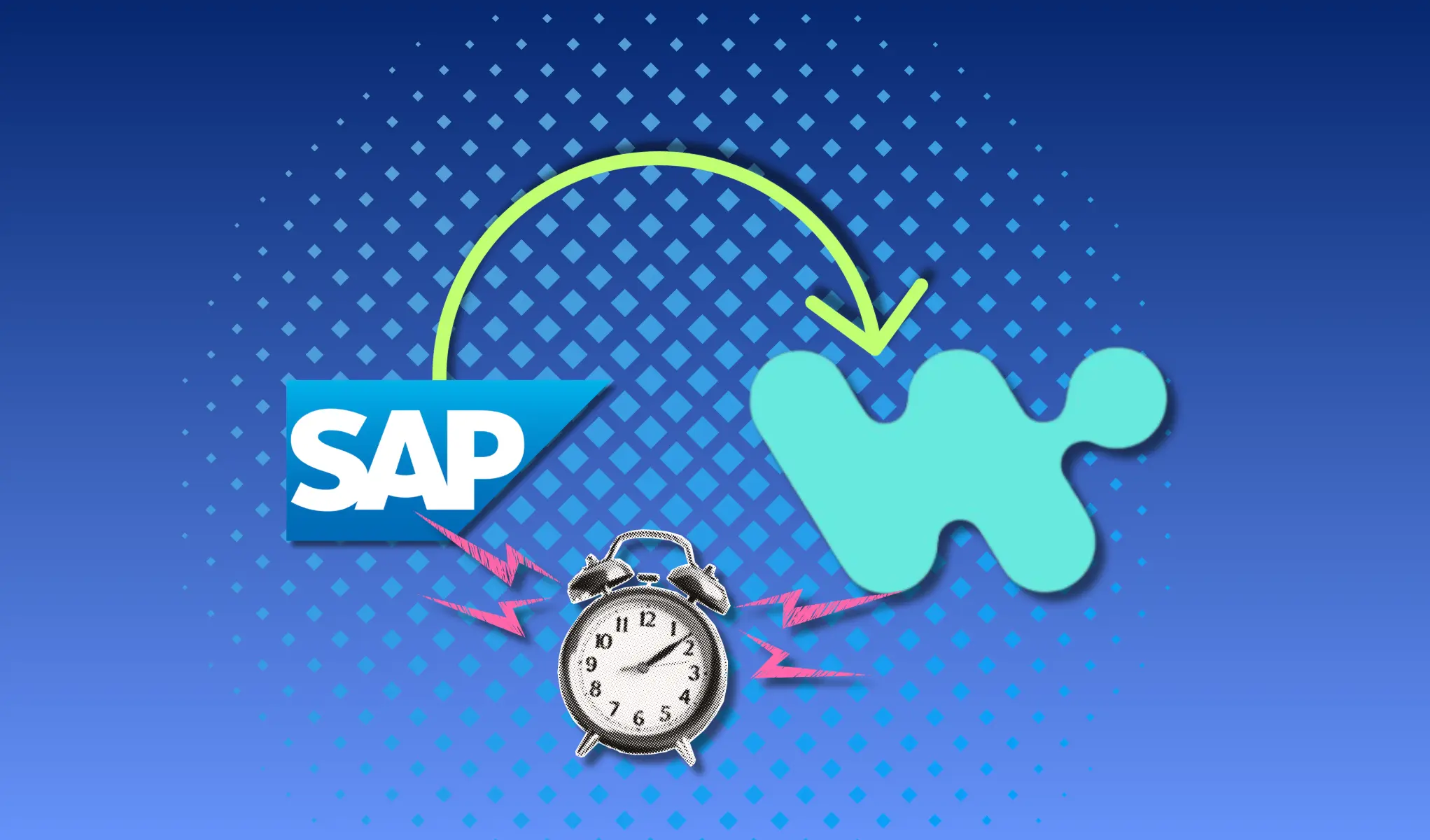
SAP has announced the end of mainstream maintenance for SAP Process Integration (PI) and SAP Process Orchestration (PO) in 2027, with extended maintenance available only through 2030—and at significantly higher costs.
While many organizations view this as another technology upgrade, executive leaders recognize it as something much larger: A once-in-a-decade opportunity to modernize the enterprise.
The question is no longer whether organizations should replace SAP PI/PO. The real question is: "Should you simply migrate your integrations—or should you redesign your integration architecture for the next generation of AI, automation, and enterprise orchestration?"
At Quandary Consulting Group, we help organizations answer that question every day.
Why Waiting Until 2027 Is Riskier Than Many Organizations Realize
Many enterprises continue operating SAP PI/PO because, "it still works." Unfortunately, "working" and "future-ready" are no longer the same thing. Every year an organization delays modernization, they accumulate additional technical debt while increasing future migration complexity.
As support deadlines approach, organizations can expect:
- Rising SAP maintenance costs with no plans of slowing down
- Increasing scarcity of experienced SAP PI/PO migration resources
- Greater cybersecurity exposure
- Growing operational inefficiencies
- Difficulty integrating AI platforms, cloud applications, and modern APIs
- Increased risk to business continuity
Most importantly, organizations lose the opportunity to innovate while competitors modernize. The companies gaining competitive advantage today are not simply replacing legacy middleware. They're redesigning how information flows across the enterprise.
SAP PI/PO Was Built for Yesterday's Enterprise
When SAP PI/PO was introduced, enterprise integration looked very different. Organizations primarily connected:
- ERP systems
- On-premises applications
- Databases
- File transfers
- SOAP web services
Today's enterprise is dramatically more complex. Modern organizations must orchestrate workflows across:
- SAP S/4HANA
- Salesforce
- Microsoft 365
- Workday
- ServiceNow
- Snowflake
- AWS
- Azure
- Google Cloud
- Quickbase
- Healthcare EHRs (MEDITECH, PracticeSuite, Nextgen, Oracle Health, athenahealth, etc.)
- Revenue Cycle platforms (Waystar, Optum, Epic, AGS Health, etc.)
- CRM systems (Salesforce, Hubspot, Attio, Zoho CRM, etc.)
- AI copilots (Fin, Microsoft Copilots, etc.)
- Large Language Models (LLMs) like Claude, Retool, etc.)
- Contact center platforms: Dialpad, Broadvoice, RingCentral, etc.)
- Thousands of APIs
Legacy integration technology was never designed for this level of connectivity.
Migration Is the Perfect Time to Rethink Your Architecture
One of the biggest mistakes organizations make is assuming they should simply rebuild every SAP PI/PO interface exactly as it exists today. That approach preserves years of technical debt.
Instead, Quandary recommends using the migration initiative as an opportunity to evaluate:
- Which integrations still create business value?
- Which workflows should be automated?
- Which APIs should be modernized?
- Which manual processes should be eliminated?
- Where can AI improve decision making?
- How can data move in real time instead of overnight?
Rather than lifting and shifting legacy integrations, organizations should focus on building an intelligent orchestration layer capable of supporting future business growth.
Why Quandary Recommends Workato
There are multiple platforms capable of replacing SAP PI/PO. Many organizations naturally consider SAP Integration Suite because it comes from SAP.; however, many of our clients are looking beyond traditional middleware and toward platforms that support broader digital transformation initiatives.
This is where Workato stands apart. Workato is not simply another integration platform. It is an Enterprise Orchestration Platform that combines integration, workflow automation, API management, AI orchestration, and business process automation into a single modern platform.
Instead of replacing one integration tool with another, organizations gain an intelligent automation platform capable of supporting virtually every business function.
The Workato Advantage
1. Accelerate Integration Delivery
Traditional enterprise integrations often require months of development. Workato dramatically reduces implementation timelines through:
- Low-code development
- Visual workflow design
- Reusable recipes
- Pre-built automation templates
- Enterprise-grade governance
This allows IT teams to deliver integrations significantly faster while maintaining enterprise controls.
2. Connect Your Entire Technology Ecosystem
Today's enterprise rarely runs SAP alone. Organizations depend on dozens—or even hundreds—of business applications. Workato provides connectors for more than 1,000 enterprise applications, including:
- SAP
- Salesforce
- Microsoft
- Oracle
- ServiceNow
- Workday
- Snowflake
- AWS
- Azure
- Quickbase
- Box
- Slack
- Jira
- Contact center platforms (Dialpad, Broadvoice, Ayaya, etc.)
Rather than building custom code for every integration, organizations can leverage a mature ecosystem of certified connectors.
3. Build an AI-Ready Enterprise
Perhaps the most significant advantage of modernizing with Workato is preparing your organization for AI. Most AI initiatives fail because enterprise data remains fragmented across disconnected systems.
Workato helps establish the orchestration layer necessary to:
- Connect enterprise data
- Automate business decisions
- Trigger AI workflows
- Coordinate human approvals
- Enable intelligent copilots
- Integrate Large Language Models (LLMs) such as Claude
- Orchestrate enterprise AI agents
Migration becomes the foundation for future AI adoption—not just a middleware replacement project.
4. Modernize Business Processes—Not Just Integrations
Successful modernization extends well beyond moving interfaces. Quandary works with organizations to redesign end-to-end business processes across areas such as:
- Finance
- Human Resources
- Supply Chain
- Customer Service
- Revenue Cycle
- Healthcare Operations
- Procurement
- Field Services
Instead of automating broken processes, we optimize workflows before automation begins. The result is faster operations, improved user experiences, and greater long-term business value.
5. Reduce Long-Term Technical Debt
Every integration platform eventually becomes technical debt if it cannot evolve alongside the business. Workato's cloud-native architecture enables organizations to:
- Reuse integrations
- Standardize APIs
- Simplify governance
- Improve monitoring
- Scale globally
- Add new applications rapidly
This reduces maintenance costs while increasing organizational agility.
Why Organizations Choose Quandary
Technology alone does not guarantee transformation. Successful modernization requires a partner that understands business operations, enterprise architecture, change management, and AI strategy.
At Quandary Consulting Group, we approach SAP PI/PO modernization differently. Rather than focusing solely on interface conversion, we help clients modernize the entire operating model. Our consultants work alongside executive stakeholders to identify opportunities for:
- Process redesign
- Workflow automation
- API modernization
- AI enablement
- Data orchestration
- Integration governance
- Enterprise architecture optimization
Quandary is one of Workato's longest standing partner (ten years and counting) our clients benefit from deep expertise in enterprise integration, automation, and orchestration while avoiding unnecessary complexity and custom development.
Quandary's SAP PI/PO Modernization Framework
Every engagement begins with understanding the business—not the technology.
Phase 1: Discovery & Assessment
We evaluate your current SAP PI/PO environment, integration landscape, business processes, and future-state objectives to identify modernization opportunities beyond a simple migration.
Phase 2: Architecture & Strategy
Our team designs a future-ready integration architecture that supports cloud applications, hybrid environments, APIs, automation, and AI while aligning with your broader technology roadmap.
Phase 3: Migration & Modernization
Using Workato, we migrate integrations in phases, minimizing business disruption while improving performance, governance, and maintainability. Wherever possible, we replace manual processes with automated workflows and modern integration patterns.
Phase 4: Optimization & AI Enablement
Once migration is complete, we help organizations expand automation, orchestrate enterprise workflows, integrate AI capabilities, and establish governance practices that support continuous innovation.
The Cost of Waiting
Many organizations assume they have plenty of time before 2027. In reality, delaying modernization often leads to:
- Higher migration costs as demand for specialized expertise increases
- Greater reliance on unsupported legacy technology
- Reduced flexibility for adopting cloud and AI initiatives
- Increased operational risk from aging integrations
- Lost opportunities to improve efficiency and customer experience
Beginning your modernization journey now provides greater flexibility, reduces project risk, and allows organizations to realize business value sooner.
Modernization Is About More Than Replacing Middleware
The end of SAP PI/PO support is not simply another software lifecycle event. It is an opportunity to rethink how your organization connects people, processes, applications, and data.
Organizations that approach this transition strategically will emerge with a more agile, intelligent, and AI-ready enterprise. Those that simply replace legacy technology risk carrying yesterday's limitations into tomorrow's business.
At Quandary Consulting Group, we help organizations turn mandatory migrations into enterprise transformation initiatives.
By combining our expertise in operating model redesign, intelligent automation, and enterprise orchestration with Workato's modern integration platform, we enable clients to reduce technical debt, accelerate innovation, and build the digital foundation needed for long-term success.
Ready to Modernize Your SAP Integration Strategy?
Whether you're beginning to evaluate the end of SAP PI/PO support or already planning your migration roadmap, Quandary can help you move beyond a one-for-one replacement.
Our team will assess your current integration landscape, identify opportunities for automation and process improvement, and develop a modernization strategy that positions your organization for cloud, AI, and future growth.
Contact Quandary Consulting Group today to schedule an SAP PI/PO modernization assessment and discover how Workato can help transform your integration architecture into a strategic business advantage.
- Author: Brian Friedopfer
- Title: President & Chief Growth & Revenue Officer
- Email: bfriedopfer@quandarycg.com
- Date Published: July 8, 2026
- About the Author: Brian Friedopfer is President & Chief Growth & Revenue Officer at Quandary Consulting Group, where he helps organizations modernize enterprise operations through AI, intelligent automation, enterprise integration, and digital transformation. Working closely with industry-leading platforms like Workato, Brian advises executive teams on building scalable, AI-ready technology strategies that improve operational efficiency and accelerate business innovation.
Top FAQs about SAP PI/PO Migration and Modernization Recommendations
1. Why is SAP PI/PO being discontinued?
SAP has announced that mainstream maintenance for SAP Process Integration (PI) and Process Orchestration (PO) ends in 2027, with optional extended maintenance available only through 2030 at an additional cost.
After that, organizations will no longer receive standard updates, security patches, or product enhancements, making modernization essential for long-term business continuity and security.
2. What should organizations replace SAP PI/PO with?
Many organizations are evaluating modern Integration Platform as a Service (iPaaS) solutions such as Workato, SAP Integration Suite, MuleSoft, Boomi, and Jitterbit.
At Quandary Consulting Group, we recommend evaluating platforms based on your broader business goals—not simply replacing middleware.
For organizations focused on AI, automation, API management, and enterprise orchestration, Workato provides a flexible, cloud-native platform that extends well beyond traditional integration capabilities.
3. Why should organizations migrate before the 2027 SAP PI/PO deadline?
Waiting until the last minute significantly increases project risk.
As the deadline approaches, organizations can expect higher consulting costs, limited availability of experienced migration specialists, increased cybersecurity risks, and greater business disruption.
Beginning your migration early provides more flexibility, reduces implementation risk, and creates opportunities to modernize business processes while migrating integrations.
4. Is migrating SAP PI/PO just a technical project?
No. While replacing legacy integration technology is an important objective, successful organizations use the migration as an opportunity to redesign business processes, eliminate manual workflows, modernize APIs, improve data governance, and prepare their organization for AI.
A modernization initiative delivers substantially greater long-term business value than a simple lift-and-shift migration.
5. What are the benefits of migrating from SAP PI/PO to Workato?
Migrating to Workato enables organizations to move beyond traditional middleware by combining integration, workflow automation, API management, AI orchestration, and business process automation on a single platform.
Benefits include:
- Faster integration development
- More than 1,000 pre-built connectors
- Cloud-native scalability
- Reduced technical debt
- Improved governance and monitoring
- AI-ready architecture
- Greater business agility
- Lower long-term maintenance costs
6. How long does an SAP PI/PO migration typically take?
The timeline depends on the complexity of your existing integration landscape. Smaller environments may take several months, while large enterprises with hundreds of interfaces often require phased migration programs lasting 12 to 24 months.
Conducting a comprehensive assessment early helps organizations establish realistic timelines while minimizing operational disruption.
7. How does Workato support AI initiatives after migration?
One of Workato's biggest advantages is its ability to serve as an enterprise orchestration platform for AI. It can connect enterprise applications, orchestrate workflows across systems, trigger AI-powered business processes, integrate large language models such as Claude, automate approvals, and coordinate intelligent agents. This creates the connected data foundation required for successful enterprise AI adoption.
8. What happens if organizations continue using SAP PI/PO after support ends?
Running unsupported software introduces several risks, including increased cybersecurity exposure, compliance concerns, higher maintenance costs, limited vendor support, and growing difficulty integrating modern cloud applications. Over time, organizations may also face increased operational risk as experienced SAP PI/PO specialists become more difficult to find.
9. How does Quandary Consulting Group approach SAP PI/PO modernization differently?
Rather than focusing solely on interface conversion, Quandary takes a business-first approach. Every engagement begins by evaluating current business processes, integration architecture, automation opportunities, API strategy, governance, and AI readiness. The goal is not simply to replace middleware but to create a future-ready operating model that supports long-term digital transformation.
10. How can organizations prepare for an SAP PI/PO migration?
The first step is conducting a comprehensive assessment of the current integration environment. Organizations should inventory existing interfaces, identify obsolete integrations, evaluate automation opportunities, prioritize business-critical workflows, define future-state architecture, and establish an AI and cloud modernization strategy.
Working with an experienced integration partner (like Quandary Consulting Group) helps ensure the migration aligns with broader business objectives rather than becoming a one-time technology replacement.
11. What is the difference between SAP PI and SAP PO?
SAP Process Integration (PI) focuses primarily on integrating applications and exchanging data between systems. SAP Process Orchestration (PO) expands on PI by adding Business Process Management (BPM) and Business Rules Management (BRM), enabling organizations to automate and orchestrate more complex business processes.
Although SAP PO offers additional workflow capabilities, both products are approaching the end of mainstream support, making now the ideal time to evaluate modern integration and automation platforms.
12. Is SAP Integration Suite better than SAP PI/PO?
For most organizations, yes.
- SAP Integration Suite is SAP's modern cloud-native integration platform and offers significantly more flexibility than legacy PI/PO. It provides API management, event-driven integration, cloud connectivity, hybrid integration, and pre-built integration content.
- However, organizations with diverse technology ecosystems often evaluate platforms like Workato because they provide broader enterprise orchestration, low-code automation, AI integration, and connectivity across thousands of non-SAP applications—not just SAP environments.
The right solution depends on your long-term digital transformation strategy.
13. What is an iPaaS platform?
Integration Platform as a Service (iPaaS) is a cloud-based platform that enables organizations to connect applications, data, APIs, and business processes without building complex custom integrations. Modern iPaaS platforms help organizations:
- Connect cloud and on-premises applications
- Automate workflows
- Synchronize data in real time
- Manage APIs
- Improve governance
- Support AI-driven business processes
Platforms like Workato have expanded beyond traditional iPaaS by combining integration, automation, API management, and AI orchestration into a unified enterprise platform.
14. What are the biggest challenges during an SAP PI/PO migration?
The most successful organizations recognize that migration involves much more than moving interfaces from one platform to another.
Common challenges include:
- Identifying obsolete integrations
- Untangling years of technical debt
- Managing complex dependencies
- Minimizing downtime
- Maintaining data integrity
- Modernizing APIs
- Coordinating multiple business stakeholders
- Ensuring proper governance and security
- Prioritizing which workflows should be redesigned instead of simply migrated
Working with an experienced modernization partner helps reduce these risks while accelerating project delivery.
15. How much does an SAP PI/PO migration cost?
Migration costs vary significantly and are dependent on:
- Number of interfaces
- Business complexity
- Custom development
- Number of applications
- Cloud strategy
- Process redesign requirements
- Testing requirements
- Governance needs
Organizations that approach migration strategically often reduce long-term operating costs by eliminating redundant integrations, automating manual processes, and consolidating multiple legacy technologies onto a modern enterprise orchestration platform.
A comprehensive assessment is typically the best way to estimate project costs accurately.
16. Can SAP PI/PO integrate with cloud applications?
Yes—but not nearly as efficiently as modern integration platforms. SAP PI/PO was originally designed for an on-premises enterprise architecture. While cloud integrations are possible, they often require additional development, custom adapters, and ongoing maintenance.
Modern integration platforms like Workato offer hundreds of pre-built cloud connectors that significantly reduce implementation time while improving scalability, governance, and long-term maintainability.
17. Does Workato replace SAP Integration Suite?
Not necessarily. While Workato can replace SAP PI/PO for many organizations, it is not simply an SAP replacement. Workato serves as an Enterprise Orchestration Platform that combines:
- Integration
- Workflow automation
- API management
- Business process automation
- AI orchestration
- Data synchronization
- Enterprise governance
Some organizations use Workato alongside SAP Integration Suite, while others standardize on Workato across their entire technology ecosystem. The optimal approach depends on business requirements, application landscape, and long-term architecture goals.
18. What is enterprise orchestration?
Enterprise orchestration refers to coordinating people, systems, applications, data, APIs, and AI across an entire organization through automated workflows.
Unlike traditional integration, which focuses on moving data between systems, enterprise orchestration manages complete business processes from start to finish.
Examples include:
- Customer onboarding
- Revenue cycle management
- Employee lifecycle automation
- Supply chain operations
- Financial approvals
- Healthcare patient access
- AI-assisted decision making
Enterprise orchestration enables organizations to become more agile, efficient, and scalable.
19. How are APIs different from traditional middleware?
Traditional middleware typically connects applications through tightly coupled, point-to-point integrations. APIs provide standardized interfaces that allow applications to communicate securely and consistently across modern cloud and hybrid environments.
API-first architectures offer several advantages:
- Faster development
- Greater flexibility
- Easier scalability
- Better governance
- Improved security
- Simplified maintenance
- Support for AI and automation platforms
Many organizations use SAP PI/PO migration as an opportunity to transition toward an API-first integration strategy.
20. What is the best integration platform for SAP S/4HANA?
There is no universal answer because every organization's technology landscape is different. The best platform depends on factors such as:
- Number of business applications
- Cloud adoption strategy
- AI initiatives
- API requirements
- Existing technology investments
- Governance needs
- Internal development resources
Organizations heavily invested in SAP may choose SAP Integration Suite, while enterprises seeking broader automation, AI orchestration, and cross-platform integration often evaluate Workato as part of their modernization strategy.
A formal architecture assessment can help determine the best fit and Quandary Consulting Group can help with this!
21. Can AI automate SAP integration workflows?
Yes! Modern integration platforms increasingly incorporate AI to automate repetitive tasks, improve decision-making, and accelerate workflow execution.
AI can help:
- Route approvals automatically
- Detect integration failures
- Validate business rules
- Generate integration logic
- Summarize workflow activity
- Predict operational issues
- Trigger intelligent automations
- Coordinate AI agents across multiple business systems
Organizations modernizing from SAP PI/PO are increasingly designing AI-ready integration architectures rather than simply replacing middleware.
22. How do I assess my SAP integration landscape before migration?
A successful modernization initiative begins with a comprehensive assessment.
Organizations should evaluate:
- Existing SAP PI/PO interfaces
- Connected business applications
- Integration complexity
- Manual processes
- API maturity
- Data quality
- Security and governance
- Technical debt
- Business-critical workflows
- Opportunities for automation
- AI readiness
- Future cloud strategy
At Quandary Consulting Group, every SAP modernization engagement begins with a structured discovery and assessment designed to identify opportunities for process optimization, workflow automation, and enterprise orchestration—not just interface migration.