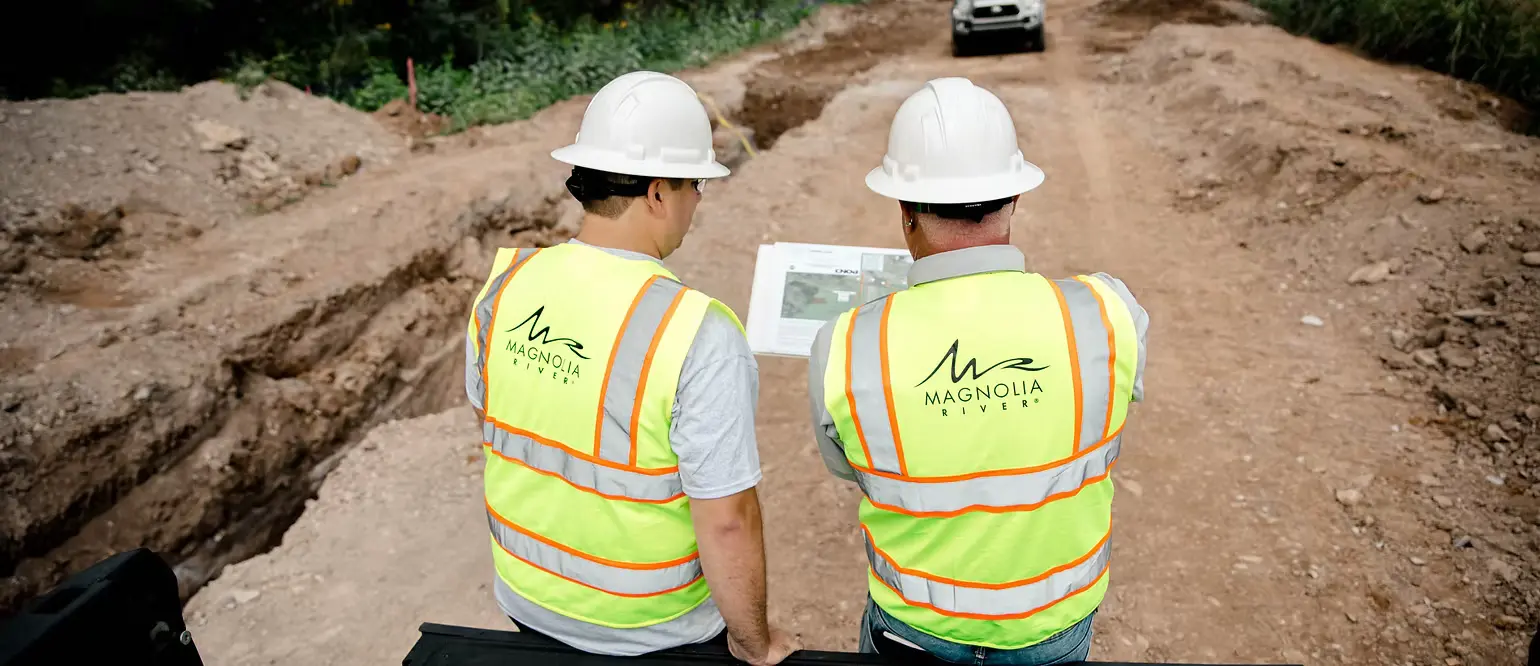
Magnolia River Group Modernizes Field Operations With FastField, Quickbase, Samsara, and Vista
The Company Profile: Magnolia River
- Use Case: Field Operations Management, Safety & Compliance, Daily Work Reporting, Payroll & Billing Automation
- Technology: Quickbase, FastField, Samsara, Vista
- Headquarters: Mississippi
- Project: Field Operations & Workflow Optimization
For more than two decades, Magnolia River has supported the organizations responsible for building, maintaining, and modernizing critical utility infrastructure. The company provides engineering, inspection, consulting, and technology-enabled services that help utilities and infrastructure operators manage complex assets, projects, field operations, and regulatory requirements.
Magnolia River works across the natural gas, water, pipeline, and broader utility infrastructure sectors, supporting projects throughout the infrastructure lifecycle. Its capabilities span engineering and design, pipeline and utility inspection, construction management, integrity management, geospatial services, field data collection, and technology solutions designed to improve how infrastructure information is captured, managed, and used.
Because much of this work takes place in the field, Magnolia River operates in an environment where accurate and timely operational data is essential. Field teams need efficient ways to document work, inspections, safety activities, equipment usage, labor, and production information, while administrative and operational teams need that information to be structured and accessible for downstream processes.
As Magnolia River continues to support complex utility operations at scale, the organization is modernizing how information moves between field employees and the operational, safety, payroll, billing, and administrative teams that support them. Creating a more connected flow of field data helps reduce manual administrative work, improve visibility, strengthen data quality, and provide a more reliable foundation for reporting and business operations.
Quandary Consulting Group is helping establish that foundation through a connected field operations environment centered on Quickbase, FastField, Samsara, and Vista™ construction ERP software (Trimble) beginning with workflows supporting Magnolia Utility Services and the engagement is designed to improve operational workflows, streamline data capture, standardize information, increase visibility, and establish integrations between Quickbase and the systems supporting field operations.
The Challenges
Connecting a Large Field Organization to the Back Office
Organizations, like Magnolia River, operate in an environment where work happens across crews, vehicles, equipment, job sites, utility corridors, and customer locations rather than behind a desk and this makes operational data both extremely valuable and unusually difficult to manage.
During a single workday, a crew may complete pre-trip inspections, travel to multiple locations, use several pieces of equipment, perform production work, record employee hours, identify safety concerns, and generate information that ultimately affects payroll and customer billing; each activity creates data.
The challenge is making sure that data does not become trapped inside paper forms, spreadsheets, emails, disconnected systems, or manual administrative processes and for Magnolia River, the initial transformation focuses on connecting those frontline activities to a structured digital operating environment.
The objective documented in the engagement is to create scalable solutions that improve visibility, standardize data collection, streamline field data capture, establish reporting and approval workflows, and create foundational integrations with external systems.
For Magnolia River, the broader opportunity is significant; instead of managing field data as a collection of individual documents and transactions, the organization can begin treating it as a connected operational asset.
Field Data Becomes Structured Operational Data
The transformation begins where the work happens: in the field. Quandary is implementing FastField and Quickbase to digitize several of Magnolia's frontline processes, beginning with:
- Pre-trip inspections
- Close-call reporting
- Good-catch reporting
The engagement specifically calls for these FastField forms to be created and integrated with Quickbase so information captured by field teams flows into structured operational records and this distinction is important (vs. just simply digitizing a paper form reduces paper). Connecting the form to the operational environment changes what happens after the form is submitted.
A FastField submission can become a Quickbase record associated with the appropriate crew, date, job, event type, equipment, supporting notes, and attachments.
Instead of information remaining isolated inside an individual form, Quickbase becomes the centralized environment where the data can trigger additional workflows, reporting, approvals, and downstream business processes and for a company operating hundreds of vehicles and pieces of equipment across a distributed field organization, that creates a much stronger foundation for operational visibility.
Safety Reporting Becomes an Active, Connected Workflow
For Magnolia River, safety reporting is more than documenting an incident or completing a required form. The value comes from turning field-level safety activity into structured, actionable information that teams can use to identify trends, address exceptions, strengthen compliance, and reduce operational risk.
Close calls and good catches, for example, can provide valuable insight into conditions across crews and job site; but, that information only becomes useful when it is consistently captured, categorized, reviewed, and connected to the broader operational environment.
Quandary is creating a dedicated Safety Events structure within Quickbase that centralizes safety information and supports standardized monthly reporting. Using FastField, employees can document safety events directly from the field, while Quickbase transforms those submissions into structured records that managers and safety leaders can review, track, and analyze.
The safety data model connects each event to the operational context surrounding it: Event Type → Crew → Region → Date → Location → Supporting Documentation → Follow-Up
Instead of manually compiling information from individual forms, Magnolia River gains a centralized view of safety activity across the organization. Leadership can identify patterns across crews, regions, locations, and event types while reducing the administrative effort required to prepare recurring safety reports.
Turning Pre-Trip Inspections Into Compliance Visibility
Pre-trip inspections create another important layer of operational and compliance visibility. Rather than simply collecting and storing completed inspection forms, Magnolia River can use the connected FastField and Quickbase workflow to monitor whether required inspections are actually being completed.
The operating model becomes:
Crew → Vehicle/Equipment → Pre-Trip Inspection → Date → Submission Status → Compliance Visibility
This distinction is important. A digital form confirms what was submitted; a connected workflow can also help identify what should have been submitted but was not.
Managers gain earlier visibility into missing inspections, incomplete records, and potential compliance exceptions, allowing teams to address gaps while they are still actionable rather than discovering them during downstream reporting or review.
The result is a more proactive approach to utility safety management and field compliance, where safety data becomes part of the operational workflow instead of remaining isolated in individual forms and reports.
Daily Work Reports Become the Operational Backbone of Field Operations
For Magnolia River, the Daily Work Report is more than a record of what happened on a jobsite. It creates a structured connection between field activity and the administrative, operational, payroll, and billing processes that depend on accurate field data.
Each Daily Work Report captures the core information needed to understand work performed in the field, including: Crew → Employee Hours → Equipment → Production → Work Performed
Quandary is structuring this information within Quickbase and developing the associated approval, notification, and processing workflows. The greater value, however, comes from what happens after the information is captured.
Rather than treating the Daily Work Report as a static record of completed work, Magnolia River can use it as the starting point for multiple downstream business processes.
Once a field employee submits a report, Quickbase routes the record to the appropriate manager and moves it into a pending approval status. The manager can review the underlying labor, equipment, production, and job information before approving the record for office processing. From there, the validated data becomes available to support downstream functions such as payroll and billing.
This creates a defined operational workflow: Field Work → Daily Work Report → Manager Approval → Office Processing → Payroll + Billing
More importantly, the same underlying data can move through each stage without employees repeatedly recreating, rekeying, or reconciling information between disconnected processes.
For Magnolia River, this turns the Daily Work Report into a central operational data layer for field service management. Information captured closest to the work can flow directly into the business processes that depend on it, helping improve data accuracy, accelerate approvals, reduce administrative effort, and create greater visibility from field activity through financial processing.
Field Hours Become Payroll-Ready Data
For Magnolia River, labor data begins in the field, but its value extends well beyond the Daily Work Report. Employee hours ultimately need to support payroll, operational reporting, job costing, and workforce visibility, which means the accuracy of downstream processes depends heavily on the quality of the information captured at the source.
In a manual environment, preparing field hours for payroll can require administrative teams to collect individual reports, identify employees and crews, reconcile hours, verify approvals, aggregate totals, and then reformat that information for payroll processing. Each additional handoff introduces administrative work and creates another opportunity for delays or data discrepancies.
Quandary is helping Magnolia River establish a more structured workflow in Quickbase. Once Daily Work Reports are approved, Quickbase can aggregate operational data using standardized reporting logic, including hours by employee, crew, work date, and other relevant dimensions.
The same information originally captured to document field activity can therefore become part of the payroll process without requiring teams to recreate the underlying labor data.
The data flow becomes: Employee → Crew → Work Date → Hours → Manager Approval → Payroll Reporting
This creates greater traceability between reported labor and the work performed in the field while reducing the administrative effort required to prepare payroll information.
More importantly, it establishes a principle that can extend across Magnolia River's broader field operations: capture operational data once, validate it at the appropriate point, and reuse it wherever the business needs it.
Connecting Field Production Directly to Billing
For field-intensive utility operations, the information required to invoice completed work often originates with the crews performing that work. Production records may contain variables such as work type, quantities, measurements, tree size, or other job-specific details that ultimately determine how the work should be classified and billed.
When those operational details require manual interpretation before they can become billing information, an additional administrative layer exists between completed field work and revenue.
Quandary is helping Magnolia River introduce rules-based billing automation into that process. Defined business rules can evaluate production information captured in the field and assign the appropriate billing codes based on customer requirements and operational variables.
The workflow becomes: Completed Work → Production Data → Business Rules → Billing Code → Billing-Ready Data
Instead of requiring administrative teams to repeatedly translate field activity into billing classifications, Magnolia River can begin applying standardized logic directly to the underlying production data.
Thus creates a stronger connection between what happened in the field and what the organization is prepared to invoice and over time, this type of automation can reduce manual billing preparation, improve consistency, strengthen the audit trail between production and invoicing, and shorten the time between completed work and revenue recognition.
Samsara Connects Equipment, Crews, Jobs, and Location Data
Field operations do not happen independently from the physical assets used to perform the work: vehicles, equipment, crews, jobs, and production activity are interconnected, and understanding those relationships creates a more complete picture of field operations.
With this being the case, Quandary included a foundational integration with Samsara, connecting telematics and equipment information with Magnolia River's operational workflows.
Rather than attempting to synchronize every element of the Samsara platform immediately, the initial architecture focuses on establishing connectivity and making high-value equipment data available where it can improve field reporting and operational visibility.
Several use cases become particularly valuable:
- Equipment identification: Equipment maintained in Samsara can become available within operational workflows, allowing employees to accurately identify the vehicles and assets associated with a job or Daily Work Report.
- GPS and location context: Asset-location information can provide additional context around where equipment is operating and how it relates to reported field activity.
- Job-location validation: Equipment associated with a Daily Work Report can potentially be compared with location data to help determine whether the selected asset was present at or near the location where the work was reported.
- Equipment usage visibility: Connecting assets with crews, jobs, production records, and Daily Work Reports creates a more complete operational history of how equipment is being used across the organization.
Together, these connections establish a richer operational data model: Employee → Crew → Job → Equipment → GPS Location → Production
Instead of maintaining telematics data and field reporting as separate sources of information, Magnolia River can begin connecting them within the same operational ecosystem. That creates greater visibility into not only what work was completed, but who performed it, which equipment supported it, and where that activity occurred.
Quickbase and Vista Connect Field Operations With the ERP
The next layer of the architecture connects Magnolia River's field operations with Vista, creating a structured path between operational activity and the organization's enterprise resource planning environment.
Rather than attempting a comprehensive ERP integration at once, Quandary is establishing the initial Quickbase-to-Vista integration framework through a phased approach focused on integration discovery, connectivity, data-flow validation, and an initial production use case.
This sequencing matters because an enterprise integration is most valuable when the information entering the ERP has already been captured consistently, reviewed appropriately, validated against business rules, and prepared for its intended downstream use.
The architecture creates that progression: Field Activity → FastField → Quickbase → Manager Approval → Business Rules → Billing-Ready Data → Vista
Within this model, FastField supports field data capture, Quickbase serves as the operational workflow and data layer, and Vista remains the downstream enterprise system.
Quickbase therefore does more than transfer information between platforms. It provides the environment where field data can be standardized, enriched, reviewed, approved, and transformed before it reaches the ERP.
This creates a fundamentally stronger integration model than simply moving fragmented information from one system into another; and, for Magnolia River, the larger opportunity is a connected field-to-ERP architecture in which information captured at the point of work can move through operational workflows and ultimately support payroll, billing, equipment management, reporting, and enterprise financial processes: Field Capture → Operational Data → Validation → Approval → Automation → ERP
The result is an operational model designed around the flow of data rather than individual applications, giving Magnolia River a more scalable foundation for connecting field operations with the back office as the organization continues to grow.
The Solutions
Building a Connected Field Operations Architecture for Deviney Construction and Magnolia Utility Services
For a field-intensive organization, digital transformation is not achieved by simply replacing paper forms with digital ones; it is created by connecting the entire operational lifecycle—from what happens at the jobsite to the systems responsible for payroll, billing, financial management, and executive reporting.
Quandary Consulting Group is creating that connected environment for Magnolia River, using Quickbase, FastField, Samsara, and Vista™ construction ERP software (Trimble) to establish an integrated field operations architecture.
Each technology serves a distinct purpose within the ecosystem. FastField captures information where work happens. Quickbase structures that information and orchestrates the workflows around it. Samsara provides equipment, asset, and location intelligence. Vista™ construction ERP software (Trimble) connects approved operational activity to the organization's downstream financial processes.
Instead of relying on disconnected forms, spreadsheets, emails, manual data entry, and institutional knowledge to move information between field and office teams, Magnolia is establishing a digital operating model in which information can follow the work itself.
Together, these platforms create a more continuous flow of operational data: Field Activity → Mobile Data Capture → Operational Workflow → Validation → Approval → Payroll & Billing → ERP → Reporting
FastField: Digitizing Data Capture at the Point of Work
For field operations technology to succeed, it has to work where employees actually perform their jobs—not just where reliable internet connections and desktop computers are available.
FastField serves as the frontline mobile data-capture layer for Magnolia, giving employees a structured way to document operational and safety information directly from the field.
Initial workflows include pre-trip inspections, close calls, and good catches, with FastField providing mobile-friendly forms that standardize how information is captured across crews and locations. FastField's offline functionality is particularly important for utility and construction environments where employees may be working in remote areas, rights-of-way, vehicles, or job sites with inconsistent connectivity. Employees can continue capturing information in the field and synchronize submissions when connectivity becomes available.
This changes the role of field data, instead of information being documented in one place and later interpreted, rekeyed, emailed, or transferred into another system, it can enter Magnolia's operational environment much closer to the moment it is created. Thus allowing the field to become the starting point of the digital workflow—not the endpoint of a manual process.
Quickbase: Creating a Central Operational System of Record
At the center of the architecture is Quickbase, which serves as the operational backbone connecting field activity with the business processes that depend on it. Quickbase brings together information and workflows spanning:
- Crews and employees
- Jobs and work assignments
- Daily Work Reports
- Employee hours and time reporting
- Production activity
- Equipment usage
- Safety events
- Pre-trip inspections
- Close calls and good catches
- Manager reviews and approvals
- Office processing
- Payroll preparation and reporting
- Billing-code automation
- Operational dashboards
- Management reporting
- Downstream system integrations
The significance of this model is not simply that these processes become digital - they become connected:
- A crew can be associated with a job
- Employees can be associated with that crew
- Equipment can be associated with the same work activity
- Production quantities can be connected to employee hours
- Safety information can be tied to people, locations, and equipment
- Approved production data can drive billing logic
These records can ultimately support payroll, invoicing, ERP processing, and management reporting; thus creating a shared operational data model connecting: People → Crews → Jobs → Locations → Equipment → Time → Production → Safety → Approvals → Payroll → Billing
For Magnolia River, Quickbase therefore becomes more than another application employees have to manage. It becomes the operational system of record responsible for coordinating how information moves between the field, management, back-office teams, and enterprise systems.
Connecting Daily Work Reporting to Payroll and Billing
One of the most important elements of the architecture is the connection between Daily Work Reports (DWRs) and downstream administrative processes.
Field reporting is often where construction organizations experience a significant amount of operational friction. Crews record what happened, supervisors review it, office employees interpret it, payroll teams validate hours, and billing teams determine how completed production should be coded and invoiced.
Every manual handoff creates another opportunity for delays, inconsistent information, duplicate entry, and errors. With this in mind, Quandary designed the Quickbase environment so that the Daily Work Report can become a foundational operational record rather than an isolated field document.
The workflow can connect: Crew → Job → Employees → Hours → Equipment → Production → Manager Approval → Payroll Processing → Billing
Once information is captured correctly upstream, multiple downstream processes can use the same validated operational record; it is a fundamental shift from collecting information repeatedly to capturing information once and operationalizing it across the business.
Automating the Path From Production to Billing
Billing represents another critical intersection between field operations and the back office. Production information recorded in the field may include variables such as work type, quantities, tree size, or other operational measurements that ultimately determine how completed work should be billed.
Traditionally, converting those details into the correct billing information can require employees to interpret field reports, reference business rules, determine billing codes, and manually prepare information for downstream systems.
Quandary is introduced rules-based billing automation within Quickbase to reduce that translation layer. Defined business rules can evaluate production information and determine the appropriate billing code based on variables established by Magnolia River.
The process becomes: Completed Work → Production Data → Business Rules → Billing Code → Approval → Billing-Ready Record
This creates a much tighter connection between what a crew completes in the field and what the organization is ultimately able to invoice and as the operating model matures, Magnolia gains the foundation for reducing billing preparation effort, improving coding consistency, shortening billing cycles, and increasing visibility into work that has been completed but has not yet progressed through the billing process.
Samsara: Connecting Physical Operations With Digital Workflows
For a construction and utility organization, operational visibility cannot stop with employees and forms. Equipment, vehicles, locations, and physical assets are fundamental parts of how work gets completed.
Samsara provides the physical operations and telematics layer within the architecture. By integrating Samsara equipment and GPS information with Quickbase, Magnolia Rover can bring physical asset intelligence into the same workflows used to manage crews, jobs, production, and field reporting.
Equipment is no longer represented solely as an asset inside a separate telematics platform. Within the connected architecture, it can become part of the operational record associated with: Equipment → Crew → Employee → Job → Location → Work Activity → Production
GPS information can also provide an additional layer of operational context and validation. For example, location information can help support workflows designed to determine whether employees or equipment were associated with the expected job site when work was reported.
This creates the foundation for a more data-driven approach to field operations in which information submitted by employees can be evaluated alongside information generated by connected assets and, over time, the same architecture can support additional opportunities around fleet utilization, equipment availability, preventive maintenance, inspections, asset allocation, exception management, and operational performance.
Vista: Connecting Field Operations to the Financial System of Record
The final layer of the architecture connects operational execution with enterprise financial management. Vista serves asMagnolia River's downstream ERP and financial system, receiving information after the appropriate operational workflows, validations, business rules, and approvals have occurred upstream.
This distinction matters, because an ERP should not have to become the place where every piece of raw field information is interpreted and corrected. Instead, the connected architecture allows Quickbase to coordinate operational processes before information reaches Vista.
The progression becomes: Field Data → Operational Validation → Management Approval → Business Rules → Financially Ready Data → Vista
As integration capabilities mature, approved payroll and billing information can move downstream without requiring office teams to repeatedly recreate information that originated in the field.
This creates a cleaner separation of responsibilities:
- FastField captures field information.
- Quickbase manages operational processes and business logic.
- Samsara contributes physical asset and location intelligence.
- Vista manages downstream financial and ERP processes.
Together, the platforms create a connected technology ecosystem rather than four independent systems.
The Connected Architecture
Quandary's approach establishes a clear flow of information across the organization: Field Employee → FastField → Quickbase → Operational Workflow → Manager Approval → Samsara Validation → Payroll & Billing Logic → Vista → Enterprise Reporting
The larger transformation is in the relationships being created underneath that workflow.
- People + Work: Employees and crews become connected to the jobs and production activities they perform.
- Work + Equipment: Equipment becomes associated with crews, jobs, locations, and reported production rather than existing as an isolated asset record.
- Work + Location: Samsara GPS data introduces physical context that can strengthen field reporting and operational validation.
- Production + Payroll: Employee hours and completed work can move through structured review and approval workflows before payroll processing.
- Production + Billing: Business rules can translate operational variables into standardized billing codes and billing-ready records.
- Operations + Finance: Approved information can move downstream into Vista, reducing the administrative gap between work performed and financial processing.
The result is a digital thread connecting the job site to the back office and the back office to the ERP.
Technology Partner Profiles
Quickbase: The Operational Backbone
Quickbase is the core operational platform within Magnolia River's field operations transformation, providing the data model, workflow automation, business logic, approvals, dashboards, and integrations required to connect processes that traditionally span multiple departments and systems.
For construction and utility organizations, that flexibility is particularly valuable because field operations rarely follow a single linear process. People, equipment, jobs, safety requirements, production, payroll, billing, and financial systems constantly intersect.
Quickbase gives Quandary the ability to model those relationships within a common operational environment. Instead of creating separate data silos for safety, Daily Work Reports, payroll preparation, equipment tracking, production, billing, and reporting, Deviney can establish shared relationships between: People + Crews + Jobs + Equipment + Locations + Time + Safety. Production + Payroll + Billing.
That common data foundation also creates a stronger environment for automation and when information changes in one part of the operation, Quickbase can use workflows and business rules to determine who needs to review it, what needs to happen next, and where the information ultimately needs to go.
For Magnolia River, Quickbase becomes the operational connective tissue between frontline execution and enterprise administration.
FastField: Mobile Data Capture Built for Field Operations
FastField provides the mobile field data collection capabilities required to extend Magnolia River's digital workflows beyond the office. Employees working across construction sites, utility rights-of-way, vehicles, and remote locations need technology designed around field conditions. FastField enables structured mobile forms while supporting offline data capture when connectivity is limited.
For Magnolia River, the initial implementation includes workflows such as pre-trip inspections, close calls, and good catches, helping standardize safety and operational reporting at the point where those activities occur.
Once submitted, the information can flow into Quickbase, where it becomes part of the larger operational record and can trigger subsequent workflows, reviews, approvals, reporting, or downstream actions. The relationship between the two platforms is intentionally straightforward: FastField captures the work. Quickbase operationalizes the information.
Samsara: Turning Fleet and Equipment Data Into Operational Intelligence
Samsara adds real-world asset, equipment, and GPS intelligence to Magnolia River's connected field operations environment. For an organization managing a large mobile workforce and equipment footprint, telematics data provides important context that employee-entered information alone cannot always provide.
Integrating Samsara with Quickbase creates the foundation for connecting people, equipment, jobs, locations, and production activity within a shared operational framework.
Initial use cases center on equipment information and location validation, helping Magnolia River establish greater context around how assets and employees interact with jobs in the field.
The long-term opportunity extends further - Once telematics information becomes part of the operational architecture, Magnolia River can build toward more sophisticated capabilities involving fleet utilization, equipment allocation, preventive maintenance, inspections, idle time, asset availability, location-based exceptions, and operational performance analytics.
Instead of simply knowing where an asset is, the organization gains the foundation for understanding how that asset is contributing to the work.
Vista ERP (Trimble): Extending Connected Operations Into the ERP
Vista ERP (Trimble) serves as the enterprise financial layer of Magnolia River's connected architecture, creating the downstream destination for operational information after it has been captured, validated, approved, and prepared for financial processing.
This approach allows the ERP to remain focused on its core financial responsibilities while Quickbase manages the operational complexity occurring upstream. Rather than asking back-office employees to manually bridge the gap between field reports and financial systems, the architecture creates a structured pathway for information to progress from work performed to work approved to work ready for payroll or billing.
As integrations mature, that creates the potential to reduce duplicate data entry, improve consistency between operational and financial records, accelerate downstream processing, and provide management with greater visibility into where work sits between field completion and financial recognition.
From Disconnected Field Processes to a Connected Operating Model
The larger value of the Magnolia River's transformation does not come from any one application it comes from the architecture created between them.
- FastField digitizes the frontline
- Quickbase orchestrates the operation
- Samsara connects physical assets and location intelligence
- Vista extends validated operational data into the financial enterprise
Together, Quandary Consulting Group, Quickbase, FastField, Samsara, and Vista are creating a connected field operations ecosystem designed to help Magnolia River reduce manual handoffs, improve data quality, strengthen field-to-office visibility, automate operational workflows, and create a more direct path from work performed to work approved, processed, billed, and reported.
The result is an operating model in which Magnolia River can increasingly answer critical questions from a connected source of operational data:
- Who performed the work?
- Where was it performed?
- What equipment was used?
- How much time was spent?
- What production was completed?
- Was the work reviewed and approved?
- How should it be billed?
- Has it reached the financial system?
That is the difference between digitizing individual processes and building a truly connected field operations platform.
The Results
A Scalable Field Operations Model for Magnolia River
The implementation gives Magnolia River more than a collection of digitized forms and automated workflows. It creates a connected field operations model designed to move information from the point of work through approvals, safety, payroll, billing, equipment management, reporting, and enterprise systems with fewer manual handoffs.
Quandary structured the implementation as a six-week Agile initiative, allowing the teams to prioritize the highest-value workflows, develop iteratively against the backlog, validate functionality through demonstrations and testing, and incorporate user feedback throughout acceptance testing.
By connecting FastField, Quickbase, Samsara, and Vista, Magnolia River establishes a scalable operational architecture in which field data can be captured once, validated, approved, and reused across multiple downstream processes. Based on the workflows automated and administrative steps eliminated, the solution was designed to deliver the following operational improvements to Magnolia River:
50% Less Administrative Processing for Daily Work Reports
Structured digital workflows can significantly reduce the manual collection, routing, interpretation, reconciliation, and re-entry traditionally required to process field reports.
60% Faster Approval Cycles
Automated routing, notifications, role-based assignments, and centralized work queues can move Daily Work Reports and other operational records through review more efficiently while giving managers greater visibility into outstanding approvals.
90% Less Manual Billing-Code Translation
Rules-based automation can translate field production data into predefined billing classifications, substantially reducing the manual interpretation required between completed work and billing preparation.
60% Less Payroll Preparation Effort
Approved labor data can be automatically organized and aggregated by employee, crew, and work date, reducing the administrative effort required to prepare field hours for downstream payroll processing.
90%+ Digital Adoption Across Targeted Safety and Inspection Workflows
Digitizing pre-trip inspections, close calls, good catches, and related safety processes creates a consistent method for capturing critical information directly from the field.
50% Faster Safety Reporting
Standardized Quickbase records and centralized reporting can replace much of the manual effort associated with collecting, organizing, and compiling recurring safety information.
40% Fewer Field-to-Office Data Discrepancies
Standardized forms, required fields, validation rules, manager approvals, and automated business logic can reduce transcription errors and inconsistencies as information moves from field teams to administrative functions.
80%+ Reduction in Duplicate Data Entry Across Targeted Workflows
Information captured in the field can support multiple downstream processes—including operations, payroll, billing, safety, equipment management, and ERP workflows—without requiring employees to repeatedly recreate the same data.
Near-Real-Time Visibility Into Field Operations
Centralized operational data gives managers greater visibility into submitted Daily Work Reports, pending approvals, safety activity, labor hours, equipment information, and production data without waiting for information to be manually consolidated.
A Scalable Foundation for Continued Operational Modernization
The architecture provides Magnolia River with a framework that can expand to additional crews, workflows, business processes, integrations, and field use cases as operational requirements evolve.
From Field Activity to Enterprise-Ready Data
The larger result is a fundamental improvement in how operational information moves through Magnolia River. Instead of field data being captured for one immediate purpose and then manually recreated for the next, the architecture establishes a continuous data path: Field Activity → Digital Capture → Quickbase → Validation → Manager Approval → Business Rules → Payroll + Billing + Safety + Equipment + Vista
This creates a connected operational foundation between field teams and the back office, allowing information captured closest to the work to support multiple business functions without unnecessary duplication or manual intervention.
For Magnolia River, the value extends beyond making individual workflows faster. The organization gains a more structured way to capture operational data at its source, apply validation and business logic, maintain greater visibility as information moves through the organization, and make trusted data available to the people and systems that depend on it.
The result is a scalable field operations model designed to reduce administrative effort, improve data quality, accelerate downstream processing, strengthen operational visibility, and provide a foundation for continued modernization across Magnolia River.
Building a Connected Digital Operations Foundation Across Magnolia River
For Magnolia River, the value of this implementation extends beyond automating individual workflows. It establishes a more connected relationship between field operations, operational data, back-office processes, and enterprise systems.
Information captured in the field no longer needs to remain isolated within individual forms or applications. Instead, each field activity can become structured data that supports additional operational and business processes.
- A pre-trip inspection becomes actionable compliance data.
- A close call or good catch becomes structured safety information that can be reviewed, categorized, and analyzed.
- A Daily Work Report becomes a trusted source for approvals, employee hours, production, equipment usage, payroll, and billing.
- Samsara adds physical-world context by connecting equipment and GPS location data with crews, jobs, and reported field activity.
- Vista ERP (Trimble) provides the downstream enterprise environment where approved and validated operational information can support financial and administrative processes.
- Quickbase serves as the operational layer connecting these systems and workflows, giving Magnolia River a structured environment for managing data between the field and the enterprise.
The result is a connected operational data flow: Field Activity → Mobile Data Capture → Structured Operational Data → Validation → Manager Approval → Business Rules → Payroll + Billing → ERP
This architecture changes the role of field data within Magnolia River. Instead of collecting information simply to document completed work, the organization can use that same information to initiate workflows, validate activity, automate business rules, support compliance, prepare payroll and billing data, and feed downstream enterprise systems.
Creating a Foundation That Can Scale With the Business
The immediate value comes from improving high-priority field processes, but the architecture also establishes a foundation that Magnolia River can extend as its operational requirements evolve.
Additional crews, workflows, business rules, integrations, and field processes can be incorporated into the same connected model without requiring the organization to rebuild its operational architecture around each new use case.
The result is a scalable digital operations foundation designed to support more connected field teams, greater operational visibility, faster administrative processing, stronger safety and compliance reporting, more reliable operational data, and a shorter path between work completed in the field and the business processes that depend on it.
Ultimately, Magnolia River created more than a digital field reporting system, they actually established a field-to-enterprise operating model in which data captured at the source can move through the organization with greater consistency, context, and control—and become useful far beyond the workflow where it originated.
Our Latest Projects

Services
Industries

© 2026 Quandary Consulting Group. All Rights Reserved.
Privacy Policy