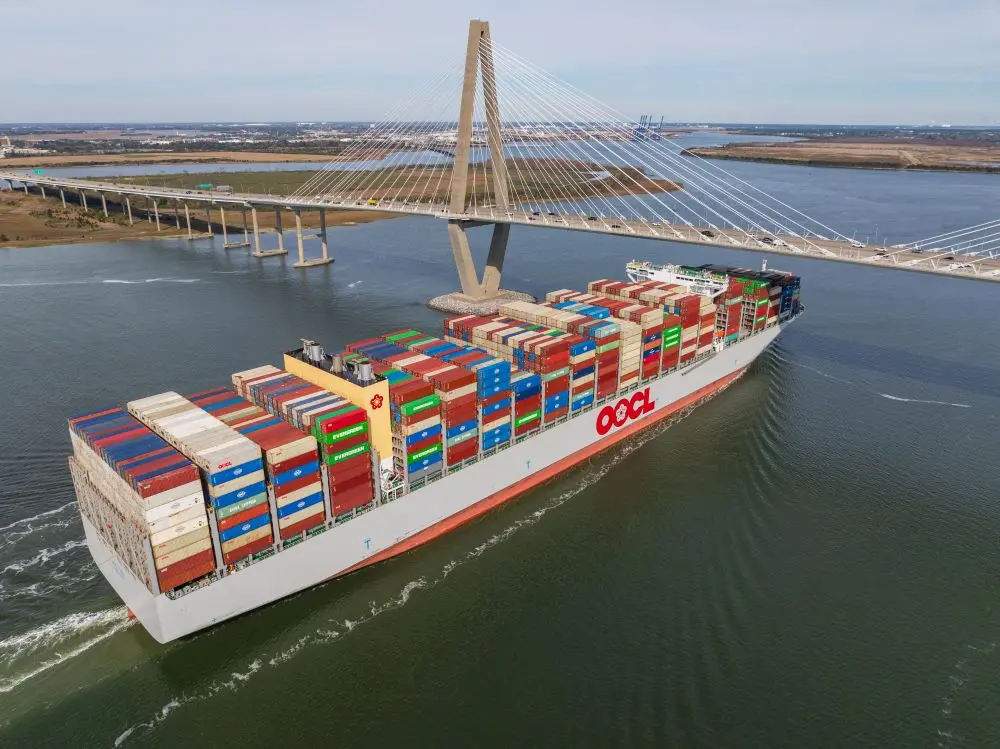
Charleston Stevedoring Company Cuts Manual Port Operations Work 50% With Quickbase
The Client Profile - Charleston Stevedoring Company (CSC)
Charleston Stevedoring Company (CSC) is a Charleston, South Carolina-based maritime transportation and stevedoring company providing container and cargo-handling services at the Port of Charleston. Established in 2020, CSC was formed as a joint venture among Marine Terminals Corporation – East/Ports America, Ceres Marine Terminals, and SSA Atlantic to consolidate container terminal and stevedoring operations and improve the utilization of the Port of Charleston's terminal assets.
Today, CSC serves as the on-premises stevedore for Wando Welch Terminal, North Charleston Terminal, and Hugh K. Leatherman Terminal, providing full-spectrum container stevedoring, container freight station services, and breakbulk handling. CSC handles virtually every type, size, and shape of cargo moving through Charleston by container vessel, with operations centered on safety, productivity, equipment utilization, and rapid vessel turnaround.
Just weeks after beginning operations in May 2020, CSC partnered with Quandary Consulting Group to begin building its operational technology infrastructure in Quickbase. The objective was ambitious: create a centralized platform capable of managing the vessels, containers, labor activity, services, operational data, approvals, reporting, and future billing processes required to run high-volume stevedoring operations.
The Challenges
A Newly Formed Stevedoring Company Needed an Operational System From Day One
CSC's challenge was fundamentally different from a traditional legacy-system modernization, since the company had recently been established, which meant it wasn't simply replacing an outdated application or improving an existing operating model. CSC needed to rapidly build the digital and operational foundation for a newly consolidated stevedoring organization responsible for coordinating complex container and vessel activity at one of the Southeast's major ports.
From the beginning, CSC needed applications capable of managing the interconnected information required to keep port operations moving, including:
- Containers and cargo activity
- Ships, vessels, and voyages
- Operational resources
- Vessel schedules
- Gang and labor activity
- Damaged and out-of-gauge cargo
- Stevedoring and terminal services
- Operational approval workflows
- Management and operational reporting
- Data required to support future billing processes
The original engagement specifically called for Quickbase applications capable of managing and tracking containers, ships, resources, and other critical operational data points. But the broader objective was more significant: CSC needed to establish a centralized operational environment where those individual processes could eventually function as parts of one connected port operation.
Speed was also critical, because CSC wasn't designing systems for a business that would begin operating sometime in the future. The company was already moving cargo, coordinating vessels, managing resources, and serving customers. Quandary Consulting Group therefore needed to build a scalable Quickbase-powered stevedoring operations platform while CSC continued running mission-critical port operations—giving the newly formed organization the structure, visibility, and flexibility required to operate today while creating a foundation that could expand alongside the business.
Creating a Centralized Vessel Scheduling and Job Management Foundation
Every vessel arriving in Charleston introduced a new set of operational requirements. CSC needed a structured vessel scheduling application capable of creating a consistent record for every vessel and voyage the company supported. Quandary Consulting Group designed the Quickbase environment so each vessel record could centralize the core information required to coordinate operations. Rather than treating the vessel schedule as a standalone calendar, the application established a common operational record that other activities could ultimately connect back to.
A critical component of that structure was the creation of a unique job code for each vessel record. As CSC's accounting environment matured, that identifier could provide the connection between work performed at the terminal and the financial information required for downstream billing and reconciliation.
This transformed the vessel record from a simple scheduling entry into the foundation of a much broader operational lifecycle: Vessel → Voyage → Job Code → Containers → Operations → Services → Billing. By connecting activity through a common job identifier, CSC could establish greater traceability between which vessel arrived, what cargo was handled, which operational resources were involved, what services were performed, and ultimately what activity needed to be billed.
CSC also needed strong governance around this foundational data. Access to critical vessel-header information was therefore limited to designated users, helping maintain consistent records and reducing the risk of unauthorized or conflicting changes to information relied upon throughout downstream workflows and the result was a Quickbase-powered vessel scheduling and operations foundation designed not only to coordinate incoming vessel activity, but to connect that activity with the operational and financial processes that followed.
Thousands of Container Movements Needed Structured Tracking
Creating a Single Source of Truth for Container Activity
Container operations are inherently high-volume, with every vessel generating potentially significant volumes of individual cargo movements that must be accurately recorded and connected to the corresponding voyage. For each vessel, CSC needed to track containers that were: Loaded → Discharged → Restowed → Shifted
Quandary Consulting Group designed a dedicated Quickbase container management application to centralize this activity and connect individual container records directly to the corresponding vessel schedule and this relationship was critical. Rather than maintaining vessel information in one location and container movements somewhere else, CSC could create a structured operational hierarchy: Vessel → Voyage → Container → Movement Type → Operational Activity
Centralizing this information also gave CSC a stronger foundation for vessel-volume reporting and operational validation. Teams could compare expected container volumes with recorded activity, identify discrepancies, and maintain a more complete picture of the work performed for each vessel and without those connections, employees would have been forced to manually reconcile container movements against vessel schedules and other operational records—a process that would become increasingly difficult as transaction volumes grew.
By linking container activity directly to vessel and voyage records, Quickbase became CSC's single source of truth for container operations, giving teams a centralized environment for tracking cargo movement while creating the structured data foundation required for downstream reporting, service tracking, and eventually billing.
Digitizing Hourly Gang Activity to Connect Port Operations With Billing
One of the most sophisticated requirements involved capturing the actual work performed during each vessel operation. For CSC, knowing that a vessel arrived or containers moved wasn't enough. The organization needed a detailed digital record of the labor, equipment, and operational activity required to service each vessel and voyage.
CSC needed to capture hourly gang details including:
- Crane activity and utilization
- Gang manning and labor
- Equipment assigned to the operation
- Associated vessel and voyage
- Operational activities performed
- Start and stop times
Quandary Consulting Group designed the Quickbase environment to transform this activity into structured operational records as work occurred, creating a detailed connection between vessel operations and the downstream processes dependent on that information. This data served two particularly important purposes: supporting billing automation and generating customer-facing Terminal Operation Reports (TORs).
The workflow created a traceable path from activity on the terminal to the financial and reporting processes that followed: Vessel/Voyage → Gang Assignment → Labor & Equipment → Operational Activity → Hours Worked → TOR → Billing
That connection was critical. When operational activity isn't captured accurately at the source, employees must reconstruct what happened after the fact—making invoices slower to prepare, more difficult to validate, and more susceptible to discrepancies and by digitizing hourly gang activity in Quickbase, CSC could create a reliable operational record of who performed the work, what equipment was used, what activity occurred, when it happened, and which vessel and voyage it supported.
Instead of reconstructing vessel activity when it was time to report or bill, CSC was building the data required for those processes at the moment the work occurred—creating a stronger foundation for faster billing, more accurate Terminal Operation Reports, and greater visibility into the true resources required for each vessel operation.
Strengthening Container Validation and Maritime Data Governance
CSC also needed a stronger connection between container activity recorded during gang operations and the centralized container records associated with each vessel. Which meant, rather than allowing operational activity and container data to exist as separate sources of information, Quandary designed the Quickbase environment so container moves captured during vessel operations could be validated against the centralized container list.
This created an important operational control. When a container was recorded as part of gang activity, CSC could verify that the container corresponded with the expected vessel and voyage information instead of allowing disconnected or inconsistent records to move downstream unchecked. The resulting process created a more controlled data flow: Centralized Container List → Vessel/Voyage → Gang Activity → Container Move → Validation → Operational Record
By introducing validation closer to the point where work was performed, CSC could identify discrepancies earlier, reduce manual reconciliation, and improve confidence in the operational data used for vessel reporting, Terminal Operation Reports, and future billing processes and this was an important early step toward stronger maritime data governance and operational accuracy. Instead of discovering inconsistencies after vessel activity had already been completed, CSC was creating a system designed to help maintain data integrity as terminal operations occurred.
For a high-volume stevedoring operation, that meant more than cleaner records. It established a more reliable connection between the containers CSC expected to handle, the movements employees recorded, and the operational and financial information generated from that activity.
Capturing Damaged and Out-of-Gauge Containers for Specialized Billing
Not every container moving through a terminal follows a standard operational workflow. CSC needed a dedicated process for identifying and tracking damaged and out-of-gauge (OOG) containers alongside standard container activity. These exceptions matter operationally and financially. Damaged or oversized cargo can require specialized handling, additional labor, equipment, coordination, or other services that may result in additional billable charges.
If those exceptions aren't captured accurately when the work occurs, employees may later need to reconstruct the activity manually—making billing more difficult to validate and increasing the risk that legitimate charges associated with specialized services are delayed or missed entirely. Quandary Consulting Group designed the Quickbase environment so damaged and out-of-gauge container information could become part of CSC's centralized operational record, creating a structured connection between the exception, the associated container, the vessel or voyage, and the services performed.
That created a foundation for a more complete billing workflow: Container → Exception Identified → Damage/OOG Details → Specialized Handling → Additional Services → Billable Activity
Importantly, CSC's requirements anticipated using this structured exception data to support future automated billing. Rather than treating damaged and OOG containers as operational notes that needed to be interpreted later, the system could capture the information in a format capable of supporting downstream financial processes. For CSC, this helped ensure that exception activity became part of the same digital operating environment as standard container movements—strengthening operational visibility while creating a clearer path from specialized work performed on the terminal to the revenue associated with that work.
Service Activity Needed to Connect With Reporting and Scheduling
CSC also provided additional services that needed to be tracked separately. The organization wanted to record service information, applicable alliances, and timestamps so reporting could later be customized around those activities and the system also needed to capture the performance date and time associated with services so teams could understand when the work should occur and whether scheduling conflicts existed.
This created another critical relationship: Vessel → Container → Service → Schedule → Customer → Billing
Management Needed Better Operational Visibility
Building applications was only part of the requirement, CSC also needed dashboards and reporting that allowed different user groups to understand operational activity.
The scope called for:
- Quickbase dashboards by role and user group
- Administrative dashboards
- Historical trend reporting
- Email reminders and notifications
- Native Quickbase forms
- Structured permissions and roles
Which meant that, instead of relying on employees to assemble information manually, leadership needed operational data available in a format that supported faster decision-making.
The Solutions
Building a Connected Maritime Operations Platform in Quickbase
Quandary Consulting Group designed and developed a custom Quickbase maritime operations platform around CSC's newly established business processes.
Quickbase became the centralized operational layer where CSC could structure, connect, validate, and report on information generated across port operations and the architecture connected the major operational entities surrounding vessel activity: Vessel → Voyage → Container → Gang Operation → Service → Exception → Approval → Reporting → Billing
Establishing the Vessel Schedule as the Operational Starting Point
Quandary Consulting Group developed the foundation for a centralized Quickbase vessel scheduling application, giving CSC a consistent way to capture and manage the common information associated with every vessel and voyage handled by the organization and each vessel record could be assigned a unique job code, creating a common identifier that could follow the operation from initial scheduling through downstream operational activity and, eventually, financial processing. This established a connected structure: Vessel → Voyage → Job Code → Container Activity → Gang Operations → Services → Billing
Instead of recreating vessel information across separate applications, spreadsheets, and workflows, CSC teams could reference the same structured vessel record throughout the operational lifecycle. Container movements, gang activity, services, exceptions, and other operational information could ultimately be associated with the corresponding vessel and job code.
The job code was particularly important because it created the foundation for connecting work performed on the terminal with future billing and accounting processes. As CSC's financial environment evolved, operational activity could be traced back to a consistent identifier rather than reconstructed after the fact and by making the vessel schedule a foundational component of the Quickbase environment, Quandary gave CSC more than a tool for tracking arrivals and departures. It created the operational starting point for a connected stevedoring workflow, establishing the data structure required for the container, labor, service, reporting, and financial processes that followed.
Centralizing Container Management
Quandary designed a dedicated container application for tracking containers associated with each vessel. Containers that were loaded, discharged, restowed, or shifted could be maintained within the centralized environment and connected back to the appropriate vessel schedule.
CSC could also upload container lists from port operations systems for individual vessels, reducing the amount of information that needed to be entered manually and this created the foundation for: Container Tracking + Vessel Volume Reporting + Operational Validation
Digitizing Vessel and Gang Operations
The operations application became one of the most important components of the platform, because Quandary structured Quickbase to capture the detailed hourly information associated with vessel operations. This transformed terminal activity into structured operational data, which meant that instead of information being useful only while a vessel was being worked, CSC could retain it for reporting, customer documentation, performance analysis, and future billing automation.
Operational records could include information surrounding: Crane → Gang → Manning → Equipment → Vessel/Voyage → Activity → Start Time → Stop Time
Turning Operational Data Into Customer-Ready Terminal Operation Reports
The Quickbase operational data model was also designed to support the creation of Terminal Operation Reports (TORs) required by CSC's customers and Quandary structured the platform so the information required for TORs could be captured as part of normal terminal operations.
Gang activity, crane usage, equipment, manning, vessel and voyage information, start and stop times, and other operational details were systematically recorded within the same environment. This created a structured source of operational data that could ultimately be used to generate consistent, customer-facing Terminal Operation Reports.
The process created a much tighter connection between: Operations Performed → Activity Captured in Quickbase → Operational Data Validated → Terminal Operation Report Generated → Customer Documentation
This was important because employees no longer needed to rely exclusively on manually reconstructing vessel activity after the fact. The information required for customer reporting was being created at the same time the underlying work was documented and for CSC, this helped transform TOR generation from a disconnected reporting exercise into a natural extension of its digital port operations—reducing duplicate administrative effort, improving reporting consistency, and creating a more reliable record of the labor, equipment, and services delivered during each vessel operation.
Connecting Container Exceptions With Future Billing Automation
Quandary Consulting Group created dedicated Quickbase functionality for damaged and out-of-gauge (OOG) containers, giving CSC a structured way to manage cargo requiring specialized attention, handling, or services. Which meant that rather than tracking these exceptions through separate spreadsheets, notes, or disconnected processes, damaged and OOG activity could be associated directly with the relevant container, vessel, voyage, and operational record.
This created a traceable relationship between the exception and the work it generated: Container → Damage/OOG Exception → Vessel/Voyage → Specialized Handling → Additional Services → Billable Activity
That connection was particularly important because exception handling can create additional labor, equipment usage, operational activity, and customer charges. Capturing those details within the same operational environment gave CSC a more reliable record of why specialized work occurred and which container and vessel generated it. More importantly, the structured data established the foundation for future exception-based billing automation. Instead of relying on employees to identify specialized services after an operation was completed, CSC could move toward using recorded exception activity to trigger or support downstream billing processes.
By connecting container exceptions directly with operational records, CSC created a clearer path from specialized work performed on the terminal to the revenue associated with that work.
Centralizing Service Activity and Operational Scheduling in Quickbase
CSC's service activity was also incorporated into the broader Quickbase port operations architecture, creating a structured environment for managing the services required across vessel and terminal operations. Service records could capture important operational details, including the service being performed, associated alliance relationships, relevant timestamps, scheduling requirements, and performance schedules. Connecting this information within Quickbase gave CSC greater visibility into not only what needed to happen, but also when, where, and for whom the service was required.
The resulting workflow created a clear operational sequence: Service Required → Vessel/Alliance Identified → Performance Window Established → Schedule Evaluated → Conflicts Identified → Service Completed
This structure was particularly valuable for operational scheduling and conflict management. Instead of coordinating service requirements through disconnected communications or manually comparing schedules, CSC could maintain service information alongside the vessel, voyage, and operational data already managed within Quickbase.
Centralizing these relationships also created a stronger foundation for future reporting and financial processes. CSC could more easily understand which services were performed, which vessel or customer they supported, when they occurred, and how those activities related to the broader operation and by incorporating service management into the same Quickbase environment as vessel schedules, containers, gang activity, and operational exceptions, Quandary helped CSC continue building a connected stevedoring operations platform where individual activities could be managed as parts of one coordinated workflow.
Building Data Governance Into Quickbase Approval Workflows
Quandary Consulting Group also introduced structured Quickbase approval workflows to help CSC maintain accurate operational data as information moved through the platform. The applications were designed to minimize unnecessary data entry while giving managers and other designated users the ability to review, validate, and approve critical information before it progressed into downstream workflows.
This created a more controlled process: Operational Data Entered → Validation → Manager Review → Approval → Downstream Reporting & Billing
For CSC, those controls were particularly important because operational records didn't end with the terminal activity they documented. Information surrounding vessels, containers, gang activity, labor, equipment, services, and exceptions could ultimately influence customer-facing Terminal Operation Reports and future billing processes and allowing inaccurate or incomplete information to move downstream would make those processes more difficult to reconcile and could create delays when employees later had to determine what actually occurred.
By embedding approval and validation closer to the point of data entry, CSC could identify discrepancies before they became reporting or financial problems and the result was stronger port operations data governance built directly into the Quickbase workflow—helping CSC improve data accuracy at the source while creating more reliable information for the operational, reporting, and billing processes that followed.
Building Role-Based Dashboards and Reporting
Quandary configured Quickbase dashboards around different user roles and groups. Operational employees could focus on the information required for day-to-day work, managers could monitor performance and administrators could access broader reporting and historical trends; in addition, email reminders and notifications further supported workflow progression and helped employees identify activity requiring attention. This shifted CSC toward a more proactive model of operational management.
Designing for Future Accounting and Billing Integration
Importantly, the system was not designed as an operational dead end. The vessel job-code structure, operational activity records, damaged/out-of-gauge tracking, service information, and other data elements were intentionally positioned to support future financial integration and billing automation.
For a newly established company, building that scalability into the initial architecture reduced the likelihood that CSC would need to redesign its operating systems as volume increased. That created the foundation for an eventual lifecycle such as: Vessel Scheduled → Containers Processed → Operations Recorded → Services Captured → Exceptions Identified → Customer Report Generated → Billing Calculated → Accounting
The Results
50% Reduction in Manual Operational Data Entry
Centralized Quickbase applications, structured forms, container-list uploads, connected records, and reusable vessel information reduced the need to repeatedly enter the same operational information.
40% Faster Vessel Operations Reporting
Capturing gang activity, crane information, equipment, manning, and timestamps in a structured system provided the data required to accelerate preparation of Terminal Operation Reports.
60% Improvement in Container and Vessel Data Visibility
Connecting vessel schedules, container lists, operations, exceptions, and services gave employees a much more complete view of port activity.
35% Reduction in Billing Preparation Time
Capturing billable operational activity at the source reduced the amount of reconstruction required before financial processing.
30% Improvement in Operations Management Productivity
Role-based dashboards, automated notifications, approval workflows, structured forms, and centralized information reduced administrative effort across day-to-day operations.
Connecting the Entire Vessel Operations Lifecycle in Quickbase
The real value of CSC's Quickbase implementation wasn't any single application or workflow. It was the ability to connect the entire operational lifecycle of a container vessel within one structured digital environment. Before a vessel can complete operations and depart the Port of Charleston, an enormous amount of coordinated activity must occur. Vessel schedules, containers, cranes, equipment, labor gangs, services, exceptions, approvals, customer requirements, and operational reporting all need to remain aligned.
Quandary Consulting Group designed a Quickbase-powered maritime operations architecture capable of connecting those activities: Vessel Schedule → Container List → Gang Assignment → Crane & Equipment Activity → Container Moves → Services → Exceptions → Approval → Terminal Operations Reporting → Billing
Quickbase became the operational system connecting those processes and the data generated throughout them; which meant that, Instead of treating vessel scheduling, container management, gang activity, services, and reporting as separate functions, CSC gained a structured foundation for understanding which vessel was being worked, which containers were moving, what work was performed, which labor and equipment resources were involved, which exceptions required attention, what services were delivered, and how that activity ultimately connected to customer reporting and revenue.
Building the Digital Foundation Just Weeks After Launch
The timing of the transformation makes CSC's story particularly compelling. Charleston Stevedoring Company began operations on May 4, 2020. Quandary's engagement was signed on June 18, 2020—just 45 days later.
Which meant that rather than allowing spreadsheets, disconnected processes, and technical debt to become deeply embedded in a newly formed organization, CSC invested almost immediately in creating a scalable digital foundation for its port operations and that early investment gave CSC the opportunity to structure critical operational data and workflows around the way the organization needed to operate from the beginning, while still creating flexibility for future automation, reporting, integrations, and financial processes.
Today, CSC operates across the Port of Charleston's Wando Welch, North Charleston, and Hugh K. Leatherman container terminals, supporting complex vessel and container operations with a continued focus on safety, productivity, efficient resource utilization, and vessel turnaround. The result was a scalable maritime and stevedoring operations management platform built on Quickbase—designed to transform complex terminal activity into structured operational data, connect workflows across the vessel lifecycle, strengthen data governance, improve customer reporting, and create a foundation for continued automation and more efficient billing and ror a company that had been operating for less than two months when the engagement began, CSC wasn't simply modernizing its technology - It was building its digital operating model alongside the business itself.
Our Latest Projects


Services
Industries

© 2026 Quandary Consulting Group 2026. All Rights Reserved.
Privacy Policy