AES Clean Technology Cuts Document Administration Management 50% With Workflow Automation
The Client Profile: AES Clean Technology
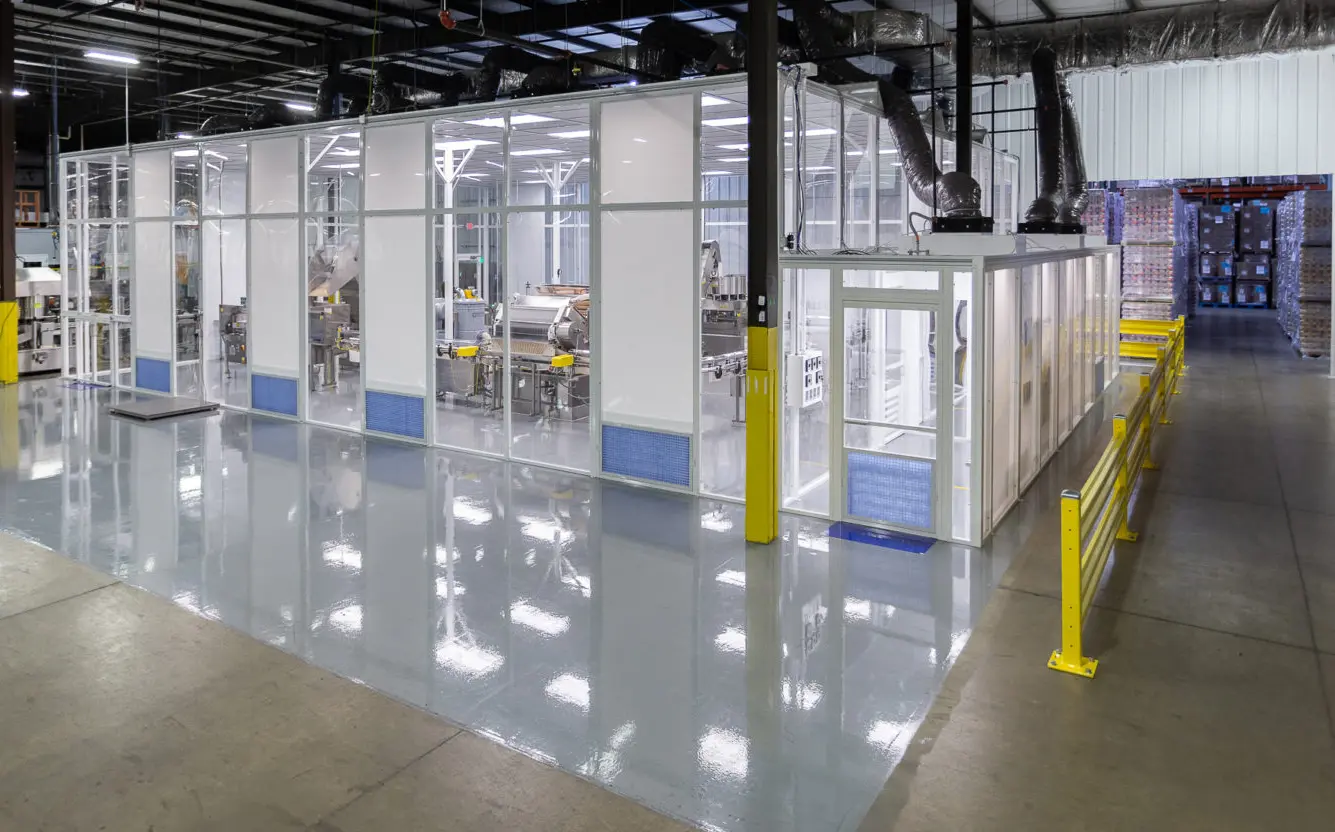
AES Clean Technology is a leading U.S.-based cleanroom design, manufacturing, and construction company headquartered in Montgomeryville, Pennsylvania. Founded in 1986, AES provides end-to-end cleanroom capabilities spanning conceptual planning, architectural design, engineering, manufacturing, construction, installation, and ongoing service for highly regulated industries including biopharmaceuticals, life sciences, medical devices, semiconductors, microelectronics, and advanced manufacturing.
Over four decades, AES has delivered 4,000+ facilities representing more than 10 million square feet of cleanroom space. Its projects support some of the world's most consequential scientific and manufacturing environments, including facilities for organizations such as Genentech, CRISPR Therapeutics, Bristol Myers Squibb, Novartis, Sanofi, Takeda, and Catalent.
Operating at that level requires more than exceptional engineering and construction capabilities. AES also needs a secure, scalable way to manage the enormous volume of drawings, specifications, contracts, project files, approvals, revisions, and supporting documentation generated throughout complex cleanroom projects.
AES partnered with Quandary Consulting Group to modernize that digital document environment and establish a more connected foundation for enterprise content management, external collaboration, workflow automation, and project delivery.
The Challenges
Complex Cleanroom Projects Generated an Increasing Volume of Critical Documents
Every AES cleanroom project requires information to move across multiple phases and stakeholders: Conceptual plans become engineering documents. engineering information informs manufacturing, manufacturing documentation supports construction, drawings are revised, files are reviewed, documents require signatures, external partners need controlled access and project teams need current information in the field.
That creates a document lifecycle resembling: Design → Engineering → Review → Approval → Manufacturing → Construction → Installation → Closeout
At AES's scale, traditional file storage alone was no longer enough, they needed an enterprise document management system capable of supporting the way complex design-build projects actually operate. The requirements extended well beyond storing files. AES needed document versioning, advanced search, sharing, permissions, external collaboration, workflow automation, e-signatures, offline access, mobile functionality, APIs, and integrations.
Document Version Control Was Essential
Cleanroom construction demands extraordinary precision, where employees, contractors, engineers, and other stakeholders need confidence that they are working from the appropriate project documentation.
AES therefore needed structured document versioning capable of maintaining a reliable history as files changed throughout the project lifecycle; without effective version management, project teams risk spending unnecessary time determining which file is current, comparing documents manually, or communicating changes across disconnected channels. For a company delivering highly regulated controlled environments, stronger document control directly supports quality, accountability, and project execution.
Employees Needed to Find Information Faster
AES also needed responsive, filterable search across the content maintained within the platform and as project libraries grow, traditional folder navigation becomes increasingly inefficient. Employees shouldn't need to know exactly where another employee stored a document before they can find it; AES needed users to be able to quickly search and filter project content so drawings, specifications, supporting documentation, and other files could be located when needed. This was especially important for project teams operating under demanding construction schedules where time spent searching for information creates unnecessary friction.
External Collaboration Needed Enterprise-Level Controls
AES projects involve stakeholders outside the organization: Clients, consultants, contractors, engineering partners, and other external participants may need access to selected project information without receiving unrestricted access to AES's broader environment.
The solution therefore needed to support external collaborators as well as external full-seat users, depending on their role and that required sophisticated permission controls; AES needed the ability to make collaboration easier without weakening governance.
File Sharing Needed to Become Simpler
AES required both direct download links and share links, making it easier for users to distribute appropriate information without creating unnecessary manual steps. For project teams regularly exchanging large or complex technical files, streamlined sharing can have a significant cumulative impact and the goal was to make approved information easier to distribute while retaining appropriate access controls.
Large Construction and Engineering Files Created Additional Requirements
AES's engineering and construction operations generate file types and sizes that are considerably more demanding than ordinary office documents. The platform needed to handle large documents and provide preview capabilities across diverse file formats and users needed to review information without unnecessary downloading, application switching, or cumbersome file-management processes, which made large-file support and embedded previews important components of the overall user experience.
Field Teams Needed Access Beyond the Desktop
AES's work does not happen exclusively inside corporate offices amd its teams operate across engineering, manufacturing, construction, installation, and service environments. AES therefore required a document platform capable of supporting: Windows Explorer + Offline Access + iOS + Android
The project requirements specifically called for Windows Explorer integration, offline access with synchronization, and mobile experiences across iOS and Android, which meant project documentation needed to follow employees into the environments where work was actually happening.
Document-Driven Processes Needed Automation
AES also recognized that documents often initiate or participate in broader business processes; i.e., a file may require review, an approval may trigger another action, a document may require an electronic signature and a completed action may need to initiate the next workflow. AES therefore required scheduled and triggered workflows, integrated e-signature capabilities, and RESTful API webhooks capable of initiating actions programmatically. The goal was to transform documents into active components of automated project workflows.
The Solutions
Building a Modern Enterprise Document Management Environment
Quandary Consulting Group designed a comprehensive document-management architecture around the realities of AES Clean Technology's design, manufacturing, and construction operations. Rather than treating document storage as an isolated IT function, the solution connected content management with the larger project lifecycle. This gave AES a foundation for managing content throughout the complete cleanroom project lifecycle.
The architecture supported: Project → Folder Structure → Document → Version → Collaboration → Review → E-Signature → Workflow → Integration → Project Action
Establishing Structured Document Version Control
Document versioning created a more reliable system for managing evolving project files. Instead of treating each revision as an independent document, the environment maintained the relationship between versions, helping teams understand how project information changed over time, which strengthened document governance while making it easier for employees to work with current project information.
For AES, this capability was particularly valuable across engineering, manufacturing, and construction workflows, where document changes can affect downstream work.
Creating Searchable Enterprise Project Content
Quandary introduced responsive, filterable search across the content environment. Employees could locate relevant information based on available search criteria rather than relying exclusively on manually navigating complex folder hierarchies and for an organization managing thousands of project-related files, reducing the time required to locate information created a more productive digital workplace.
This changed the employee experience to: Search → Filter → Identify Document → Take Action
Enabling Secure External Collaboration
The environment also supported controlled collaboration with users outside AES. Depending on the business requirement, external participants could be incorporated as collaborators or full users while complex permission models governed what information they could access and this gave AES a more structured way to work with external project stakeholders without sacrificing enterprise governance.
Introducing Automated and Triggered Document Workflows
The solution extended document management into workflow automation. Scheduled and event-triggered workflows allowed AES to automate processes surrounding project information instead of relying exclusively on employees to recognize when the next action was required and documents could participate in structured workflows where defined events triggered downstream activities.
In addition, the project also incorporated integrated e-signature capabilities, reducing the friction associated with documents requiring formal authorization.
This created a more connected model: Document Created → Review → Approval → Signature → Status Update → Downstream Action
Connecting Systems Through RESTful APIs and Webhooks
One of the most important architectural requirements was extensibility. AES required API webhooks and RESTful API-triggered actions, as well as APIs supporting administrative functions and this meant the document environment wasn't designed as another technology silo.
Which meant, instead, it could participate in a larger enterprise technology ecosystem, allowing events occurring within the document platform to trigger actions elsewhere and enabling other systems to interact programmatically with the content environment. That created the foundation for broader construction technology integration and workflow orchestration.
Automating Project Folder Creation and Management
Quandary also addressed one of the repetitive administrative tasks associated with project setup: creating and maintaining folder structures. Templatized folder creation and management allowed AES to establish standardized content structures for new projects. Which meant, that instead of rebuilding folder hierarchies manually for every engagement, standardized templates helped ensure that projects began with a consistent information architecture. In addition, unique identifiers for files and folders further strengthened the ability to reliably reference content across workflows and integrations.
Supporting Mobile and Offline Construction Operations
The environment was designed to make project information accessible beyond the traditional desktop. AES required support for iOS, Android, Windows Explorer, and offline access with synchronization and for field personnel, offline synchronization was particularly valuable. Employees working in environments with limited connectivity could maintain access to relevant information and synchronize changes when connectivity returned; this brought document management closer to where AES actually performs its work: engineering offices, manufacturing facilities, construction sites, and cleanroom environments.
Strengthening Enterprise Security and Administration
The modernization also addressed the administrative infrastructure required to manage a growing content environment, AES required:
- Complex permission models
- Protected trash/recovery capabilities
- Security controls
- Environment-wide administration
- Administrative APIs
- External-user management
- Reliable internal and vendor support
These requirements established stronger governance around who could access, modify, share, recover, and administer project information.
The Results
60% Faster Document Search and Retrieval
Responsive enterprise search, filtering, embedded previews, standardized folders, and improved content organization reduced the time employees needed to locate project information.
50% Reduction in Manual Document Administration
Templatized folders, automated workflows, share links, version management, triggered actions, and API-driven processes reduced repetitive administrative activity surrounding project documents.
40% Faster Document Review and Approval Cycles
Integrated e-signatures and triggered workflows reduced manual coordination surrounding documents requiring review, approval, and authorization.
70% Reduction in Document Version and Duplication Issues
Structured version management, standardized folder architecture, unique identifiers, and centralized access established greater control over project content.
30% Improvement in Project-Team Productivity
Faster search, mobile access, offline synchronization, embedded previews, standardized content structures, and workflow automation collectively reduced the administrative friction associated with managing project information.
Connecting Documents With the Complete Cleanroom Project Lifecycle
For AES Clean Technology, enterprise document management wasn't simply about finding a better place to store files. AES manages highly complex projects where information moves continuously between design, engineering, manufacturing, construction, installation, external partners, clients, and field teams.
The documents supporting those projects needed to move just as effectively and Quandary Consulting Group helped AES establish a more connected architecture: Project → Standardized Folder → Document → Version Control → Collaboration → Review → E-Signature → Automated Workflow → API Integration → Field Access
- Employees gained faster access to information.
- External stakeholders gained controlled collaboration capabilities.
- Project documentation became accessible from desktop and mobile environments.
- Offline synchronization extended access into field operations.
- Automated workflows reduced administrative coordination.
- E-signature connected authorization directly with document processes.
- APIs and webhooks created a foundation for connecting document activity with AES's broader technology ecosystem.
The result was a more scalable enterprise document management and construction workflow automation environment designed to support the same precision, control, and operational excellence AES brings to the cleanrooms it designs and builds; for a company responsible for more than 4,000 facilities and 10 million square feet of cleanroom space, modernizing the flow of project information created an important digital foundation for continued growth.
Our Latest Projects

Services
Industries
© 2026 Quandary Consulting Group 2026. All Rights Reserved.
Privacy Policy