Artificial Intelligence (AI)
Beyond Automation | The Strategic Value of a AI Sales Agent powered by Workato


Sales organizations today are operating under intensifying pressure to do more with less—accelerate pipeline velocity, deliver highly personalized buyer experiences, and improve conversion rates—all without materially increasing headcount.
Yet most revenue teams remain constrained by fragmented systems, manual qualification processes, and inconsistent follow-up. The result is a sales motion that is reactive rather than proactive, operationally heavy rather than insight-driven, and ultimately misaligned with the expectations of modern buyers.
This is precisely where AI sales agents are beginning to redefine how high-performing sales organizations operate.
Rather than simply automating tasks, AI sales agents introduce a new operating model—one in which intelligent, autonomous systems augment human sellers, orchestrate workflows across the revenue stack, and enable real-time, context-aware engagement at scale.
In this guide, we take a practical, enterprise-focused view of AI sales agents: what they are, how they work, where they create value across the funnel, and how organizations can deploy them effectively. We also explore why platforms like Workato are emerging as the ideal foundation for building and scaling AI-driven sales operations.
What Are AI Sales Agents?
AI sales agents are intelligent, autonomous—or semi-autonomous—software entities designed to execute sales-related activities using a combination of artificial intelligence technologies, including large language models (LLMs), machine learning, natural language processing (NLP), and workflow orchestration.
However, it’s important to distinguish AI agents from traditional automation. Traditional automation is deterministic—it follows predefined rules and executes linear workflows.
AI agents, by contrast, are probabilistic and context-aware.
They can:
- Interpret unstructured data (emails, conversations, CRM notes)
- Understand buyer intent and sentiment
- Make decisions based on dynamic inputs
- Orchestrate actions across multiple systems in real time
In practice, this means AI sales agents don’t just do tasks—they manage outcomes. They operate as digital teammates embedded within the sales motion, capable of qualifying leads, engaging prospects, progressing deals, and maintaining data integrity across the revenue ecosystem.
What are the Types of AI Sales Agents
AI sales agents can be categorized based on their role within the sales funnel and their level of autonomy.
Lead Generation & Prospecting Agents
These agents focus on top-of-funnel pipeline creation. They continuously identify target accounts, enrich lead data, and detect buying signals across internal and external sources. More advanced implementations dynamically prioritize outreach based on intent data and engagement patterns.
Conversational AI Agents
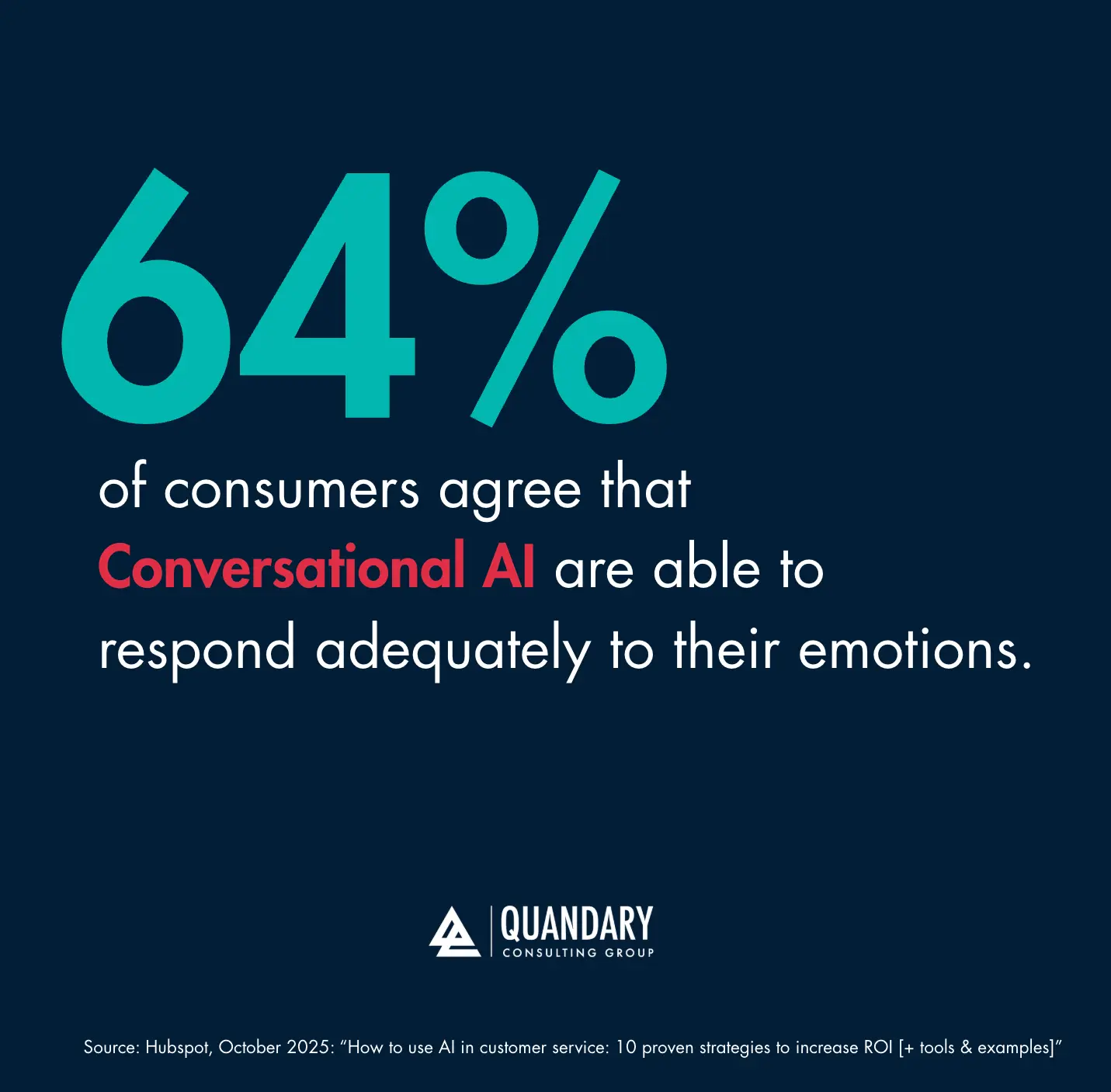
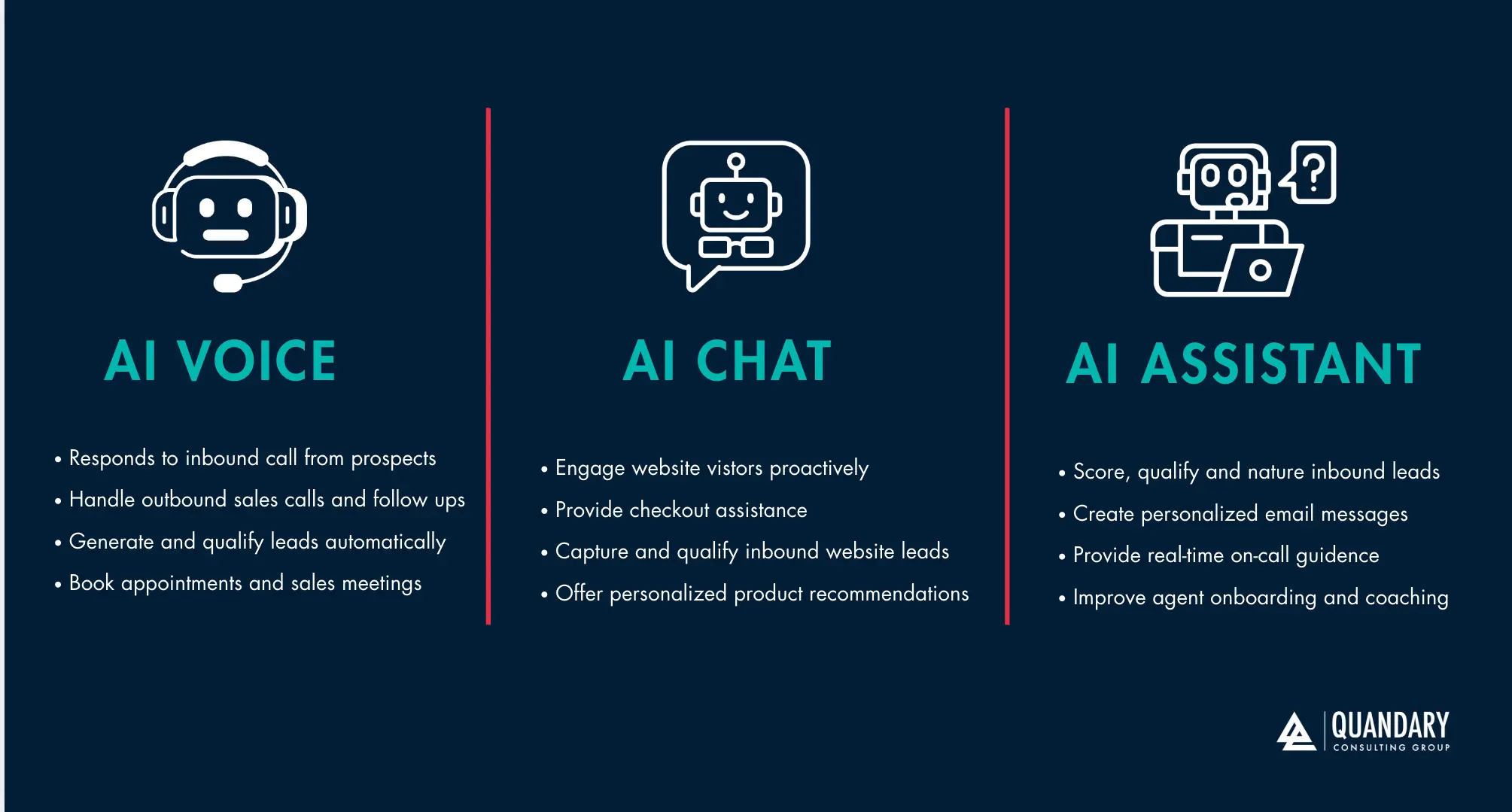
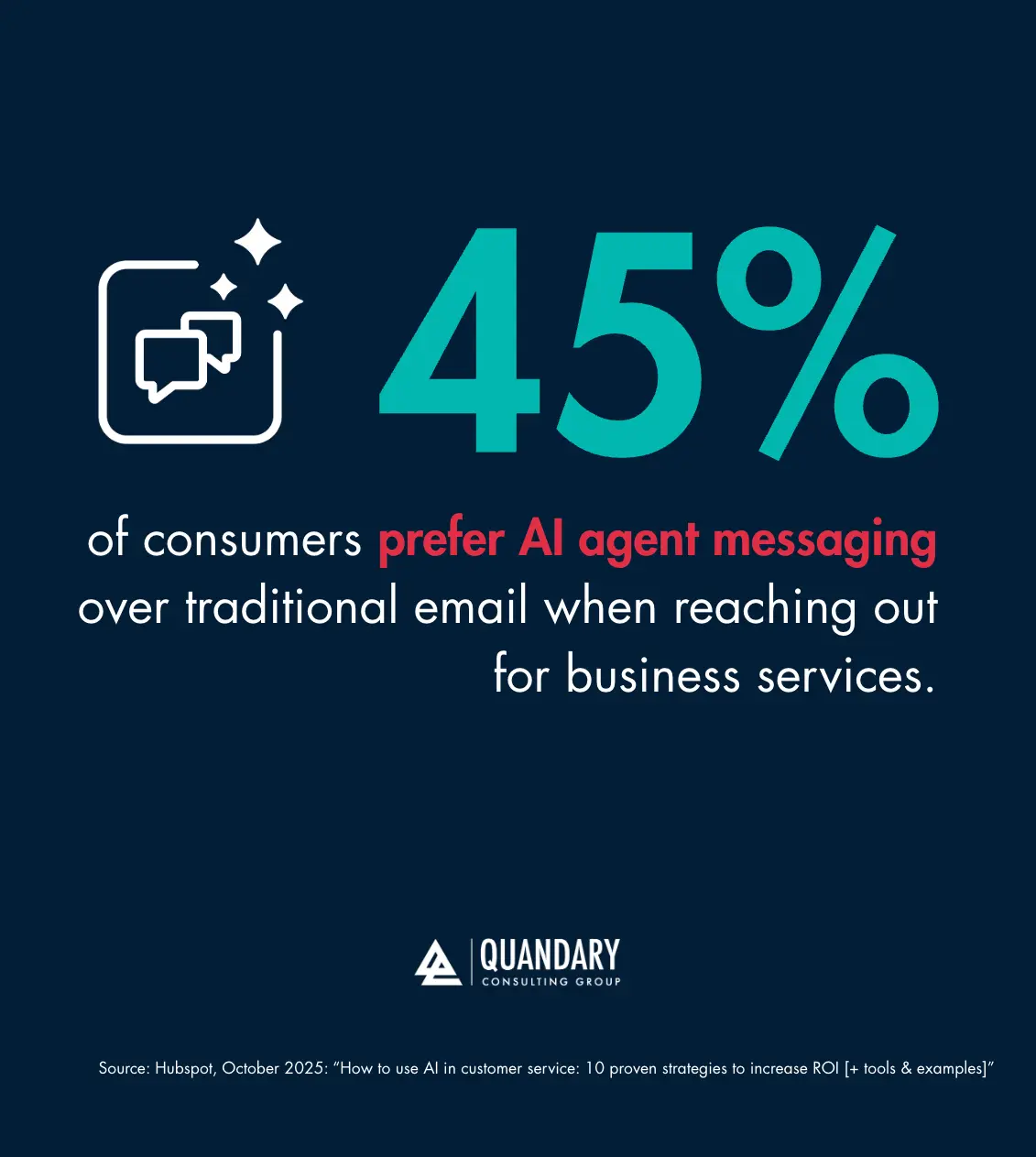
Operating across channels such as email, chat, SMS, and messaging platforms, these agents engage directly with prospects. They maintain context across interactions, respond intelligently, and guide buyers through early-stage qualification—effectively acting as a first line of engagement for inbound and outbound motions.
Sales Operations & RevOps Agents
These agents function behind the scenes to ensure operational rigor. They enforce routing logic, maintain CRM hygiene, manage SLAs, and orchestrate workflows across sales, marketing, and customer success systems—areas where manual processes often introduce risk and inefficiency.
Deal Acceleration & Follow-Up Agents
Focused on pipeline progression, these agents monitor deal activity, identify stalled opportunities, and trigger next-best actions—whether that’s sending follow-ups, alerting account executives, or initiating cross-functional workflows to unblock deals.
The Business Impact of AI Sales Agents
When implemented strategically, AI sales agents drive measurable impact across the revenue organization:
Increased Sales Productivity: By offloading administrative and repetitive tasks, sales reps can focus on high-value activities such as relationship building and closing.
Faster Lead Response Times: Immediate engagement—often within seconds—dramatically improves conversion rates and ensures no opportunity is missed.
Higher Quality Pipeline: AI-driven qualification leverages multiple data sources and behavioral signals, leading to better prioritization and stronger opportunities.
Improved Data Integrity and Forecasting: Automated updates reduce human error and ensure CRM data remains accurate, directly improving pipeline visibility and forecast reliability.
Scalable Personalization: AI agents enable highly tailored outreach and engagement at a scale that would be impossible to achieve manually.
High-Value Use Cases Across the Sales Lifecycle
AI sales agents can be deployed across the entire revenue lifecycle, including:
Inbound Lead Qualification: Instant qualification, enrichment, and routing based on predefined criteria and real-time signals
Outbound Prospecting: Target account identification, personalized outreach generation, and engagement tracking
Meeting Scheduling: Automated coordination of calendars, eliminating friction in booking
Deal Monitoring: Proactive identification of stalled deals and automated follow-ups
RevOps Automation: Enforcement of process consistency across systems and teams
The common thread across these use cases is orchestration—AI agents connecting data, decisions, and actions across systems in a seamless, end-to-end flow.
AI Sales Agents & Their Capabilities
AI sales agents are artificial intelligence–powered tools designed to support sales professionals across the entire sales cycle. By leveraging advanced machine learning and data analysis, these agents help teams automate routine work, uncover insights, and make smarter, faster decisions.
At their core, AI sales agents enhance how sales teams operate. They can analyze large volumes of data in real time, identify patterns, and translate those insights into actionable recommendations. This allows sales professionals to prioritize the right opportunities, personalize engagement, and continuously refine their approach.
AI sales agents are commonly used for lead qualification, prospecting, personalized outreach, forecasting, customer segmentation, and performance analysis. Their ability to process data at scale enables teams to focus on high-impact activities and drive better outcomes.
Ultimately, AI sales agents are not a replacement for sales professionals—they amplify their effectiveness. By combining human expertise with AI-driven insights, organizations can improve efficiency, strengthen customer relationships, and accelerate revenue growth.
Key Capabilities of AI Sales Agents
Data analysis: Rapidly processes large datasets to uncover insights on customer behavior, market trends, and sales performance.
Lead qualification: Uses machine learning to identify high-quality prospects, helping teams focus on leads most likely to convert.
Personalization: Delivers tailored messaging and recommendations based on customer behavior, preferences, and history.
Automation: Handles repetitive tasks such as data entry, lead scoring, and outreach, freeing up time for strategic work.
Predictive analytics: Forecasts trends, anticipates customer needs, and highlights opportunities so teams can act proactively.
Dynamic pricing: Adjusts pricing strategies based on market conditions, competition, and customer behavior to maximize revenue.
Customer insights: Provides a deeper understanding of customer sentiment, preferences, and feedback.
Emotion recognition: Detects tone and emotional cues in interactions, enabling more empathetic and effective communication.
Conversational intelligence: Analyzes calls and meetings to identify key themes, objections, and opportunities for coaching.
Social media listening: Monitors online conversations to surface leads, track sentiment, and enable timely engagement.
Automated meeting scheduling: Streamlines scheduling by coordinating calendars and availability, reducing back-and-forth communication.
How AI Sales Agents Work
Deploying AI sales agents effectively requires more than just enabling a model—it requires a structured approach:
Define a High-Impact Use Case: Start with a focused workflow (e.g., inbound qualification or follow-up automation) where speed and consistency are critical.
Integrate Systems and Data*: AI agents are only as effective as the data they can access. This includes CRM platforms, marketing automation tools, enrichment providers, and communication channels.
*This is where Workato becomes particularly valuable. Its enterprise-grade iPaaS foundation enables secure, scalable integration across hundreds of applications—creating the connected environment AI agents require to operate effectively.
Design Agent Logic and Guardrails: Define objectives, decision frameworks, prompts, and escalation paths. Establish clear boundaries for autonomy.
Introduce Human-in-the-Loop Controls: Especially in early deployments, human oversight ensures quality, compliance, and trust.
Continuously Monitor and Optimize: Measure performance against KPIs and refine agent behavior over time.
What are business leaders’ expectations of AI in customer engagement?
According to a report put out by LivePerson;
- 84% of executives use the technology to interact with clients.
- 88% believe automated systems for quick resolutions and answers boost user loyalty
- 91% of businesses are positive about using AI for consumer engagement.
- 96% believe Generative AI will enhance customer interactions.
Companies also consider artificial intelligence as a solution for other daily challenges they face:
- 67% for faster information or answers.
- 62% to reduce wait times.
- 53% for more accurate data.
- 42% to create consistent experiences.
- 41% for personalized responses.
- 28% to lower operational costs.
Why Workato is the Ideal Platform for AI Sales Agents
A critical success factor for AI sales agents is not just intelligence—but orchestration. Workato stands out as a leading platform for building and scaling AI agents because it combines:
- Enterprise-grade integration (iPaaS)
- Agent builder capabilities for custom AI agents
- Pre-built, production-ready AI sales agents
- Model Context Protocol (MCP) support for structured AI interactions
This allows organizations to move beyond isolated AI experiments and instead deploy agents that operate seamlessly across CRM, marketing, support, and data systems.
In short, Workato enables AI agents to function as part of a unified revenue engine—not as disconnected point solutions.
To read about Workato and their approach to AI Sales Agents, visit: AI Sales Agents: The Complete Guide
How to Get Started
Organizations that succeed with AI sales agents typically follow a pragmatic, phased approach:
- Map existing workflows and identify friction points
- Define clear KPIs tied to business outcomes
- Start with limited-scope deployments
- Ensure data quality and system connectivity
- Scale incrementally based on proven value
Equally important is aligning AI initiatives with broader RevOps strategy—ensuring that automation, data, and process improvements work together cohesively.
AI sales agents are not a future concept—they are rapidly becoming a core component of modern revenue operations. Organizations that embrace this shift are seeing faster sales cycles, improved efficiency, and more consistent execution across their go-to-market teams.
However, success is not driven by AI alone. It requires the right combination of strategy, process design, and technology enablement.
Where Quandary Comes In
At Quandary Consulting Group, we help organizations move from AI experimentation to real, production-grade outcomes. As a Workato Partner with certified, onboarded experts, we specialize in:
- Designing scalable AI agent strategies aligned to RevOps goals
- Implementing and integrating Workato across complex tech stacks
- Building both pre-configured and custom AI sales agents
- Ensuring governance, data integrity, and long-term scalability
If you're exploring how to operationalize AI within your sales organization—or want to accelerate existing initiatives—our team can help you define the roadmap and execute with confidence.
→ Connect with Quandary to start building AI-powered sales operations that actually scale.
Additional Resources
Top FAQs about AI Sales Agents
1. What is an AI sales agent?
An AI sales agent is an intelligent software system that uses artificial intelligence, machine learning, natural language processing (NLP), and large language models (LLMs) to automate and optimize sales activities.
Unlike traditional automation, AI sales agents can understand context, analyze customer intent, make informed decisions, and take action across multiple business systems. They help organizations qualify leads, personalize outreach, update CRM records, schedule meetings, and accelerate revenue growth while allowing sales teams to focus on building relationships and closing deals.
2. How do AI sales agents work?
AI sales agents connect to CRM platforms, marketing automation tools, communication channels, and business applications to analyze customer data and execute sales workflows.
Using AI models and workflow orchestration, they identify opportunities, qualify leads, recommend next-best actions, generate personalized communications, and automate repetitive tasks. Enterprise platforms like Workato enable AI agents to securely orchestrate workflows across hundreds of applications while maintaining governance and compliance.
3. What is the difference between AI sales agents and traditional sales automation?
Traditional sales automation follows predefined rules and executes repetitive tasks exactly as programmed. AI sales agents go much further by understanding natural language, interpreting customer behavior, learning from interactions, and adapting their recommendations based on changing circumstances. Instead of simply automating tasks, AI sales agents make intelligent decisions that improve sales outcomes and customer engagement.
4. What tasks can AI sales agents automate?
AI sales agents can automate many time-consuming sales activities, including:
- Lead qualification and scoring
- Prospect research and enrichment
- Personalized email generation
- CRM updates and data entry
- Meeting scheduling
- Follow-up reminders
- Pipeline monitoring
- Opportunity routing
- Sales forecasting
- Customer engagement across chat, email, SMS, and voice
This automation allows sales professionals to spend more time selling and less time on administrative work.
5. What are the benefits of AI sales agents?
Organizations implementing AI sales agents often experience:
- Faster lead response times
- Higher conversion rates
- Improved CRM data quality
- Increased sales productivity
- More personalized customer interactions
- Better pipeline visibility
- More accurate forecasting
- Reduced manual work
- Greater sales consistency
- Scalable revenue operations
Together, these improvements help organizations accelerate revenue growth while improving operational efficiency.
6. Can AI sales agents replace human sales representatives?
No. AI sales agents are designed to augment—not replace—sales professionals. They automate repetitive work, surface insights, and recommend actions while human sellers focus on relationship building, negotiation, strategic conversations, and closing complex deals. The strongest sales organizations combine AI-powered automation with human expertise.
7. What industries benefit most from AI sales agents?
AI sales agents deliver value across nearly every industry, especially organizations with high lead volumes, complex sales processes, or large customer bases.
Common industries include:
- Healthcare
- Financial services
- Technology and SaaS
- Manufacturing
- Construction
- Professional services
- Telecommunications
- Logistics
- Insurance
- Retail
Any organization seeking faster sales cycles, better customer engagement, and improved operational efficiency can benefit from AI sales agents.
8. What systems can AI sales agents integrate with?
Modern AI sales agents integrate with a wide range of enterprise technologies, including:
- Salesforce
- Microsoft Dynamics 365
- HubSpot
- Microsoft 365
- Google Workspace
- Workato
- Slack
- Microsoft Teams
- SAP
- Oracle
- NetSuite
- Marketo
- Outreach
- Salesloft
- Gong
- Zoom
- LinkedIn Sales Navigator
Integration enables AI agents to orchestrate actions across the entire revenue ecosystem instead of operating in isolated applications.
9. How do AI sales agents improve lead qualification?
AI sales agents evaluate both structured and unstructured data, including CRM records, website activity, email engagement, firmographic data, buying signals, and customer interactions. By analyzing this information in real time, they score leads more accurately, prioritize the highest-value opportunities, and automatically route prospects to the appropriate sales representatives, improving both efficiency and conversion rates.
10. Are AI sales agents secure for enterprise organizations?
Yes. Enterprise AI sales agents can be deployed with robust security controls, governance policies, role-based access, audit logging, encryption, and human approval workflows. Platforms such as Workato support enterprise-grade security, allowing organizations to safely deploy AI while maintaining compliance with internal governance standards and industry regulations.
11. What is the best platform for building AI sales agents?
The best platform depends on your business requirements, but organizations with complex enterprise environments often choose Workato because it combines AI agent development with enterprise integration, workflow automation, API management, and Model Context Protocol (MCP) support.
This enables AI agents to securely interact with hundreds of business applications while maintaining governance and scalability.
12. How long does it take to implement AI sales agents?
Implementation timelines vary depending on the complexity of the environment and the use case. Many organizations begin with a focused pilot—such as inbound lead qualification or automated follow-up—and can launch within a few weeks. Enterprise-wide AI sales agent deployments involving multiple systems, governance frameworks, and custom workflows typically take several months and are rolled out in phases.
13. What is the ROI of AI sales agents?
Organizations commonly see measurable improvements in:
- Sales productivity
- Pipeline velocity
- Lead conversion rates
- CRM accuracy
- Forecast accuracy
- Customer engagement
- Revenue growth
- Administrative time savings
Actual ROI depends on the maturity of the sales organization, the quality of available data, and how effectively AI agents are integrated into existing workflows.
14. How does Workato support AI sales agents?
Workato provides the enterprise integration and orchestration foundation AI sales agents need to operate effectively. It connects CRM platforms, marketing systems, communication tools, ERP applications, and data sources into a unified environment. Organizations can build custom AI agents, deploy pre-built sales agents, automate workflows, and securely scale AI initiatives without creating disconnected point solutions.
15. How can Quandary Consulting Group help implement AI sales agents?
Quandary Consulting Group helps organizations move beyond AI experimentation by designing, implementing, and optimizing enterprise AI sales agent solutions.
As a certified Workato Partner, Quandary develops AI strategies aligned to business goals, integrates AI across complex technology ecosystems, builds custom and pre-configured AI sales agents, and establishes governance frameworks that ensure long-term scalability, security, and measurable business outcomes.
16. What are the first steps to implementing AI sales agents?
Successful AI sales agent initiatives typically begin with:
- Assessing current sales workflows
- Identifying repetitive, high-value automation opportunities
- Evaluating CRM and data quality
- Defining measurable business outcomes
- Selecting the right AI platform
- Implementing governance and security controls
- Launching a focused pilot
- Measuring results before expanding across the organization
A phased approach minimizes risk while demonstrating measurable value early in the implementation process.
17. What are AI sales agents used for?
AI sales agents are used to automate and improve sales processes across the customer journey. Common use cases include lead qualification, prospecting, personalized outreach, meeting scheduling, CRM updates, opportunity management, forecasting, follow-up automation, pipeline monitoring, and sales analytics. By handling repetitive tasks and providing real-time insights, AI sales agents help sales teams sell more effectively and close deals faster.
18. Can AI sales agents personalize customer outreach?
Yes! AI sales agents analyze CRM data, previous conversations, customer behavior, company information, buying signals, and engagement history to generate highly personalized emails, messages, and recommendations. This enables organizations to deliver relevant communications at scale while improving response rates and customer experience.