Artificial Intelligence (AI)
Workato Q1 2026: From Automation to AI Execution

TL;DR
- Enterprise automation is evolving into AI execution, where agentic systems use real-time context to reason, make decisions, and coordinate actions across business applications.
- Workato combines enterprise integration, AI orchestration, prebuilt agents, and Model Context Protocol capabilities to connect fragmented systems and provide AI with governed access to the data and tools required for execution.
- Organizations seeking to scale AI successfully should strengthen their integration and data foundations, prioritize clearly defined use cases, and establish robust governance, security, and performance controls.
In Q1 2026, enterprises are moving beyond workflow automation into a new paradigm: AI execution—where systems don’t just automate tasks, but understand context, make decisions, and act autonomously. This shift is happening faster than most realize. Industry forecasts suggest that nearly 50% of enterprise applications will include AI agents within the next year, signaling a massive transition toward AI-driven operations.
At the center of this transformation is a new enterprise architecture powered by:
- Agentic AI
- Model Context Protocol (MCP)
- Prebuilt AI agents
- And platforms like Workato that unify it all
This is the foundation of the autonomous enterprise.
The Shift: From Automation to AI Execution
For years, automation was about efficiency:
- Reducing manual work
- Streamlining processes
- Increasing speed
But efficiency is now expected. What differentiates modern enterprises is their ability to execute intelligently:
- Systems that understand real-time context
- AI that can make decisions across workflows
- And platforms that can act across the business
This is where MCP becomes critical and without context, automation is limited. With Model Context Protocol, AI systems can securely access enterprise data and act across applications while maintaining governance and control.
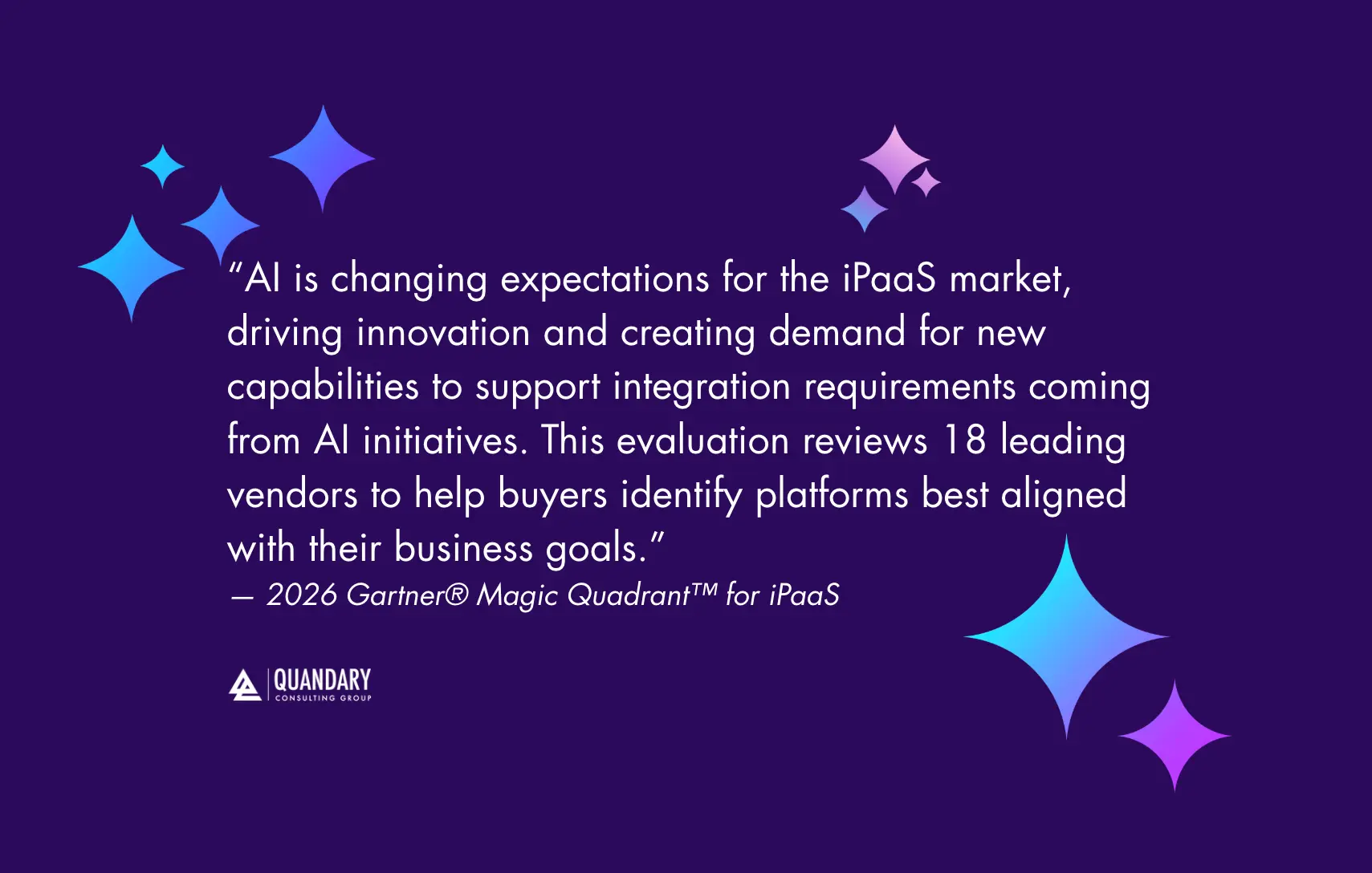
Key Trends in AI-Powered Automation (Q1 2026)
Enterprises are prioritizing AI execution over basic automation.
Organizations are shifting to intelligent, context-aware systems powered by MCP, enabling real-time decision-making and autonomous execution.
Agentic AI is redefining enterprise workflows.: AI agents can now reason, act, and collaborate across systems, and adoption is accelerating as enterprises embed agents directly into business applications.
MCP is becoming the backbone of enterprise AI: Model Context Protocol enables secure, governed, and scalable context sharing, and is emerging as a standard layer for connecting AI with enterprise systems and tools.
Prebuilt AI agents are accelerating time-to-value: Organizations can deplowith MCP, reducing development time and accelerating enterprise AI adoption.y ready-to-use AI agents integrated
Integration platforms (iPaaS) are becoming strategic infrastructure: iPaaS is now the default choice for enterprise integration, forming the backbone for AI orchestration and execution.
Hyper-automation is evolving into autonomous execution: Enterprises are combining AI, orchestration, and MCP-enabled context to move toward fully autonomous operations.
Why Workato Is Leading the AI Automation Market
From integration platform to AI execution engine: Workato enables organizations to move from simple automation to agentic AI that can reason, act, and orchestrate work across the enterprise.
MCP (Model Context Protocol) enables contextual AI at scale: Workato’s Enterprise MCP provides context, trust, and accuracy for AI agents, enabling them to operate securely across business systems.
Prebuilt AI agents accelerate enterprise adoption: Organizations can deploy prebuilt, MCP-enabled AI agents to automate complex processes quickly and efficiently.
Agentic orchestration transforms workflows into execution systems: Workato enables AI agents to reason and act across applications, driving real-time, intelligent execution.
Enterprise-grade scale and adoption: Workato is trusted by thousands of organizations, including major global enterprises, to power mission-critical operations.
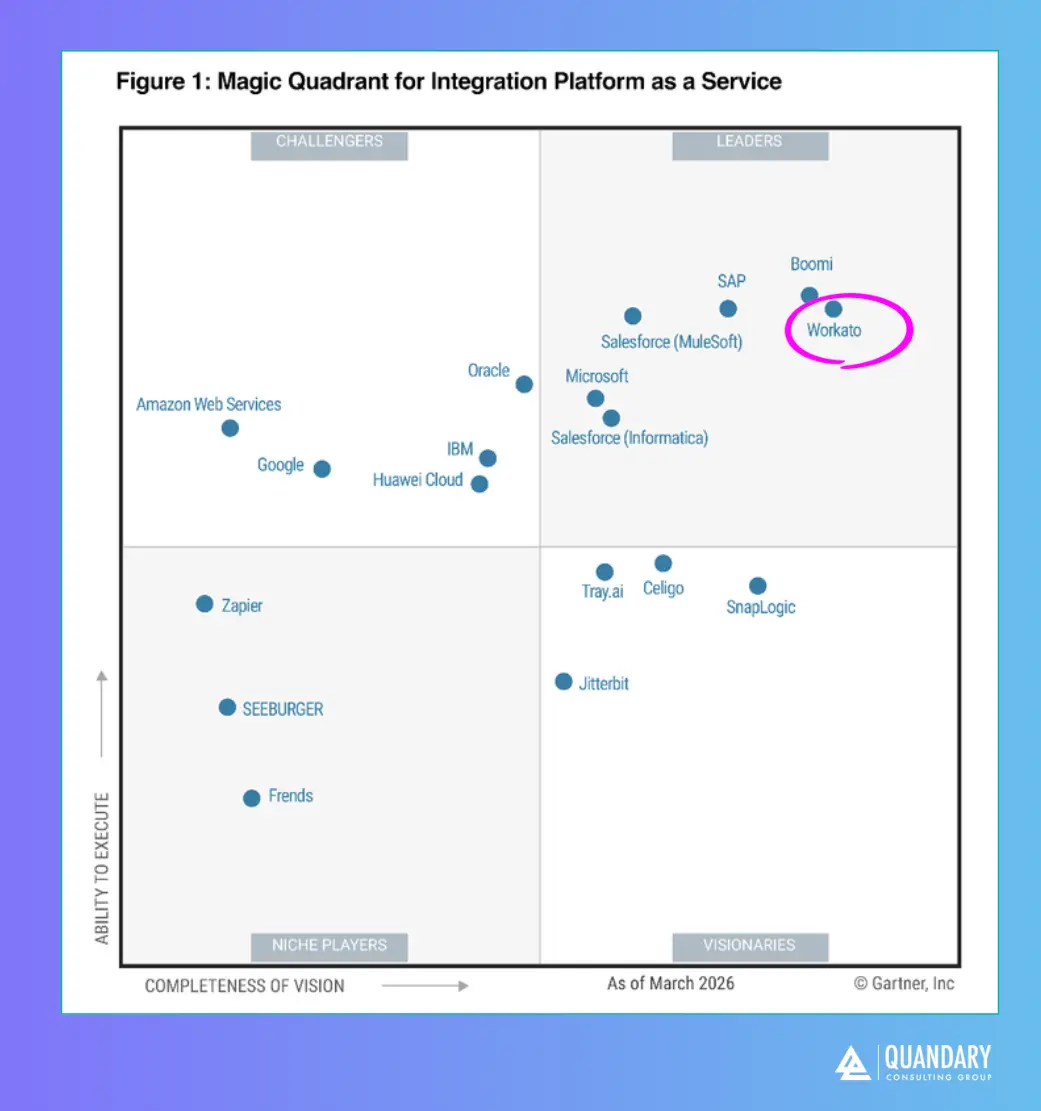
Recognized market leadership: Workato has been named a Leader in the Gartner Magic Quadrant for iPaaS for eight consecutive years, validating both execution and vision.
From Automation to AI Execution: What This Means for Enterprises
Automation is no longer enough: Enterprises now require context-aware systems powered by MCP, enabling intelligent decision-making and real-time execution.
AI agents are becoming digital coworkers: AI adoption is accelerating, with agents increasingly embedded into workflows to execute business processes autonomously.
MCP is enabling enterprise-ready AI execution: MCP allows AI systems to securely access shared enterprise data and tools, enabling scalable and governed automation.
Operational agility is now a competitive advantage: Organizations leveraging AI + MCP-enabled context can respond faster and execute more effectively.
Governance and security are critical: Notably, over 40% of AI agent projects are expected to fail by 2027 due to poor governance and unclear ROI—highlighting the importance of strong foundations.
Strategic Focus Areas for 2026
- Adopt AI-first automation strategies: Move toward intelligent, MCP-enabled execution systems powered by agentic AI.
- Invest in integration and data foundations: Use platforms like Workato to connect systems and enable MCP-driven context sharing.
- Leverage low-code/no-code automation tools: Empower teams to deploy AI agents and workflows efficiently at scale.
- Operationalize MCP for contextual AI: Implement MCP to unify context across systems and improve AI accuracy and reliability.
- Scale with governance in mind: Ensure secure, compliant AI execution frameworks, reducing risk and increasing ROI.
Our Final Thoughts: The Autonomous Enterprise Is Already Here
This is not a future state this is is happening now. Enterprises are evolving from:
- Manual work → Automated workflows
- Automated workflows → Intelligent systems
- Intelligent systems → AI-executing operations powered by MCP
The difference today is scale and capability. AI agents are no longer experimental—they are becoming embedded, operational, and accountable systems across the enterprise.
What defines the next generation of leaders is not automation maturity—It is execution capability and is driven by:
- Agentic AI
- Model Context Protocol (MCP)
- Prebuilt AI agents
- And platforms like Workato
The organizations that move first will not just be more efficient, they will be fundamentally more capable, more adaptive, and more competitive. The question is no longer whether AI will transform your business, but whether your business is ready to execute with it.
How Quandary Consulting Group Helps Enterprises Execute
As a Workato partner, Quandary Consulting Group, helps organizations move from automation to AI execution at scale
- Workato-led integration and automation strategies
- MCP-enabled AI architecture and governance
- Deployment of prebuilt and custom AI agents
- End-to-end intelligent workflow orchestration
Our focus is simple: Turn fragmented systems into connected, context-aware, AI-driven operations. Interesting in learning more how Quandary can help your organization?
Schedule your discovery call with one of Quandary's Workato experts today!
Top FAQs about Q1 Workato Developments & Announcements
What is AI execution in enterprise automation?
AI execution refers to automation systems that can analyze data, make decisions, and complete actions without human intervention. Unlike traditional workflow automation, AI execution uses agentic AI to drive real-time outcomes, making it essential for modern enterprises seeking intelligent automation and scalable digital transformation.
How is Workato used for AI-powered automation?
Workato is an enterprise iPaaS platform that enables organizations to integrate applications, automate workflows, and orchestrate AI-driven processes. It supports low-code development and agentic AI capabilities, allowing businesses to build intelligent automation systems that operate across departments and data sources.
What is agentic AI and why does it matter?
Agentic AI refers to autonomous AI systems that can reason, make decisions, and take action across workflows. It matters because it transforms automation from static processes into dynamic, self-operating systems, enabling organizations to achieve real-time execution and improve operational efficiency.
What is MCP (Model Context Protocol)?
The Model Context Protocol is an emerging standard that lets AI agents securely connect to external systems, retrieve information, and take actions through defined endpoints. MCP helps ensure consistency, governance, and observability when agents interact with business systems.
Why is automation no longer enough for enterprises?
Automation alone focuses on task efficiency, but modern enterprises require systems that can adapt and make decisions in real time. AI execution enhances automation by enabling intelligent workflows, helping organizations respond faster to market changes and improve business outcomes.
What are the benefits of using an iPaaS like Workato?
An iPaaS like Workato centralizes integrations, automates workflows, and connects data across systems. It enables scalability, reduces manual effort, and supports AI-driven automation, making it a critical foundation for enterprises pursuing digital transformation and operational efficiency.
What challenges prevent companies from adopting AI automation?
The most common challenges include fragmented systems, siloed data, and lack of integration infrastructure. Without a unified platform like Workato, organizations struggle to scale AI automation and achieve seamless workflow orchestration across business processes.
How does AI automation improve business operations?
AI automation improves operations by reducing manual tasks, accelerating decision-making, and enabling real-time execution. It enhances productivity, minimizes errors, and allows organizations to scale processes efficiently using intelligent workflows and AI-driven orchestration.
What industries benefit most from AI-powered automation?
Industries such as healthcare, finance, SaaS, and retail benefit significantly from AI-powered automation. These sectors rely on real-time data, complex workflows, and compliance, making intelligent automation essential for improving efficiency, customer experience, and operational scalability.
How can companies get started with Workato and AI execution?
Companies can start by assessing their integration and automation maturity, then implementing Workato to connect systems and automate workflows. Partnering with experts like Quandary Consulting Group helps accelerate adoption, ensure governance, and enable scalable AI-driven automation.
What is the future of enterprise automation?
The future of enterprise automation is autonomous, driven by AI execution and agentic workflows. Organizations will move from manual processes to fully intelligent systems that operate independently, enabling faster decision-making, greater efficiency, and continuous innovation.