Procurement
7 Procurement Trends Reshaping Enterprise Operations in 2026


TL;DR:
The Biggest Procurement Trends in 2026
- Procurement automation is shifting from task automation to end-to-end orchestration, connecting sourcing, purchasing, suppliers, contracts, invoices, approvals, accounting, and payment workflows.
- Generative AI and AI agents are moving into operational procurement, helping teams analyze spend, summarize contracts, prepare sourcing documents, evaluate information, and execute controlled workflows.
- Supplier intelligence and supply chain visibility are becoming strategic requirements as organizations manage geopolitical, regulatory, tariff, pricing, and operational risk.
- Procurement teams are becoming strategic business partners, with technology handling more transactional work while people focus on sourcing strategy, supplier relationships, risk, and business outcomes.
- Low-code platforms, APIs, integration platforms, and AI orchestration allow companies to modernize procurement without replacing their entire technology stack.
Procurement is no longer simply a back-office function responsible for negotiating prices, issuing purchase orders, and processing invoices. In 2026, procurement sits at the intersection of cost control, supplier risk, artificial intelligence, operational resilience, data strategy, and enterprise automation.
That shift matters because procurement touches nearly every part of an organization. Supplier selection affects operational continuity. Contract terms influence financial risk. Purchase-to-pay processes affect working capital. Supplier data supports compliance. And the quality of procurement data increasingly determines whether artificial intelligence can make useful recommendations or safely automate work.
The organizations generating the most value from procurement transformation are therefore doing more than digitizing individual tasks. They are connecting systems, standardizing data, automating workflows, applying AI where it creates measurable value, and giving procurement teams better visibility across the entire source-to-pay lifecycle.
The investment reflects that change.
Deloitte's 2025 Global Chief Procurement Officer Survey, which includes more than 250 CPOs across 40 countries, finds that leading digital procurement organizations allocate as much as 24% of their procurement budgets to technology. These organizations also report an average 3.2x return on generative AI investments, compared with slightly more than 1.5x among less digitally mature organizations.
For executives evaluating their procurement strategy in 2026, seven trends deserve particular attention.
1. Procurement Automation Becomes End-to-End Process Orchestration
For years, procurement automation largely means digitizing individual tasks. For example, a company automates an approval, another introduces electronic invoices, a third builds a vendor portal.
These improvements do matter, but automating isolated steps does not necessarily fix a fragmented procurement process.
In 2026, the more important shift is toward end-to-end procurement orchestration. Instead of treating requisitions, supplier onboarding, purchase orders, invoices, approvals, compliance, accounting, and payments as separate workflows, organizations increasingly connect them into a coordinated operating model.
A modern procurement workflow can look something like this: Request → Approval → Supplier → Purchase Order → Delivery → Invoice → Validation → Exception Management → Accounting → Payment → Reporting
The individual applications do not necessarily need to be replaced. Instead, integration and automation technologies can connect ERP platforms, procurement applications, accounting systems, document repositories, communication tools, supplier portals, and custom applications.
This distinction is very important, because the goal is not simply to make one employee process an invoice faster. The goal is to eliminate unnecessary handoffs, duplicate data entry, reconciliation work, and manual coordination across the entire process.
What Procurement Automation Looks Like in Practice
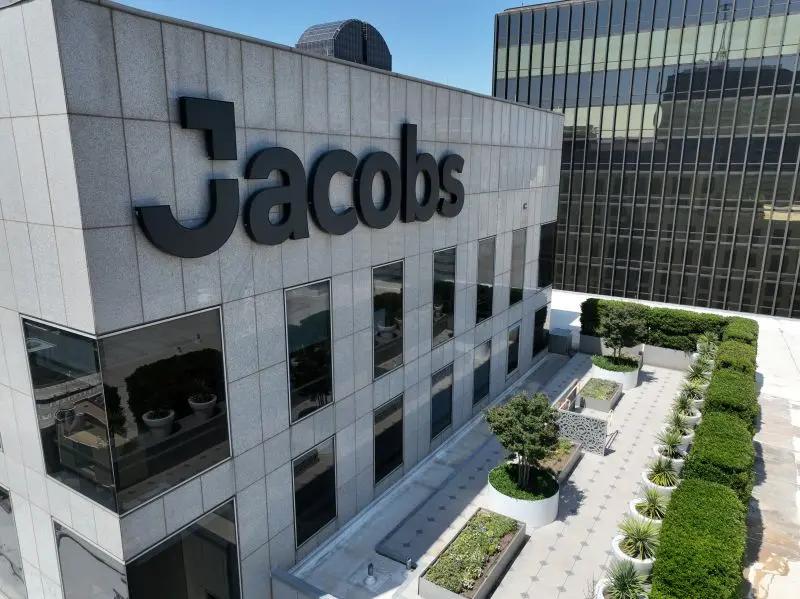
Quandary Consulting Group demonstrates this approach in its work with Jacobs.
Jacobs manages approximately $600 million in annual purchasing, with procurement processes spanning vendor management, invoices, supplier certifications, reconciliation, payment notifications, and enterprise financial systems.
Quandary creates an integrated procurement ecosystem using Quickbase as the centralized operational platform and Workato as the enterprise integration and orchestration layer, connecting Microsoft 365, Oracle, flat-file data sources, and document-processing technology.
The resulting environment moves key workflows toward near-touchless processing. The operation reduces the workforce required to maintain productivity from approximately 140 employees to 60 — a 57% reduction — while continuing to support roughly $600 million in annual purchasing activity.
This illustrates a broader lesson for procurement leaders: the largest ROI often comes from redesigning the process, not simply automating the task.
Quandary Case Study: Jacobs Procurement Automation Cuts Operational Headcount by 57% While Managing $600M in Annual Spend
2. Procurement Becomes a Strategic Enterprise Function
Cost savings still matter, but modern procurement is responsible for considerably more than finding the lowest-priced supplier.
In 2026, procurement increasingly influences:
- Margin protection
- Operational resilience
- Supplier performance
- Working capital
- Regulatory compliance
- Cybersecurity and third-party risk
- Business continuity
- Data quality
- Sustainability
- Innovation
- AI governance
Deloitte's procurement research reinforces this shift. Among surveyed CPOs, 72% identify improving margins through cost reduction as a leading priority, while 68% identify operational efficiency, 67% identify digital transformation and generative AI, and 63% identify risk management as enterprise priorities.
The numbers demonstrate why procurement can no longer operate as an isolated administrative department.
A supplier decision based exclusively on price can create downstream costs through delivery failures, quality problems, compliance issues, contract disputes, cybersecurity vulnerabilities, or supply interruptions.
Strategic procurement therefore asks a more sophisticated question:
- What combination of cost?
- Quality, risk?
- Performance?
- Flexibility?
- What long-term value produces the best business outcome?
It also requires procurement teams to spend less time chasing approvals, reconciling spreadsheets, manually entering invoices, and searching for supplier information; technology creates that capacity.
3. AI Moves From Procurement Analytics to Procurement Agents
Artificial intelligence is one of the most important changes occurring in procurement, but the 2026 conversation is considerably more advanced than simply using AI to analyze historical spend.
Generative AI can now help procurement teams summarize contracts, analyze supplier information, create sourcing documents, identify anomalies, categorize spend, retrieve procurement policies, evaluate purchasing requests, and surface risks.
The next evolution is agentic AI.
Unlike a conventional chatbot that primarily responds to questions, an AI agent can be connected to enterprise tools and workflows so that it can retrieve information, apply defined logic, initiate actions, and coordinate processes.
For example, a controlled procurement agent could receive a purchasing request, retrieve approved supplier information, verify procurement policies, identify the appropriate workflow, create or route a request, and escalate exceptions to a human reviewer.
Workato's Agent Studio documentation already includes a procurement use case in which an AI-powered agent processes purchase-order requests using deterministic fulfillment rules.
This illustrates an important principle for enterprise AI:
AI becomes significantly more valuable when it can operate inside a governed business process.
Where AI Is Already Entering Procurement
Deloitte's 2026 analysis of source-to-contract AI identifies several use cases procurement organizations are already piloting or deploying:
- 53% use or pilot AI for spend dashboards.
- 42% use or pilot it for RFI, RFP, and RFQ generation.
- 41% use or pilot it for contract summaries and key-term extraction.
- 32% use or pilot it for contract drafting.
- 28% use or pilot it for sourcing optimization recommendations.
This does not mean procurement should become autonomous overnight.
High-value procurement decisions frequently involve contractual, financial, regulatory, operational, and supplier risk. Therefore, the strongest AI architectures combine automation with business rules, permissions, audit trails, exception handling, and human oversight.
The objective is not to remove people from procurement.
It is to remove unnecessary administrative work so people can focus on decisions where judgment matters.
4. Supply Chain Visibility Becomes Real-Time Supplier Intelligence
Traditional procurement environments often scatter supplier information across ERP systems, spreadsheets, email, contract repositories, accounting platforms, sourcing applications, and individual departments.
That fragmentation creates a visibility problem.
One department may negotiate with a supplier while another purchases the same product under different terms. Finance may have payment information that procurement cannot easily see. Compliance documentation may live somewhere else entirely.
The organization technically has the data, but it cannot use that information as a unified source of intelligence.
In 2026, procurement leaders increasingly focus on connecting this information.
Deloitte reports that 64% of surveyed CPOs identify greater supply-chain visibility as an effective risk-mitigation strategy, while 74% point to maintaining alternative supply sources and 61% prioritize stronger supplier information sharing and collaboration.
That visibility becomes increasingly important as companies respond to changing tariffs, geopolitical instability, supplier concentration, regulatory requirements, material shortages, pricing volatility, cybersecurity risks, and transportation disruptions.
A connected procurement environment can help leaders answer questions such as:
- Which suppliers represent the greatest operational risk?
- How much are we actually spending with each vendor?
- Where are contracts approaching renewal?
- Which vendors have missing compliance documentation?
- Where do we have excessive supplier concentration?
- Which invoices consistently create exceptions?
- Which categories are experiencing unusual price changes?
- Where does negotiated pricing differ from actual purchasing behavior?
- Which suppliers consistently miss service-level expectations?
The next generation of procurement visibility does not simply produce more dashboards.
It turns fragmented supplier data into actionable procurement intelligence.
5. Contract Intelligence Becomes Part of Procurement Automation
Contracts contain some of the most valuable information in procurement, including pricing commitments, renewal dates, service levels, obligations, termination clauses, discounts, and risk provisions.
Yet many organizations still treat contracts primarily as documents rather than operational data.
AI is changing that.
Modern contract intelligence can extract key terms, identify obligations, compare language, surface renewal dates, support contract review, and connect contractual commitments with operational workflows.
Recent data suggests that the impact can be significant.
A 2026 Deloitte and DocuSign global study of more than 1,100 leaders reports average 36% efficiency gains from time savings and reduced agreement cycle times. Respondents also report 36% cost avoidance through mitigated risks, while legal respondents report an average 37% time savings across agreement-management activities.
For procurement teams, this creates an important opportunity.
Contract intelligence becomes even more powerful when connected to the rest of the procurement environment.
Instead of simply identifying a renewal date, for example, an integrated workflow can identify the approaching renewal, retrieve supplier-performance data, alert the appropriate owner, initiate the review process, and provide the information necessary for renegotiation.
That is the difference between AI that generates insight and automation that turns insight into action.
6. Low-Code and Integration Platforms Modernize Procurement Without Replacing the ERP
Many organizations recognize that their procurement processes need improvement, but complete ERP or source-to-pay replacement programs can require significant time, budget, migration work, and organizational change.
That creates an uncomfortable choice: tolerate inefficient workflows or launch a major system replacement.
In many situations, there is a third option.
Low-code development, enterprise integration platforms, APIs, automation, and AI can modernize the processes around existing systems.
Platforms such as Quickbase and Workato can help organizations create operational applications and orchestrated workflows that connect existing ERP, CRM, accounting, document management, collaboration, and procurement technologies.
This is particularly useful when an organization's business process does not fit neatly inside a standard enterprise application.
Instead of forcing every process into the ERP, companies can create an operational layer that handles specialized workflows while preserving existing systems of record.
Explore Quandary's Workato automation capabilities.
Learn more about Quickbase consulting and application development.
The architectural principle is simple:
Do not replace a core system merely because the workflows around it are inefficient.
First determine whether integration, process redesign, automation, or a purpose-built application can close the gap.
This approach can reduce implementation risk while allowing organizations to modernize incrementally.
7. Procurement ROI Shifts From "Hours Saved" to Enterprise Value
Automation projects frequently begin with a simple business case: How many labor hours can we save?
That metric remains useful, but it does not capture the full value of procurement transformation.
In 2026, procurement leaders should measure operational and financial outcomes across the process.
Useful procurement KPIs include:
- Purchase requisition cycle time
- Purchase-order processing time
- Invoice processing time
- Cost per invoice
- Percentage of touchless transactions
- Invoice exception rate
- Approval cycle time
- Spend under management
- Maverick spend
- Contract compliance
- Supplier on-time delivery
- Supplier defect or quality rates
- Procurement cost as a percentage of spend
- Discount capture rate
- Days payable outstanding
- Supplier concentration risk
- Employee hours per transaction
- Automation rate
- AI exception and escalation rate
The difference between digitally mature procurement organizations and their peers is already measurable.
Deloitte reports that its digital procurement leaders are more likely than followers to meet or exceed performance plans across cost savings (96% versus 80%), cost avoidance (94% versus 75%), internal stakeholder satisfaction (84% versus 59%), supplier performance (84% versus 59%), and innovation enablement (56% versus 24%).
This matters because procurement transformation should not be justified simply by how much technology an organization implements.
The real question is whether technology improves business performance.
How to Optimize Your Procurement Process in 2026
Procurement transformation does not begin with buying another platform.
It begins with understanding how work actually moves through the organization.
Before introducing automation or AI, organizations should map the current procurement lifecycle and identify where information stops, where employees re-enter data, where approvals stall, where exceptions occur, and where employees manually coordinate work between systems.
A practical transformation sequence looks like this:
Process Discovery → Workflow Mapping → Data Assessment → Prioritization → Process Redesign → Integration → Automation → AI Enablement → Governance → Measurement
This sequence matters because automating an inefficient process can simply make a bad process run faster.
Organizations should first identify the highest-friction workflows and determine why those problems exist.
From there, they can prioritize opportunities based on measurable business impact.
A strong first procurement automation project usually has four characteristics: high transaction volume, repetitive manual work, clearly defined business rules, and measurable outcomes.
Invoice processing, supplier onboarding, purchase-order approvals, compliance verification, contract review, reconciliation, and supplier information management are often strong candidates.
What Does the Future of Procurement Look Like?
The future of procurement is not fully autonomous, and it is not simply another software implementation.
It is connected, intelligent, measurable, and increasingly orchestrated.
ERP systems continue to manage core enterprise records. Procurement platforms manage specialized sourcing and purchasing functions. Integration platforms connect applications and data. Low-code platforms address unique operational workflows. AI interprets information and supports decisions. AI agents increasingly execute controlled actions. And people remain responsible for strategy, judgment, relationships, governance, and high-risk decisions.
This combination changes the role of procurement.
Instead of employees acting as the connective tissue between disconnected applications, technology increasingly handles data movement and repetitive coordination.
Instead of procurement teams spending most of their time finding information, they can spend more time interpreting it.
And instead of measuring procurement primarily by how cheaply the organization buys something, leaders can measure its contribution to margin, resilience, risk reduction, supplier performance, working capital, productivity, and enterprise growth.
That is the larger opportunity behind procurement transformation in 2026.
The objective is not simply to automate procurement.
It is to build a procurement operating model that can make better decisions, respond faster to change, and scale without adding unnecessary operational complexity.
Frequently Asked Questions About Procurement Trends in 2026
What are the biggest procurement trends in 2026?
The biggest procurement trends in 2026 include AI and agentic AI, end-to-end procurement automation, supplier intelligence, real-time risk monitoring, contract intelligence, low-code procurement applications, enterprise integration, and greater emphasis on measurable procurement ROI.
How is AI used in procurement?
AI can support spend analysis, supplier research, sourcing-event preparation, contract analysis, document processing, anomaly detection, purchasing assistance, risk identification, knowledge retrieval, and workflow decision support. AI agents can extend these capabilities by taking controlled actions across connected enterprise systems.
What is procurement automation?
Procurement automation uses software, integrations, workflows, business rules, and increasingly AI to reduce manual work across processes such as purchasing requests, approvals, supplier onboarding, purchase orders, invoices, compliance, reconciliation, and payments.
What is agentic AI in procurement?
Agentic AI refers to AI systems that can interpret requests, access approved information and tools, determine an appropriate action, and execute parts of a procurement workflow within defined permissions and governance controls. Human review remains important for high-risk, contractual, financial, and exceptional decisions.
What is the difference between procurement automation and procurement orchestration?
Procurement automation typically automates a specific task or workflow. Procurement orchestration coordinates multiple systems, workflows, people, rules, and data sources across a larger end-to-end business process.
For example, automating invoice approval is task automation. Connecting vendor onboarding, purchase orders, invoice capture, validation, approval, accounting, payment, and reporting is procurement orchestration.
Can companies automate procurement without replacing their ERP?
Yes. Organizations can use APIs, integration platforms, workflow automation, low-code applications, and AI to modernize procurement processes around existing ERP and financial systems. This approach can preserve core systems of record while improving the workflows that operate across them.
How should companies measure procurement automation ROI?
Organizations should measure procurement automation using a combination of financial and operational KPIs, including processing cost, cycle time, employee hours, exception rates, touchless transaction rates, spend under management, maverick spend, discount capture, supplier performance, contract compliance, and cost avoidance.
Meta Title
7 Procurement Trends Reshaping Business in 2026 | Quandary
Meta Description
Explore seven procurement trends shaping 2026, including AI agents, procurement automation, supplier intelligence, contract AI, low-code development, integration, and procurement orchestration.
Suggested URL Slug
/procurement-trends
Suggested Primary Keyword
procurement trends 2026
Secondary Keywords
procurement automation, AI in procurement, procurement process optimization, digital procurement, procurement software, agentic AI procurement, procurement orchestration, strategic procurement, source-to-pay automation, procurement AI, supplier management automation