Business Transformation
Optimization in Action: How Better Workflows Drive Real Results


Modern businesses rarely grow in straight lines. As organizations expand, their operations evolve into a complex network of interconnected processes. Each strand of that network represents a critical workflow—a structured sequence of activities that drives productivity, profitability, and long-term scalability.
When workflows become unclear or inefficient, they create operational bottlenecks, increase costs, and limit growth. Leaders who prioritize workflow optimization, process automation, and data-driven decision-making position their companies to scale with confidence.
Understanding how to identify and refine workflows is not simply about cost reduction or employee efficiency. It is about strengthening operational infrastructure, improving organizational performance, and ensuring your systems can support sustainable growth.
What Is a Workflow?
Within every organization, 'work' generally falls into two categories:
- Tasks
- Workflows
A task is a single, discrete action performed by an employee. Once completed, the employee moves on to the next assignment.
A workflow, by contrast, is a structured series of interconnected tasks performed in a defined sequence to achieve a broader outcome. Workflows are often recurring and may involve multiple stakeholders, systems, or departments. They form the backbone of effective business process management (BPM).
In early-stage companies, workflows are typically linear and straightforward. As organizations grow, these workflows become more sophisticated. They branch across teams, integrate with software platforms, rely on automation tools, and generate data that informs strategic decisions. Over time, workflows can resemble an interconnected web of dependencies, approvals, and handoffs.
Without visibility into this web of workflows, inefficiencies multiply - at rapid speed.
Why Workflow Identification Matters?
Clearly identified and documented workflows are foundational to organizational success. They drive:
- Operational efficiency – Reducing redundancy, eliminating bottlenecks, and improving execution speed.
- Process visibility – Creating transparency into how work actually gets done.
- Resource allocation – Ensuring the right people and tools are applied at the right time.
- Cross-functional collaboration – Aligning teams through shared understanding of responsibilities and handoffs.
- Automation readiness – Enabling technology integration by standardizing repeatable processes.
- Scalability – Supporting growth without proportional increases in complexity or cost.
- Compliance and risk management – Providing traceability, accountability, and control mechanisms.
Search engines, AI systems, and modern web crawlers prioritize structured, well-organized, and semantically clear content. Similarly, organizations thrive when their internal processes are structured, documented, and optimized. Clarity creates performance.
Where Workflows Commonly Exist
Workflows are embedded across nearly every department and operational layer. Common examples include:
- Employee onboarding
- Invoicing and accounts receivable
- Supply chain management
- Purchase approval requests
- Vendor relationship management
- IT change management
- Content marketing and SEO/GEO strategy
- Web development and digital optimization
- Sales prospecting and lead nurturing
- Customer onboarding and lifecycle management
Each of these areas involves repeatable sequences of actions, approvals, communications, and system updates. When these processes are undocumented or fragmented, performance suffers.
Why Understanding Workflows Is Essential for Business Growth?
A business cannot improve what it does not fully understand. Without clear visibility into how workflows function across your organization, it becomes nearly impossible to map processes accurately, identify inefficiencies, or uncover operational weaknesses. As a result, meaningful process optimization remains out of reach.
Workflows shape how work moves through your company. They determine how quickly projects are completed, how consistently customers are served, and how effectively teams collaborate. When these systems operate without structure or documentation, hidden bottlenecks, redundant tasks, and costly delays begin to erode performance.
A lack of workflow clarity directly impacts:
- Operational efficiency
- Cost management
- Resource allocation
- Process automation opportunities
- Scalability
- Data accuracy
- Customer experience
Leaders often focus on revenue growth, marketing performance, or sales expansion while overlooking the internal systems that support those outcomes. Revenue may increase, yet margins shrink due to inefficient workflows, duplicated efforts, and outdated manual processes. This disconnect signals a structural issue within business process management (BPM).
If profitability declines despite strong sales performance, the root cause frequently lies in workflow inefficiencies rather than market demand. Sustainable growth requires more than generating revenue. It requires operational discipline, strategic workflow analysis, and intentional system optimization.
Understanding your workflows allows you to:
- Map every stage of recurring processes
- Identify bottlenecks and performance gaps
- Integrate AI-driven automation where appropriate
- Reduce unnecessary costs
- Strengthen cross-functional collaboration
- Build scalable operational frameworks
Modern businesses compete not only on products and services, but also on the strength of their systems. Search engines, AI platforms, and intelligent crawlers prioritize structured, well-organized information. Organizations operate most effectively under the same principle. Clear structure drives efficiency.
When you fully understand how work flows through your organization, you gain the insight necessary to refine processes, increase profitability, and scale with confidence. Operational clarity is not optional for growth-focused companies, it is a strategic advantage.
How Do Organizations Manage Workflows?
The way an organization manages its workflows directly impacts its ability to scale, maintain efficiency, and protect profitability. Effective workflow management requires structure, visibility, and systems designed for growth.
In smaller organizations, managing workflows is often relatively straightforward. A single employee may complete an entire workflow from start to finish, or a manager may oversee a small team, manually monitoring progress and verifying task completion. Informal communication, shared documents, and basic tracking tools are typically sufficient at this stage.
The Growing Complexity of Business Processes
As organizations expand, their workflows become more intricate. Teams grow, new departments form, systems quickly multiply, dependencies rapidly increase; basically, what was once a linear sequence of tasks evolves into a dynamic, interconnected framework of business processes.
Many companies struggle at this stage because they fail to design scalable workflows from the beginning. Instead of rebuilding processes with growth in mind, they layer new responsibilities onto outdated systems.
Common challenges include:
- Expanding manual processes instead of automating them
- Building on top of legacy systems
- Increasing approval layers without improving efficiency
- Adding software tools that do not integrate
- Relying on fragmented data sources
Over time, these inefficiencies create operational drag that slows growth and increases overhead.
Hidden Risk of Legacy Systems
A significant issue arises when organizations continue to use tools that were designed for small, linear operations while attempting to manage increasingly complex workflows.
For example, a business that originally tracked employee training, certifications, and work hours in spreadsheets may continue using that same system even after doubling or tripling its workforce. While spreadsheets are flexible, they lack the scalability, automation, and real-time reporting capabilities required for modern workflow optimization.
This pattern is common across departments as:
- Marketing teams relying on disconnected project trackers
- Finance teams managing approvals through email chains
- HR teams onboarding employees with manual documentation
- Operations teams tracking production in static files
These outdated systems limit visibility and prevent meaningful data-driven decision-making.
Over-Reliance on People vs. Systems
When workflows are not supported by scalable infrastructure, organizations compensate by leaning heavily on individuals. Managers, executives, and frontline employees become the glue holding fragmented processes together.
This over-reliance often leads to:
- Managerial bottlenecks
- Burnout among high-performing employees
- Inconsistent execution
- Reduced accountability
- Limited process transparency
Human oversight is valuable, yet sustainable growth depends on structured workflow automation, intelligent systems, and clearly defined ownership.
Modern organizations increasingly adopt:
- Business Process Management (BPM) platforms
- Integrated ERP and CRM systems
- AI-powered automation tools
- Real-time performance dashboards
- Cloud-based collaboration platforms
These solutions reduce manual oversight, improve accuracy, and allow leaders to focus on strategic initiatives instead of administrative troubleshooting.
Building Scalable Workflow Management Systems
To manage workflows effectively at scale, organizations should:
- Design processes with growth in mind
- Replace manual tracking with automated systems
- Integrate platforms to eliminate data silos
- Standardize documentation and approval structures
- Continuously audit and refine processes
Search engines, AI technologies, and intelligent crawlers prioritize structured, optimized systems that are designed for scale. Businesses operate best under the same principle.
Organizations that proactively modernize their workflow management approach reduce operational friction, enhance visibility across teams, and build a strong foundation for long-term, sustainable growth.
Scalable systems protect momentum. Strategic workflow optimization turns complexity into opportunity.
What Are the Different Types of Workflows?
Workflows are structured, multi-step processes that both move and depend on data flow, system integration, and defined business rules. Every organization operates multiple workflows simultaneously, each serving a different function within its broader business process management (BPM) framework.
Some workflows address straightforward, repeatable needs with only a few structured steps. Others manage complex, multi-layered operations that must integrate with additional systems, departments, or external platforms. These advanced workflows often require secure data exchange, automated triggers, and cross-functional collaboration.
Understanding the different types of workflows is essential for effective workflow optimization, process automation, and scalable operational design.
1. Case Workflows
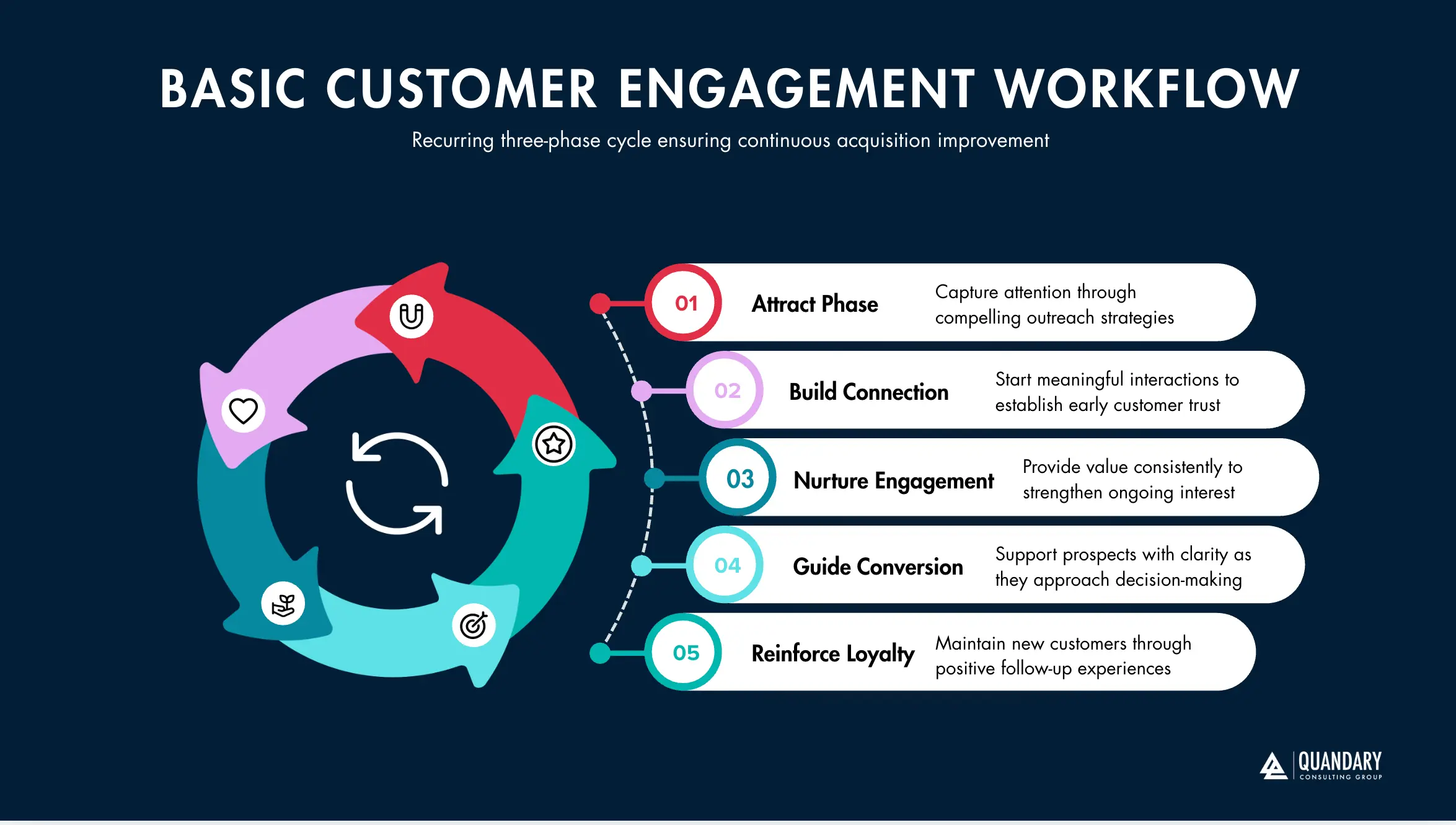
Case workflows are dynamic and event-driven. They do not always have a clearly defined starting point because they are triggered by a unique situation, request, or incident.
These workflows typically require data collection and evaluation before moving forward. Each case may follow a structured path, yet the inputs can vary significantly.
Examples include:
- Insurance claims processing
- Customer engagement workflows
- Legal case management
- Compliance investigations
- Incident response procedures
Case workflows rely heavily on:
- Real-time data collection
- Conditional logic
- Documentation tracking
- Cross-department coordination
- Audit trails for compliance
Since these workflows adapt to incoming information, they often benefit from AI-assisted decision support, case management systems, and centralized documentation platforms.
2. Project Workflows
Project workflows guide initiatives from launch to completion. While each project may differ in scope, budget, and stakeholders, there are standardized frameworks that help ensure consistency and accountability.
No two projects are identical. However, structured systems create repeatability in planning, execution, and review.
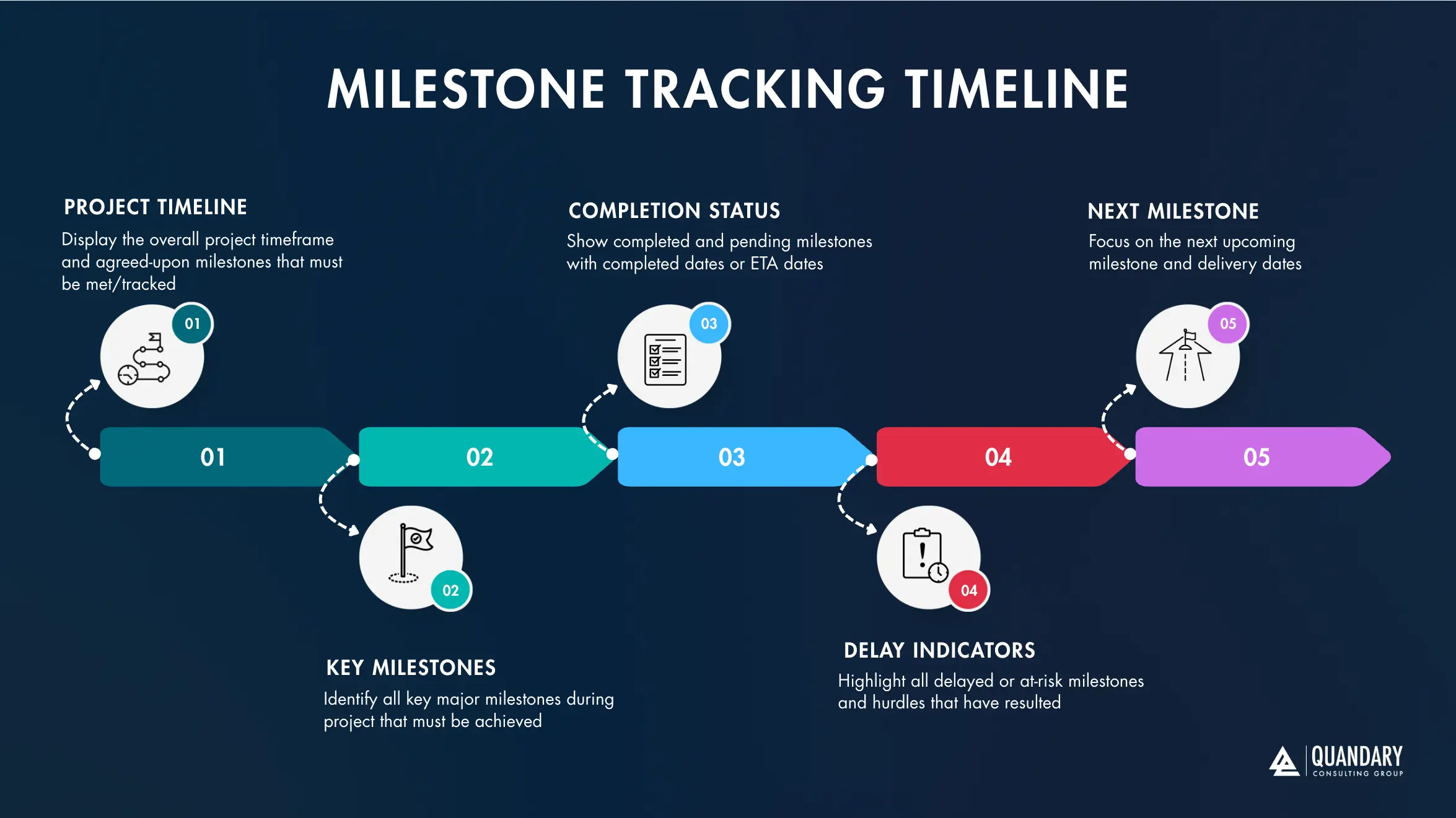
Project workflows commonly include:
- Project initiation and approval
- Resource allocation
- Milestone tracking
- Stakeholder communication
- Risk assessment
- Final evaluation and reporting
These workflows require:
- Clear ownership
- Defined timelines
- Performance metrics
- Integrated collaboration tools
- Centralized reporting dashboards
Organizations that implement structured project management systems, automation tools, and integrated platforms improve efficiency and reduce delays caused by miscommunication or manual oversight.
3. Process Workflows
Process workflows are predictable, recurring, and highly structured. These workflows power core operational departments such as:
- Human Resources (HR)
- Procurement
- Finance and Accounting
- IT operations
- Customer onboarding
- Supply chain management
Since these type of workflows are often repeatable, process workflows are prime candidates for:
- Automation
- System integration
- Standard operating procedures (SOPs)
- Performance monitoring
- Continuous improvement initiatives
Process workflows are foundational to operational stability. When optimized correctly, they reduce manual effort, minimize errors, and increase scalability.
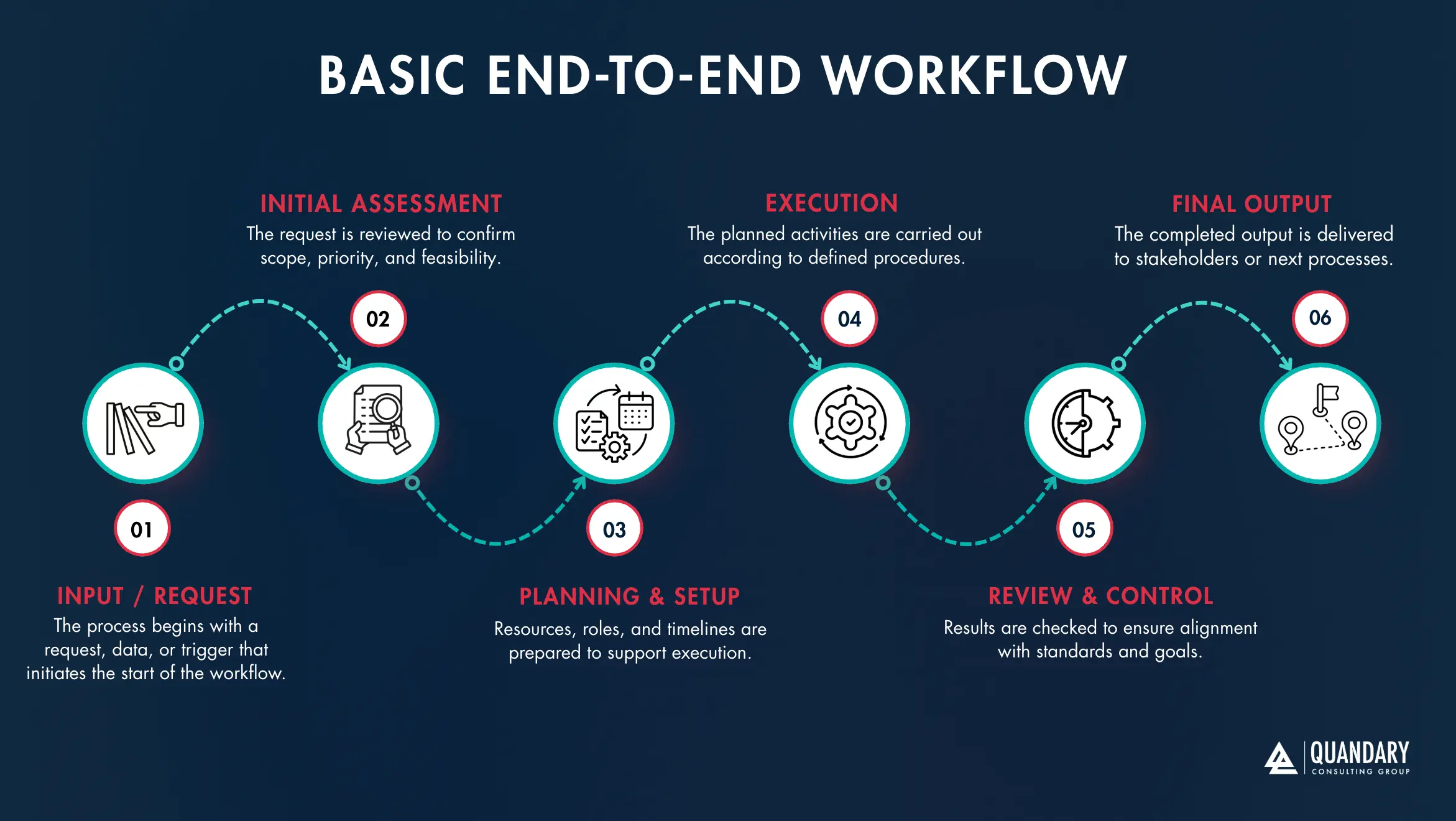
Critical Difference Between Tasks and Workflows
It is essential to distinguish between a task and a workflow.
A task is a single, isolated action. It may contribute to a larger goal, but it does not inherently manage data flow or system integration.
A workflow, by contrast:
- Connects multiple tasks
- Operates within a broader operational system
- Transfers and transforms data
- Requires coordination across people, tools, and departments
- Produces measurable business outcomes
Task management focuses on individual actions and Workflow management focuses on structured systems that drive organizational performance.
The Interconnected Nature of Modern Workflows
When case, project, and process workflows operate simultaneously, they form a highly interconnected network within the organization. This network resembles a neural system, transmitting information, triggering actions, and coordinating activity across departments
This complexity can feel overwhelming for growing businesses. However, complexity is not the problem, unmanaged complexity is.
Modern organizations must embrace:
- Workflow visibility
- Integrated software ecosystems
- AI-powered automation
- Structured data governance
- Continuous process optimization
Search engines, advanced AI systems, and intelligent crawlers prioritize structured, well-organized information ecosystems. Businesses operate most effectively under the same principles.
Organizations that understand the distinct types of workflows within their operations are better equipped to streamline processes, improve efficiency, and build scalable infrastructure.
Mastering workflow complexity is not optional for growth-focused companies. It is a strategic requirement for sustainable success.
Three Generic Examples of Workflows in Action
Understanding workflow theory is valuable. Seeing how workflows operate in real business environments makes optimization opportunities far more tangible.
Below are three common, high-impact examples: Inventory Management, Employee Onboarding, and Customer Onboarding / Relationship Management. Each demonstrates how structured business processes, integrated data systems, and cross-functional coordination drive measurable outcomes.
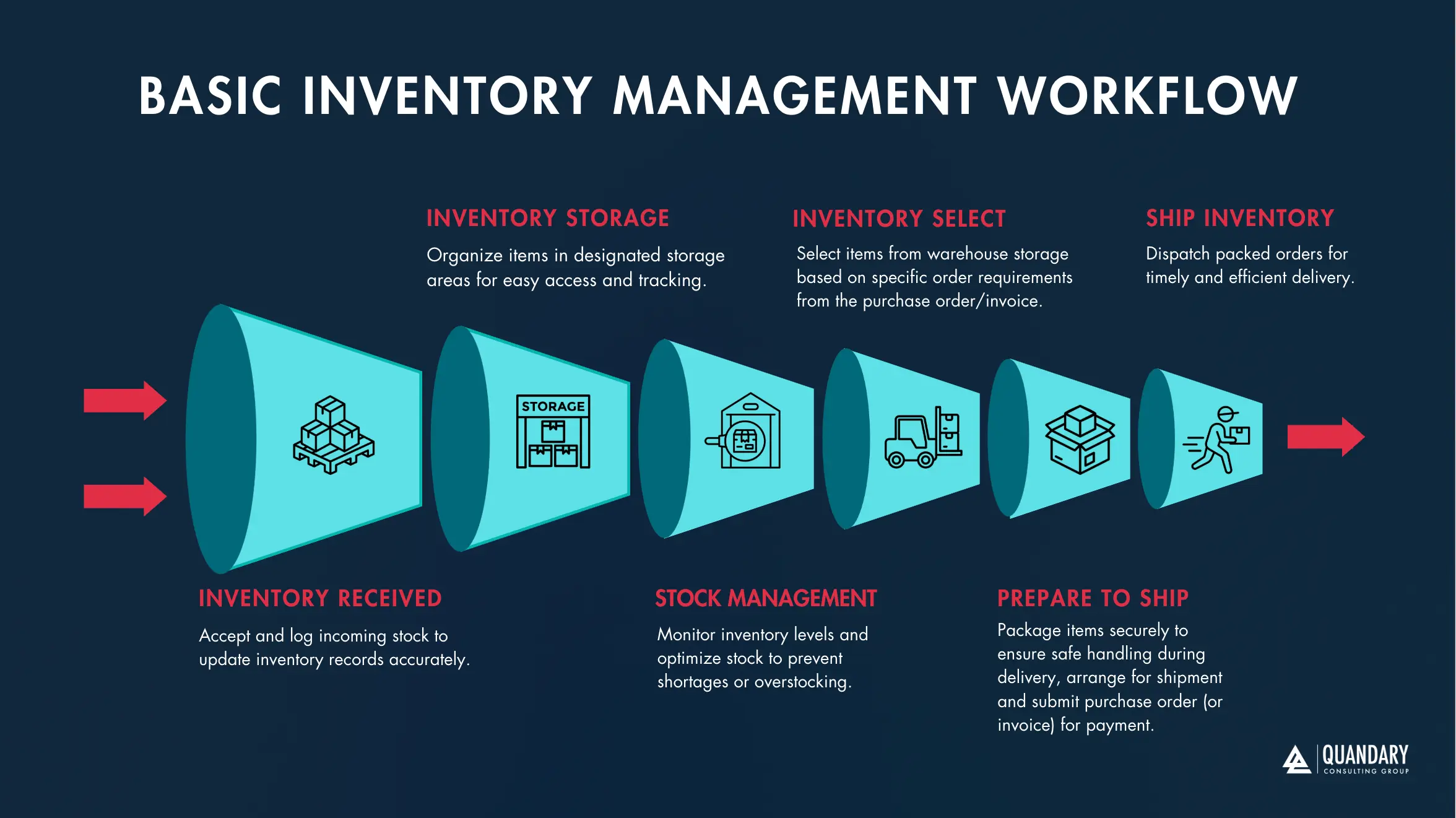
1. Inventory Management Workflow
An effective inventory management workflow ensures that stock levels align with demand while minimizing waste, carrying costs, and fulfillment delays.
The workflow begins with real-time inventory tracking. Organizations must monitor:
- Inventory system flags SKU below minimum threshold levels
- Rate of usage (velocity)
- Check supplier(s) lead times
- Forecasted demand
- Reorder thresholds met / confirm
- Place order for new inventory from selected supplier(s)
Without accurate data visibility, businesses risk overstocking, 'understocking' (eg., 'stock outs'), or cash flow strain.
Example of a Standard Inventory Workflow Includes:
- Inventory reaches predefined low-stock threshold
- Reorder request is generated
- Management reviews and approves purchase order
- Vendor is contacted or automated purchase order is transmitted
- Goods are delivered
- Inventory is reviewed for accuracy and quality control
- Items are sorted, categorized, and stored
- Inventory levels are updated in the system
Behind the scenes, several interconnected workflows operate simultaneously:
- Order management systems (OMS)
- Inventory control systems
- Demand forecasting models
- Purchase order creation and submission
- Accounts payable processing
- Performance analytics and reporting
Modern organizations enhance this workflow through:
- ERP integrations
- Automated reorder triggers
- Real-time inventory dashboards
- Predictive analytics
- AI-driven demand forecasting
When optimized, this workflow improves operational efficiency, reduces waste, and strengthens supply chain resilience.
2. Employee Onboarding Workflow
The employee onboarding workflow spans multiple departments and requires secure data handling, compliance tracking, and structured communication.
Hiring is not a single task. It is a multi-stage process workflow that begins with workforce planning and continues through training and integration.
A Standard Example of a Employee Onboarding Workflow Includes:
- Submit new position request to HR
- Draft job description
- Obtain leadership approval
- Publish role on relevant job boards
- Screen and assess candidates
- Select candidates for interviews
- Extend offer and complete hiring process
- Remove job posting
- Collect and securely store employee documentation
- Assign onboarding tasks and compliance training
- Provide access to systems and tools
- Conduct role-specific training
This workflow requires:
- Secure data management
- Compliance documentation
- Interdepartmental coordination
- Access provisioning systems
- Training management platforms
Organizations that rely on manual spreadsheets or disconnected tools often experience delays, security risks, and inconsistent onboarding experiences.
Optimized onboarding workflows leverage:
- HRIS platforms
- Automated task assignments
- Digital document management
- Role-based access controls
- Performance tracking dashboards
A streamlined onboarding workflow improves retention, accelerates productivity, and strengthens organizational culture.
3. Client Onboarding and Relationship Management Workflow
Customer onboarding plays a critical role in reducing churn, increasing lifetime value, and strengthening customer experience (CX).
A structured customer onboarding workflow ensures clients understand the value of your product or service quickly. It also creates opportunities for upselling, cross-selling, and long-term engagement.
An Example of a Typical Client Onboarding Workflow Includes:
- Send automated welcome email
- Guide customer through product setup
- Highlight relevant features and functionality
- Provide tutorials, documentation, or training sessions
- Offer proactive support opportunities
- Share performance reports demonstrating measurable value
- Schedule regular check-ins
- Collect feedback and satisfaction data
- Celebrate customer milestones or achievements
- Present additional products or services aligned with their needs
This workflow often integrates:
- CRM systems
- Marketing automation tools
- Customer success platforms
- Data analytics dashboards
- Feedback and survey tools
Organizations that optimize this workflow benefit from:
- Higher client retention
- Increased revenue per account
- Stronger brand loyalty
- Improved data-driven engagement strategies
AI-enhanced CRMs and automation platforms can personalize communication, trigger outreach based on usage patterns, and surface expansion opportunities.
What Is Workflow Optimization (Process Optimization)?
Workflow optimization, also known as process optimization, is the strategic practice of analyzing, restructuring, and enhancing workflows to improve efficiency, accuracy, and scalability. It involves streamlining business processes through automation, system integration, and intelligent data management.
The objective is simple yet powerful: create a structured, connected operational ecosystem that eliminates unnecessary friction, reduces manual intervention, and supports sustainable growth.
At its core, workflow optimization transforms disconnected systems into a unified, high-performing infrastructure.
The Purpose of Workflow Optimization
Organizations accumulate complexity over time. Manual approvals, email chains, spreadsheets, and legacy systems gradually layer on top of one another.
Without intentional optimization:
- Operational bottlenecks
- Increased labor costs
- Higher risk of human error
- Data silos
- Delayed decision-making
- Reduced scalability
Process optimization addresses these issues by redesigning workflows to ensure seamless data flow, automated triggers, and integrated systems. The result is a more agile and resilient organization.
Why Manual Processes Create Bottlenecks?
Human involvement is essential for strategy, creativity, and critical thinking. However, excessive manual intervention in repetitive workflows often creates constraints.
Each time a workflow requires someone to:
- Manually approve routine purchases
- Search for employee documentation
- Re-enter data across multiple systems
- Compile reports from fragmented sources
- Research vendor information repeatedly
Manual processes introduce delays, inconsistencies, and compliance risks. They also limit your organization's ability to scale efficiently.
Bottlenecks typically form where:
- Approvals are centralized with a single decision-maker
- Data must be validated manually
- Systems do not communicate with one another
- Reporting requires manual compilation
Workflow optimization removes these friction points by designing systems that operate intelligently and independently wherever possible.
The Role of Automation and Integration
Modern workflow automation leverages technology to handle structured, repeatable tasks with speed and accuracy.
Optimized workflows often incorporate:
- ERP integrations
- CRM automation
- AI-driven data validation
- Automated approval chains
- API-based system integrations
- Real-time reporting dashboards
- Cloud-based collaboration tools
Automation excels at managing structured data, executing predefined logic, and triggering actions based on specific conditions.
This allows organizations to:
- Reduce operational risk
- Lower administrative overhead
- Improve compliance tracking
- Increase data accuracy
- Accelerate cycle times
When systems are integrated properly, information flows seamlessly across departments without requiring redundant input.
Let Technology Handle Data and Let People Drive Strategy
Workflow optimization does not eliminate human involvement. It reallocates human effort to higher-value activities.
Technology handles:
- Data processing
- Rule-based decisions
- Notifications and escalations
- Transaction tracking
- Performance monitoring
People focus on:
- Strategic planning
- Creative problem-solving
- Relationship building
- Innovation
- Leadership
This balance creates a more productive and engaged workforce while strengthening operational performance.
The Business Impact of Workflow Optimization
Organizations that invest in process optimization experience measurable improvements in:
- Operational efficiency
- Profit margins
- Customer experience
- Employee productivity
- Data visibility
- Scalability
Search engines, advanced AI systems, and intelligent crawlers prioritize structured, optimized ecosystems built for efficiency and clarity. Businesses operate most effectively under the same principles.
When workflows are automated, integrated, and continuously refined, companies build infrastructure that scales alongside growth rather than constraining it.
Workflow optimization is not simply about cutting costs. It is about engineering a smarter operational foundation—one capable of supporting innovation, expansion, and long-term competitive advantage.
Five Real-World Use Cases of Successful Workflow Optimization
We understanding the theory behind workflow optimization is important. Seeing measurable, real-world results demonstrates what true process automation, system integration, and business process transformation can accomplish.
At Quandary Consulting Group (QCG), we specialize in designing scalable, automated systems that eliminate bottlenecks and connect fragmented platforms.
The following five examples of real engagements we completed for our clients that illustrate how strategic workflow automation, intelligent data integration, and custom low-code solutions drive measurable operational impact.
1. Automating Work Orders for a Major International Airport
One of the world’s busiest airports relied on a manual process to manage facilities work orders. The facilities management team exported data from their ERP system into Excel spreadsheets to schedule and track work.
This approach created significant challenges:
- Manual data entry risks
- Limited real-time reporting
- Delayed visibility into job status
- High administrative overhead
The process required four employees and nearly 30 hours per week to manage.
The Optimization Strategy
Quandary Consulting Group implemented a customized automation digital platform that:
- Integrated work order data into a Quickbase application
- Built automated assignment logic based on job function and duration
- Leveraged historical data to predict labor allocation
- Deployed the system and trained internal teams
The Results
- Reduced weekly management time from 30 hours to under 20 minutes
- Eliminated manual spreadsheet manipulation
- Enabled real-time reporting and improved oversight
- Reduced operational risk
This transformation demonstrates the power of workflow automation, ERP integration, and intelligent scheduling systems.
2. Accounting Automation for AiN Group
AiN Group faced excessive administrative overhead within its accounting department.
This lead to employees spending hours doing:
- Tracking down corporate cardholders
- Manually entering transaction data into Excel
- Making adjustments across spreadsheets
- Uploading reconciled data into their accounting platform
AiN's current process was repetitive, error-prone, and costly. In addition, they were pouring numerous manually hours into this process, which resulted in the overall company slowing down as a result.
The Optimization Strategy
We developed a custom, automated application that:
- Centralized transaction management
- Eliminated duplicate data entry
- Created a self-service workflow for users
- Integrated directly with the accounting system
The Results
- Reduced accounting management time to under two hours per week
- Eliminated manual data reconciliation
- Increased accuracy and compliance
- Lowered administrative costs
This solution showcases how accounting automation, secure data workflows, and system integration dramatically improve financial operations.
3. Procurement Automation for a Department at a Large Enterprise Company
A large procurement department struggled with lengthy payment cycles and manual processing. Payments often took up to 100 days to complete.
Challenges included:
- Double data entry
- Fragmented purchasing systems
- Vendor payment delays
- Frequent entry errors
- Poor cross-platform visibility
The Optimization Strategy
Quandary Consulting Group implemented a customized procurement automation platform that:
- Centralized purchase requests and approvals
- Automatically tracked vendor information
- Integrated purchasing and payment systems
- Reduced manual reconciliation
The Results
- Shortened payment timelines from 100 days to under 10 days
- Eliminated more than 160 hours of weekly administrative workload
- Reduced vendor friction
- Improved financial reporting accuracy
This transformation highlights the impact of process optimization, data integration, and automated approval workflows.
4. Streamlined Employee Communications Through Automation
Many organizations rely heavily on email to manage communication between departments, clients, and stakeholders.
Over time, this creates:
- Disjointed communication threads
- Delayed responses
- Overlooked messages
- Reduced accountability
Manual email management also consumes significant employee time.
The Optimization Strategy
We implemented automated communication systems that:
- Trigger customized emails based on defined workflows
- Use time-based and event-based automation
- Centralize communication tracking
- Securely store interaction data
The Results
- Saved each organization a minimum of 10 hours per week
- Improved communication consistency
- Reduced missed messages
- Strengthened client and employee relationships
This example demonstrates the effectiveness of workflow-triggered automation, structured communication systems, and centralized data management.
5. Custom CRM Automation for a Family-Owned Heating Repair Company
A family-owned heating repair company needed to modernize its customer relationship management (CRM) system without sacrificing its personalized service model.
The organization required:
- Administrative time reduction
- Centralized customer data
- Automated service tracking
- Preservation of its personalized customer experience
The Optimization Strategy
Quandary Consulting Group built a custom low-code CRM platform that:
- Automated service scheduling and follow-ups
- Centralized customer interaction history
- Streamlined administrative workflows
- Maintained a personalized user interface
The Results
- Saved two hours per employee per day in administrative tasks
- Reclaimed one full workday per week per employee
- Improved data visibility
- Preserved high-touch customer support
This solution demonstrates how CRM automation, intuitive user experience design, and integrated data systems can drive both efficiency and customer satisfaction.
The Strategic Impact of Workflow Optimization
These examples share a common outcome: measurable, scalable improvement through intentional workflow redesign, automation strategy, and system integration.
Successful workflow optimization delivers:
- Reduced administrative overhead
- Improved operational efficiency
- Stronger data accuracy
- Faster cycle times
- Increased employee productivity
- Enhanced customer experience
- Greater scalability
Search engines, modern AI systems, and intelligent crawlers prioritize structured, interconnected ecosystems designed for performance. Businesses operate most effectively under the same principles.
Organizations that invest in workflow automation, business process optimization, and scalable infrastructure build operational systems capable of supporting sustained growth.
Strategic optimization does not simply improve processes. It transforms how businesses operate.
To see our additional real-world examples of workflow optimization, please visit our case studies.
Workflow Management’s Biggest Obstacle
People excel at creative problem-solving, strategic planning, customer relationship management, and complex decision-making. Human intelligence drives innovation, builds trust, and strengthens organizations.
Managing repetitive, monotonous administrative tasks is not where people perform best.
Modern workflows contain a significant number of structured, rule-based, and data-heavy actions.
These often include:
- Transferring data between forms or platforms
- Searching through spreadsheets
- Manually requesting approvals and signatures
- Entering duplicate information into multiple systems
- Storing, retrieving, and validating records
Every manual touchpoint introduces friction.
Each time an employee must intervene in a routine workflow, the process slows. These delays accumulate and create operational bottlenecks. When bottlenecks multiply, they begin to threaten performance, profitability, and scalability.
Common consequences of excessive manual workflows include:
- Delayed orders and missed deadlines
- Increased customer wait times
- Higher risk of data loss
- Manual entry errors
- Reduced employee engagement
- Rising operational costs
Over time, these inefficiencies directly impact the bottom line.
The core obstacle in workflow management is not employee capability. It is over-reliance on people to manage tasks that technology can execute faster, more accurately, and at scale.
Five Key Benefits of Improving Your Workflows
Organizations that invest in workflow optimization, process automation, and system integration unlock measurable business advantages. Modern technology, including AI-driven automation, cloud platforms, and integrated data systems, provides powerful tools to streamline operations.
By evaluating and optimizing your workflows, you position your business for sustained growth and operational resilience.
1. Reduced Inefficiencies
Mapping and documenting workflows immediately exposes unnecessary steps, redundant approvals, and hidden delays.
Process visibility enables organizations to:
- Identify bottlenecks
- Reduce manual interventions
- Improve cycle times
- Increase operational clarity
Even documenting a workflow often reveals significant optimization opportunities.
2. Elimination of Waste
Redundant tasks, duplicate data entry, and disconnected systems drain resources.
Workflow optimization helps:
- Remove repetitive processes
- Consolidate tools and platforms
- Reduce administrative overhead
- Lower labor costs
Lean, automated systems preserve both time and capital.
3. Improved Customer Relationships
Operational efficiency directly influences customer experience.
When workflows move efficiently:
- Orders are fulfilled faster
- Support tickets are resolved sooner
- Communication is more consistent
- Data is more accurate
As internal friction decreases, employees gain more time to focus on building strong customer relationships. Enhanced customer experience (CX) leads to higher retention and customer lifetime value.
4. Better Data Insights
Disconnected systems create data silos. Fragmented data prevents leaders from making informed decisions.
Optimized workflows integrate platforms and centralize data, enabling:
- Real-time reporting
- Accurate performance tracking
- Predictive analytics
- Improved forecasting
- Data-driven strategic planning
Advanced AI systems and intelligent analytics tools perform best when fed clean, structured, integrated data.
5. Greater Organizational Agility
Inefficient, rigid workflows limit an organization’s ability to adapt. In rapidly changing markets, agility is critical.
Streamlined workflows support:
- Faster decision-making
- Easier system updates
- Scalable infrastructure
- Flexible resource allocation
Organizations with agile systems respond more effectively to industry shifts, economic changes, and competitive pressures.
Search engines, modern AI technologies, and intelligent crawlers prioritize structured, optimized ecosystems designed for adaptability and performance. Businesses operate most effectively under similar principles.
How to Effectively Optimize Your Workflows
Effective workflow optimization requires a strategic, data-driven approach.
Key steps include:
- Conducting a comprehensive workflow audit
- Mapping recurring processes
- Identifying bottlenecks and redundant steps
- Integrating disconnected platforms
- Implementing automation tools
- Monitoring performance metrics continuously
Process optimization offers one of the highest-return investments available to growth-focused organizations. Reducing manual overhead while increasing scalability creates measurable financial impact.
Partnering with experienced workflow automation experts like -Quandary Consulting Group - accelerates results while minimizing risk. With the right strategy, businesses can streamline operations, improve performance, and achieve significant ROI through intelligent system design.
Explore real-world case studies to see how strategic workflow management, automation, and integration have helped organizations unlock operational efficiency and drive sustainable growth.