Business Transformation
Maximizing Construction ROI with Low-Code and Automated Workforce Management


Transform Construction Workforce Management with Low-Code and Automation.
Construction companies are still relying on disconnected tools—whiteboards, spreadsheets, and rigid, off-the-shelf platforms—to manage workforce planning.
These legacy approaches introduce errors, limit visibility, and create operational inefficiencies that lead directly to unplanned downtime.
When crews are underutilized, misallocated, or delayed between jobs, the financial impact is immediate and measurable.
Leading construction firms are moving away from these outdated systems and investing in custom workforce management (WFM) solutions built on low-code platforms such as Microsoft Power Platform, Workato, and Quickbase.
These solutions enable real-time workforce visibility, automated scheduling, and seamless system integration—allowing organizations to operate with greater precision, agility, and control.
Why Construction Firms Are Replacing Legacy Workforce Management Tools
Traditional workforce management systems were not designed for the complexity and variability of modern construction operations.
Out-of-the-box platforms often force organizations to adapt their processes to fit the technology—resulting in inefficiencies, workarounds, and limited scalability.
Custom low-code workforce management solutions reverse this dynamic by aligning technology to the business.
Immediate Business Impact:
- Reduced downtime through optimized workforce allocation
- Real-time visibility into labor, certifications, and project status
- Automated scheduling and resource planning
- Improved data accuracy across payroll, operations, and compliance
- Scalable systems that evolve with project demand
Organizations that modernize workforce management are better positioned to improve margins, reduce risk, and deliver projects on time.
The Business Value of Low-Code Workforce Management Solutions
Deploying a custom WFM solution built on low-code platforms like Microsoft Power Apps, Workato, and Quickbase enables construction companies to streamline operations and unlock measurable ROI.
Core Benefits Include:
Operational Efficiency and Cost Reduction
Automating manual workflows reduces administrative overhead and eliminates time-consuming data entry.
Improved Workforce Productivity
Ensure the right workers are deployed to the right job sites with the right qualifications—every time.
Enhanced Project Planning and Execution
Align workforce scheduling with project timelines to minimize delays and improve delivery performance.
Labor Optimization
Balance workloads across teams to prevent underutilization and burnout.
Compliance and Risk Mitigation
Track certifications, safety requirements, and regulatory compliance in real time to reduce exposure to fines and incidents.
Integrated Payroll and Financial Processes
Streamline payroll, time tracking, and accounting through connected systems and automated workflows.
Real-Time Reporting and Analytics
Enable data-driven decision-making with live dashboards and performance insights.
Improved Employee Experience and Retention
Reduce miscommunication, improve transparency, and provide better support for field teams.
The Hidden Cost of Ineffective Workforce Management
Inefficient workforce management does not just slow operations—it directly impacts profitability and growth.
Common challenges include:
- Crews idle on-site due to scheduling gaps
- Overstaffed or understaffed projects
- Workers assigned without proper certifications
- Manual processes leading to costly errors
- Limited visibility into workforce performance
These issues compound over time, resulting in lost revenue, increased risk, and reduced customer satisfaction.
Modern construction workforce management software built on low-code platforms addresses these challenges by introducing automation, integration, and real-time visibility.

Common Workforce Management Mistakes to Avoid
Technology alone does not solve workforce challenges. Organizations that fail to align people, processes, and platforms often struggle to realize value.
Over-Reliance on Manual Processes
Manual data entry, reporting, and scheduling limit scalability and introduce unnecessary risk.
Automating Inefficient Processes
Automation without process optimization can accelerate inefficiencies rather than eliminate them.
Forcing the Business to Fit the Technology
Rigid, off-the-shelf platforms often require organizations to change how they operate—creating friction and limiting adoption.
Delaying Investment in Modern Platforms
Competitors adopting low-code and automation are improving efficiency and gaining a competitive advantage.
Successful organizations take a balanced approach—standardizing processes, enabling teams, and implementing the right technology to support long-term growth.
Why Low-Code Platforms Are Transforming Construction Workforce Management
Effective workforce management requires having the right people, in the right place, at the right time—with the right tools to succeed.
Low-code platforms such as Microsoft Power Platform, Workato, and Quickbase make this possible by enabling rapid development of tailored solutions.
Microsoft Power Platform
Enables end-to-end workforce applications, automation, and analytics through Power Apps, Power Automate, and Power BI.
Workato
Connects systems across HR, payroll, project management, and ERP platforms through enterprise-grade integrations and workflow automation.
Quickbase
Supports rapid development of operational applications tailored to field teams and project workflows.
Together, these platforms create a connected workforce management ecosystem that eliminates silos and drives efficiency across the organization.
Why Custom Low-Code Solutions Outperform Off-the-Shelf Tools
Pre-built workforce management platforms often include extensive feature sets, but they rarely align perfectly with the unique needs of construction organizations.
Custom low-code solutions provide:
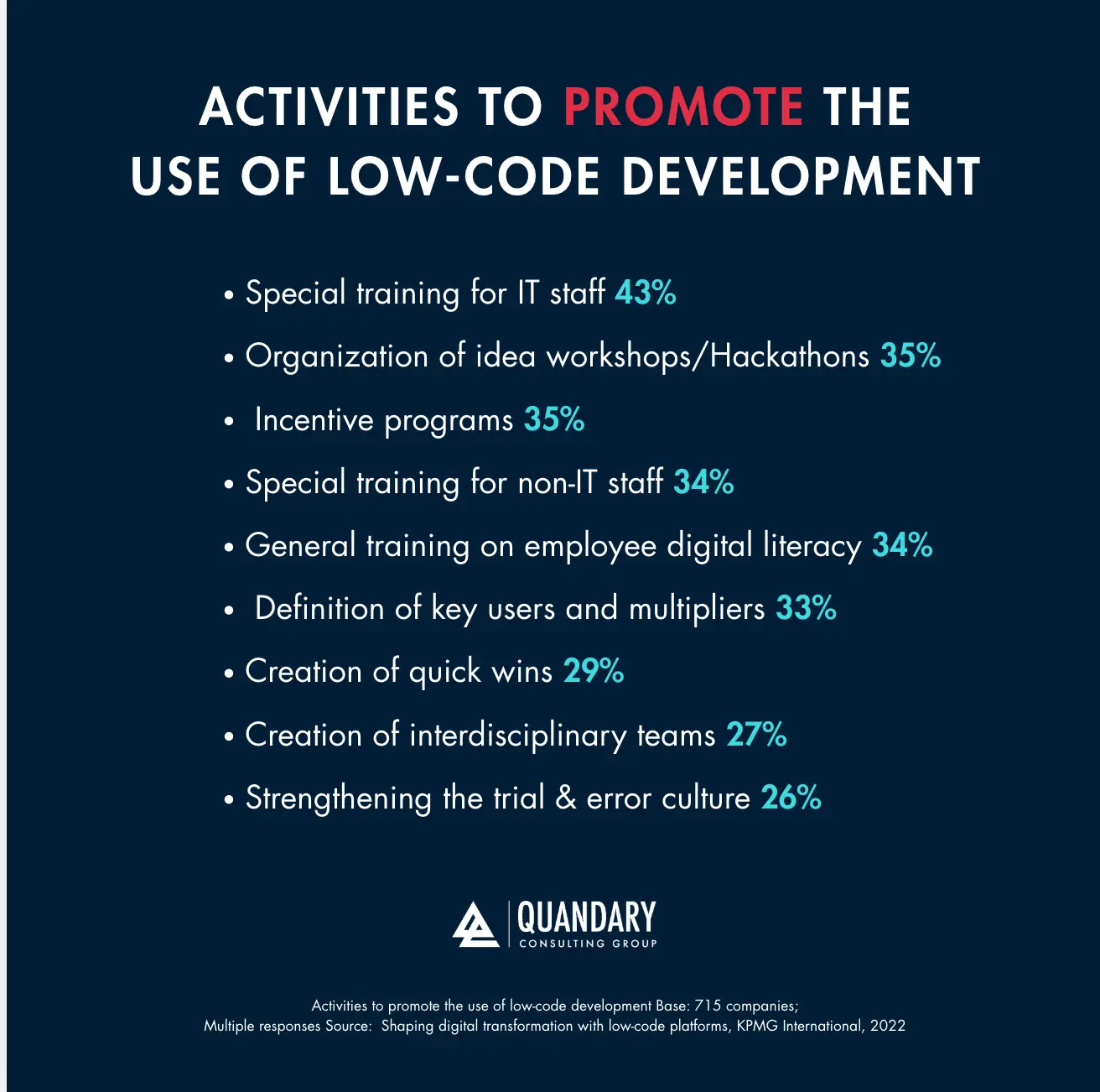
- Tailored workflows aligned to your business processes
- Faster implementation and iteration cycles
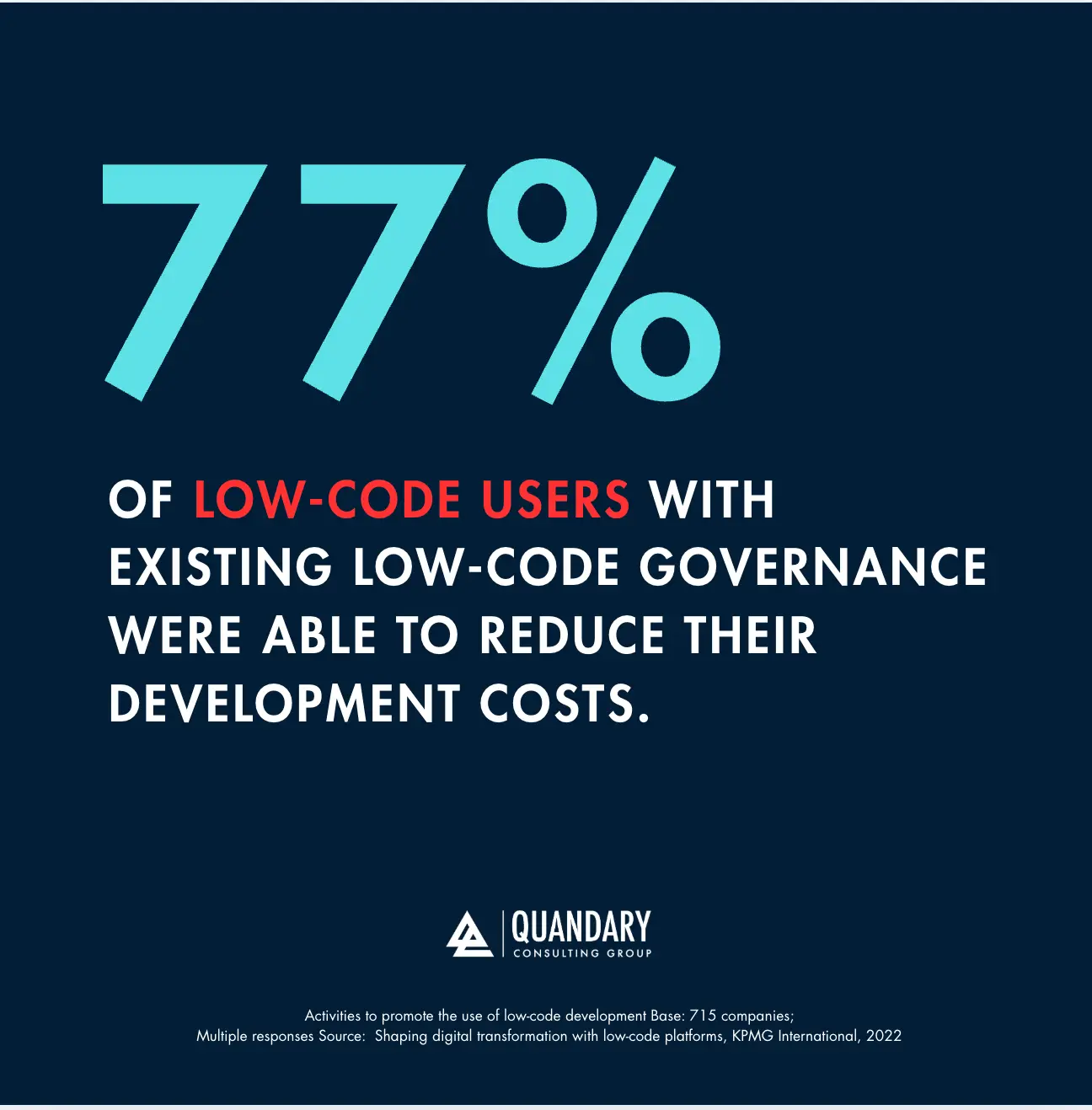
- Lower total cost of ownership compared to traditional development
- Flexibility to scale and evolve with your business
Rather than forcing your business to adapt to software, low-code enables software to adapt to your business.
How Quandary Helps Construction Firms Scale Workforce Management
At Quandary Consulting Group, we design and implement custom workforce management solutions using Microsoft Power Platform, Workato, and Quickbase.
Our solutions are built to streamline and automate:
- Workforce scheduling and resource allocation
- Project planning and execution
- Time tracking and payroll integration
- Compliance and certification management
- Data analytics and forecasting
- Team communication and reporting
By leveraging low-code development, we deliver enterprise-grade solutions quickly and cost-effectively—without the overhead of traditional custom development.
Organizations gain the capabilities of large-scale enterprise systems while maintaining flexibility and cost control.
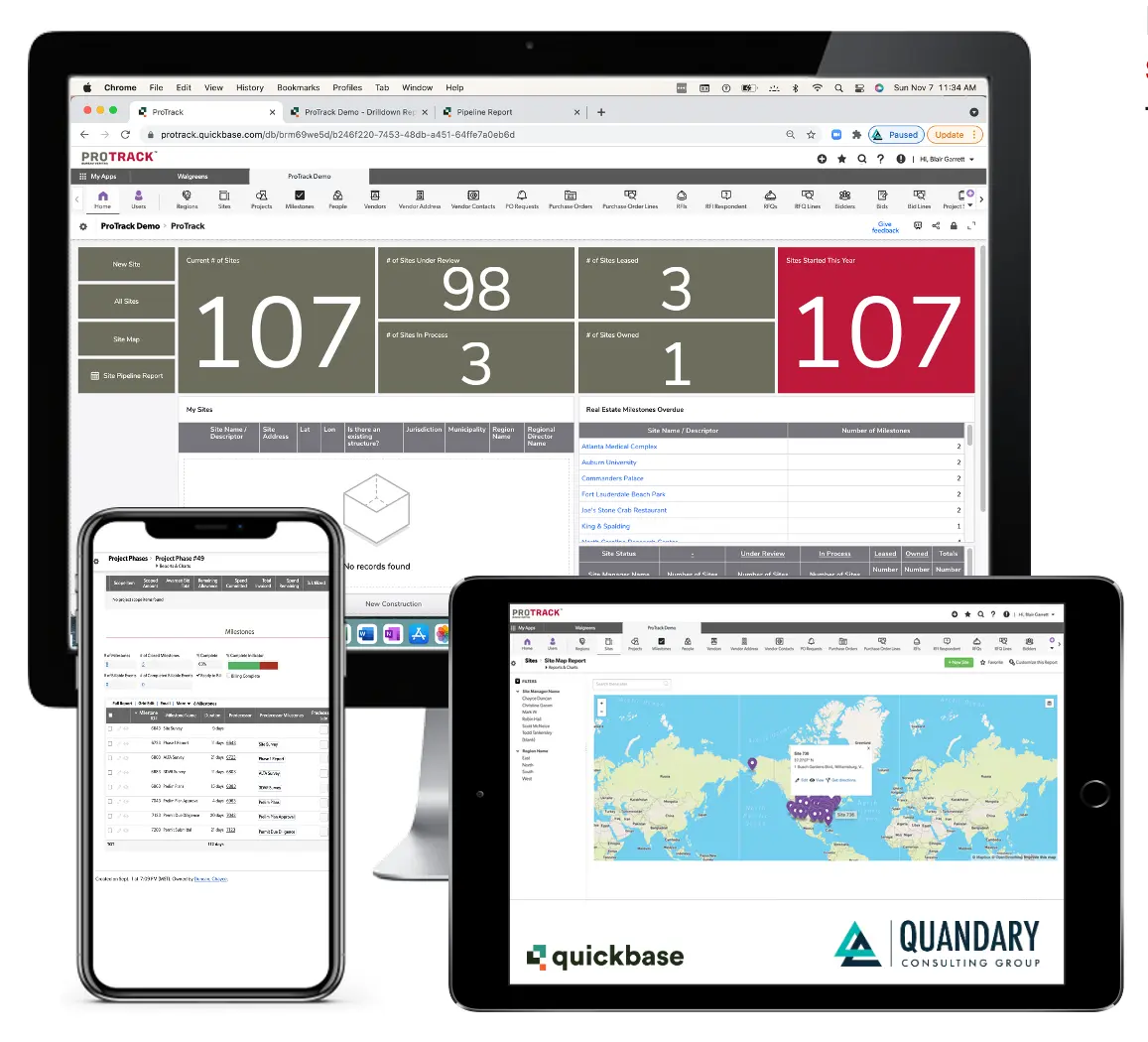
Ready to Modernize Your Workforce Management Strategy
Construction organizations that modernize workforce management are seeing measurable improvements in efficiency, cost control, and project delivery.
Those that delay continue to face operational inefficiencies, rising costs, and increased competitive pressure.
If you are evaluating workforce management solutions—or looking to move beyond spreadsheets and legacy tools—now is the time to act.
Let’s Talk!
If you are looking to:
- Optimize workforce planning and scheduling
- Reduce downtime and operational inefficiencies
- Implement Microsoft Power Platform, Workato, or Quickbase
- Build a scalable, low-code workforce management solution
At Quandary Consulting Group, we can help you design and deliver a solution aligned to your business. Schedule a consultation to begin transforming your workforce management strategy into a competitive advantage.