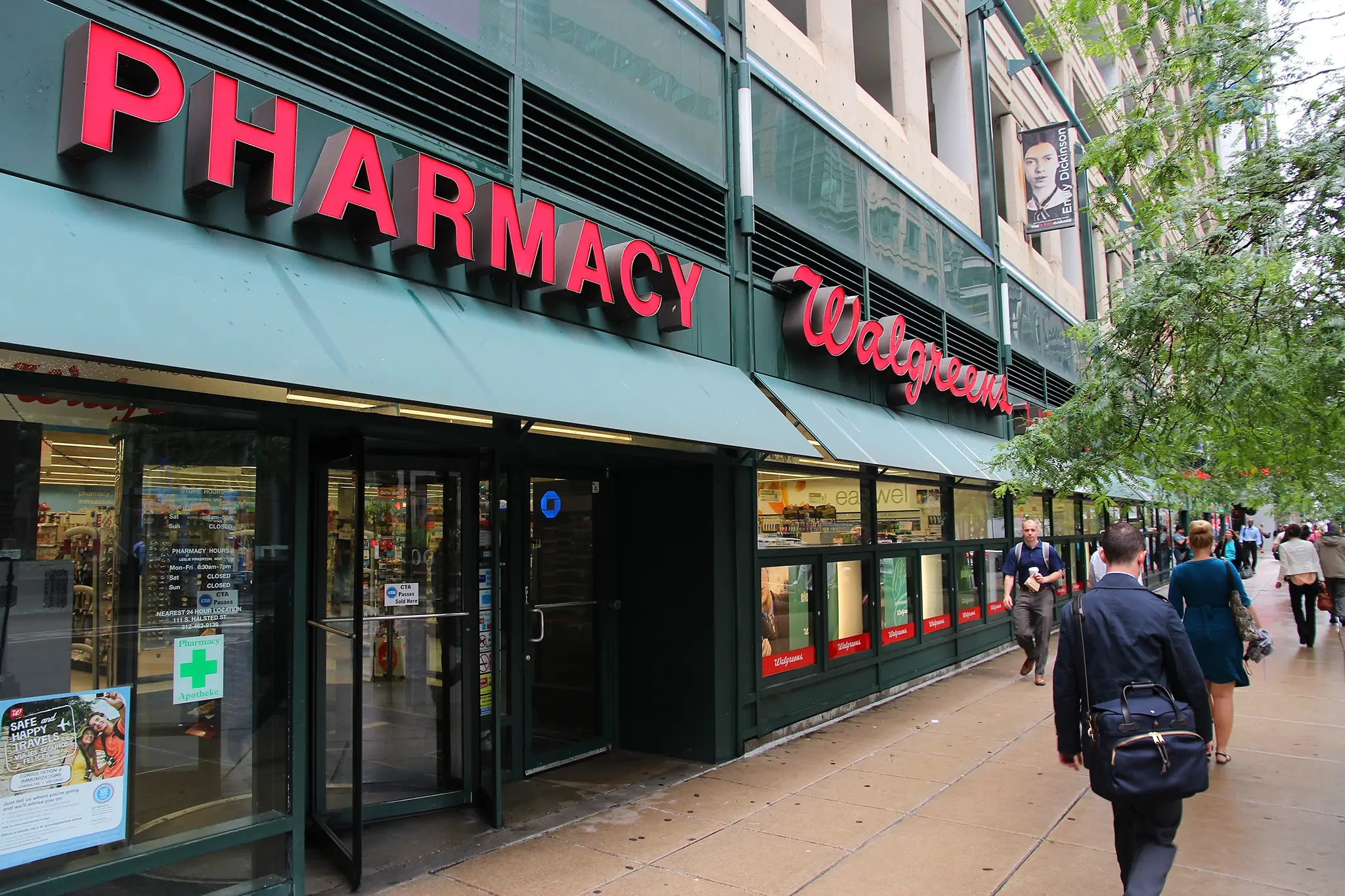
Walgreens, JLL, BVNA & Quandary Redesign ProTrack to Modernize Multi-Site Retail Capital Improvement Management
The Client Profile: Walgreens / Bureau Veritas North America (BVNA)
- Program Management Partner: JLL
- Technology Partner: Quandary Consulting Group
- Platform: Quickbase
- Application: ProTrack
- Industry: Retail, Facilities Management & Construction
- Use Case: Multi-Site Capital Improvement and Store Refresh Management
Walgreens operates one of the largest retail pharmacy footprints in the United States. Maintaining a portfolio of that scale requires an ongoing pipeline of capital improvement projects ranging from routine facility upgrades to more comprehensive store remodels and refresh programs.
These projects can include new signage, interior and exterior painting, flooring replacement, lighting, fixtures, ADA improvements, repairs, equipment upgrades, and other capital improvements designed to maintain and modernize the physical store environment.
Bureau Veritas North America supported Walgreens through its construction and project management capabilities and its ProTrack construction project management platform (developed in conjunction with Quandary Consulting Group), while JLL played an important role in the broader facilities and program management ecosystem.
ProTrack was built on Quickbase and designed specifically for multi-site construction management. The platform supported project schedules, site history, resource allocation, quality control, process automation, performance metrics, vendor management, field data, budgets, documents, and reporting.
As Walgreens' programs and operational requirements evolved, Quandary Consulting Group was brought in to help rethink and redesign the Walgreens/BVNA ProTrack environment around the people actually responsible for delivering store refreshes.
The Challenges
A Store Refresh Was Not One Project — It Was a Network of Interdependent Workflows.
On paper, refreshing a Walgreens location might sound relatively straightforward; i.e., replace flooring, paint the store, install new signage, complete a punch list, complete facility improvements, close the project, warranty management, etc.
Operationally, however, each refresh touched numerous teams, vendors, approvals, schedules, budgets, documents, and dependencies; for example a single capital improvement initiative could require coordination between: Walgreens → JLL/BVNA → Project Management → Construction → Facilities → Procurement → Finance → Vendors → Contractors → Field Teams → Store Operations → Closeout
Each department viewed the project differently.
- A construction manager needed to know whether work was ready to begin.
- A procurement stakeholder needed visibility into vendors, bids, costs, and approvals.
- A facilities stakeholder cared about the condition of the location and what improvements were required.
- Finance needed accurate budget and spend information.
- Store operations needed to understand when work would occur and how it could affect the location.
- Executives needed portfolio-level visibility across hundreds or potentially thousands of individual projects.
Most importantly, project managers needed to understand all of the above, plus more.
The existing ProTrack environment contained significant functionality, but the application needed to evolve around how Walgreens, JLL, and BVNA teams actually executed the work.
Understanding the Entire Store Refresh Lifecycle
Rather than beginning with the existing Quickbase application and asking what screens needed to change, Quandary began with the business.
The team conducted detailed discovery sessions with the departments and stakeholder groups impacted by Walgreens store refresh and capital improvement programs. This approach aligned closely with ProTrack's underlying onboarding philosophy, which specifically calls for stakeholder interviews to distinguish executive requirements from daily workflow requirements.
But for the Walgreens redesign, the objective went deeper; because, Quandary needed to understand:
- What happens when a store is identified for a refresh?
- Who determines the scope?
- Which department owns each portion of the project?
- What information does each team need?
- What must happen before another department can begin its work?
- Where do approvals occur?
- How are contractors and vendors coordinated?
- How are schedules communicated?
- How are budgets and changes managed?
- What happens when something falls behind?
- How does leadership understand the status of the overall program?
- What constitutes a truly completed store refresh?
The goal was to capture the actual operational lifecycle, not simply reproduce the existing application.
Mapping Every Department Into One Connected Process
Through stakeholder interviews and process-mapping sessions, ran by JLL and Quandary, documented how workflows traveled across each sub-departments and where those workflows intersected.
Instead of treating signage, flooring, painting, construction, permitting, procurement, budgeting, scheduling, and closeout as unrelated activities, Quandary helped structure them as components of a larger capital improvement lifecycle.
Conceptually, that lifecycle became: Store Identified → Scope Defined → Assessment → Budget → Approvals → Vendor/Contractor Coordination → Scheduling → Construction → Field Updates → Issue Resolution → Punch List → Closeout → Store History
Within that lifecycle, individual scopes of work could progress through their own workflows, for example
- Store Refresh → Flooring → Vendor Assignment → Schedule → Installation → Inspection → Completion
- Store Refresh → Signage → Design/Scope → Approval → Fabrication → Installation → Verification
- Store Refresh → Painting → Contractor Assignment → Schedule → Field Completion → Quality Review
All of those activities ultimately belonged to the same Walgreens location and capital improvement program and this relationship was critical to the redesigned ProTrack architecture.
The Solutions
Redesigning ProTrack Around the Walgreens Store Refresh Process
Quandary redesigned the Quickbase-powered ProTrack environment to better reflect how Walgreens, JLL, BVNA, contractors, vendors, and internal stakeholders actually coordinated capital improvement projects.
Instead of forcing users to adapt their work to the structure of the application, the redesigned system was structured around the operational relationships between sites, projects, scopes, milestones, stakeholders, vendors, budgets, documents, approvals, and closeout activities. Quickbase remained the foundation because its low-code architecture could support a highly configurable environment while maintaining role-based access, automation, integrations, and portfolio-level reporting.
The ProTrack platform itself was designed to support configurable user privileges, vendor and stakeholder task management, milestone tracking, automated notifications, integrations, and site- and program-level reporting and Quandary used those capabilities to create a more intuitive operating model for Walgreens' programs.
Creating a Single Source of Truth for Every Walgreens Location
One of the most important architectural principles was establishing the store or site record as the operational center of the system. Rather than information being scattered across spreadsheets, email threads, individual project trackers, and departmental systems, stakeholders could work from a common record connected to the broader history of the Walgreens location.
This aligned with ProTrack's site-management model, where site records can centralize approvals, project milestones, recurring services, documents, assets, planning information, and project communications
Connecting Interdepartment-Specific Workflows Without Creating Departmental Silos
A major design consideration was recognizing that different departments needed different experiences and the answer was not to force everyone into the same dashboard. Quandary designed ProTrack so users could interact with the information most relevant to their responsibilities while still contributing to a common operational dataset.
- Project managers could focus on schedules, milestones, dependencies, and exceptions.
- Construction teams could focus on active projects and field execution.
- Facilities teams could track site conditions and required improvements.
- Procurement and vendor-management stakeholders could manage contractor information and purchasing activity.
- Financial stakeholders could monitor budgets, approvals, and spend.
- Executives could view portfolio and program performance.
The underlying information remained connected even though the user experience changed based on role.
Managing Hundreds of Milestones Without Hundreds of Follow-Up Emails
Walgreens' own ProTrack use case demonstrates the scale of the scheduling challenge: the environment supported a 700-line schedule managed and reported in real time through ProTrack. The Walgreens program included multiple remodel programs, new-store and program rollouts, permitting, scheduling, budget management, contractor management, and closeout management.
Quandary's redesign focused on making that complexity manageable: Milestones could represent critical steps across the refresh lifecycle, allowing teams to understand what had happened, what needed to happen next, who was responsible, and whether the broader project remained on schedule.
ProTrack's milestone functionality supports status updates, notes, delivery dates, assignments, role-based notifications, and drill-down visibility into individual milestones; the operating model could move toward: Milestone Updated → ProTrack Updated → Stakeholder Notified → Next Action Triggered
Improving Portfolio-Level Visibility
Individual store refreshes matter, but Walgreens, JLL, and BVNA also needed to understand the program as a whole. Quandary redesigned reporting and dashboards so stakeholders could move between portfolio-level visibility and individual store-level detail.
ProTrack's reporting architecture was already designed to provide real-time operational visibility across multiple units and allow users to drill from summarized program information into the corresponding site or project.
The redesigned environment could therefore help answer questions such as:
- Which stores are currently under construction?
- Which projects are behind schedule?
- Which scopes have not started?
- Where are approvals outstanding?
- Which contractors are responsible for delayed work?
- Which refreshes are approaching completion?
- Which locations have unresolved punch-list items?
- Where is budget at risk?
- Which stores require immediate attention?
Instead of leadership requesting status updates from multiple departments, the system could increasingly provide those answers directly.
Connecting Budgets, Vendors, Approvals, and Construction
Capital improvements are not simply construction workflows. They are also financial workflows. The redesigned ProTrack environment helped connect the operational side of a Walgreens refresh with the financial activity surrounding it.
ProTrack's underlying procurement functionality supports vendor management, bid management, milestone tracking, purchasing, invoices, approvals, document management, and automated workflows; which, allowed Quandary to design processes where budget and procurement information remained connected to the store and project it supported.
Rather than separate teams maintaining separate versions of the project, the resulting operational chain could look more like: Scope Identified → Budget Established → Vendor Selected → Approval Received → Work Scheduled → Work Completed → Invoice Approved → Project Closed
Building Accountability Into the Workflow
A large multi-site capital improvement program cannot depend entirely on people remembering to follow up. Quandary incorporated automation and structured workflow logic throughout the redesigned application to help surface responsibilities and exceptions.
ProTrack supports role-based workflows, automatic notifications, reminders, approval routing, permissions, and alerts when tasks are due or projects are at risk of falling behind and this allowed the redesigned environment to move beyond simply recording what happened and could actually help coordinate what needed to happen next, for example:
- When a milestone changed, the appropriate stakeholder could be notified.
- When an approval was required, the request could move to the appropriate person.
- When work fell behind, project teams could identify the exception.
- When documentation changed, stakeholders could work from the latest version.
When one department completed its portion of the process, the next team could gain visibility into the handoff.
Standardizing Store Refreshes Without Making Every Store the Same
Walgreens' scale created another challenge: standardization, a capital improvement program needs repeatable processes, but individual stores can have different conditions, scopes, contractors, schedules, permitting requirements, and operational constraints and Quickbase gave Quandary the flexibility to balance both requirements. Common project templates, milestones, workflows, fields, and reporting structures could establish a standardized operating model while still allowing individual locations and projects to capture their unique requirements.
Which meant that rather than building an entirely different process for every project, this created a framework for: Standard Process + Store-Specific Execution
Creating a More Structured Project Closeout Process
Completing construction did not necessarily mean completing the project, teams still needed to manage inspections, outstanding issues, punch-list items, documentation, approvals, warranties, and final closeout.
ProTrack's closeout capabilities support punch-list management, mobile field updates, photographs, task assignment, automatic notifications, approval tiers, warranty tracking, and standardized punch-list templates and Quandary incorporated these concepts into the broader redesign so project completion could become a defined workflow rather than an ambiguous status: Construction Complete → Punch List → Corrections → Verification → Documentation → Approval → Closeout
Once complete, the project information remained connected to the Walgreens store record, helping create a long-term history of improvements performed at the location.
The Results
The redesigned Walgreens/BVNA ProTrack environment transformed Quickbase from a project tracking application into a more comprehensive multi-site capital improvement operations platform. Rather than departments managing their portions of a store refresh independently, the redesigned architecture helped create a shared operational model connecting people, projects, stores, contractors, milestones, budgets, documents, approvals, and reporting.
Key Outcomes Included:
- A centralized source of truth for Walgreens store refresh and capital improvement projects.
- Greater cross-department visibility into the status and dependencies surrounding each project.
- More standardized workflows across repeatable multi-site refresh programs.
- Improved milestone and schedule visibility for complex programs involving hundreds of individual activities.
- Better coordination between Walgreens, JLL, BVNA, vendors, contractors, and project stakeholders.
- Role-specific dashboards and reporting that gave users relevant information without disconnecting them from the broader project lifecycle.
- Automated notifications and workflow routing that reduced dependence on manual follow-up.
- Stronger budget, procurement, and approval visibility tied directly to sites and projects.
- More structured project closeout and punch-list management.
- A scalable Quickbase architecture capable of supporting changing capital improvement requirements across a massive retail footprint.
Most importantly, Quandary's work was not simply a technical redesign - It was an operational redesign supported by Quickbase.
From Store Refresh to Connected Capital Improvement Operations
A Walgreens refresh might begin with something as straightforward as replacing flooring, repainting a store, installing new signage, or updating aging facilities; but at enterprise scale, those seemingly simple projects create thousands of interconnected decisions, tasks, approvals, dependencies, vendors, documents, schedules, and financial transactions.
Quandary worked with Walgreens, JLL, and Bureau Veritas North America to understand those relationships at the departmental level and redesign ProTrack around the way the work actually happened.
The result was an operating model as one connected lifecycle: Store → Scope → Budget → Approval → Vendor → Schedule → Construction → Milestone → Issue → Punch List → Closeout
- Quickbase provided the low-code foundation.
- ProTrack provided the construction and capital program framework.
- Quandary helped redesign the architecture, workflows, and user experience around the people responsible for getting the work done.
For an organization managing capital improvements across a large distributed retail footprint, that creates something more valuable than another project management application, it creates a connected system for managing the physical evolution of the retail portfolio.
Our Latest Projects


Services
Industries


© 2026 Quandary Consulting Group 2026. All Rights Reserved.
Privacy Policy