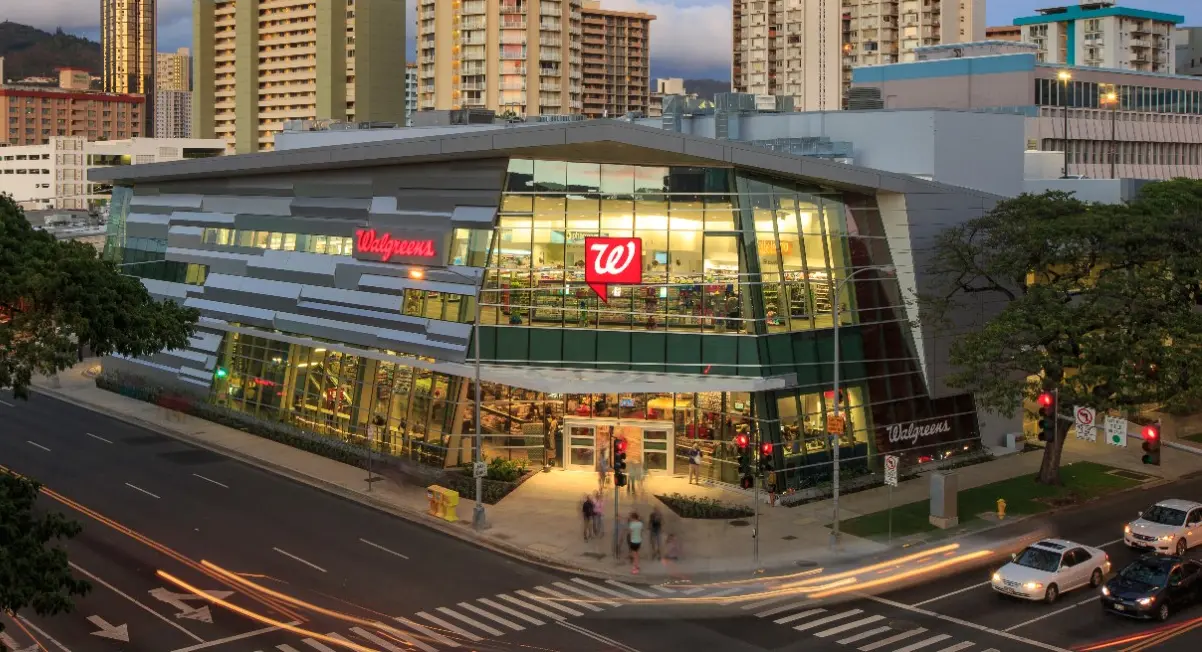
A Structured Data Lake Strategy Turned Walgreens' Fragmented Data Into The Data Foundation for AI/Microsoft Copilot
The Company Profile: Walgreens
- Industry: Retail, Real Estate, Construction & Facilities Management
- Use Case: Enterprise Data Cleanup, Data Migration & Data Lake Architecture
- Programs: New Store Development & Existing Store Refresh
Walgreens operates one of the largest retail pharmacy networks in the United States, creating a significant and ongoing need to manage information surrounding new-store development, existing-store renovations, capital improvements, facilities projects, construction, vendors, budgets, schedules, and property-level activity.
At that scale, data is more than a reporting asset. It becomes part of the operational infrastructure required to develop and maintain the physical retail portfolio.
Walgreens was already using ProTrack (Bureau Veritas North America's Quickbase-powered construction project management environment, to support facilities and construction programs.) The platform was designed for multi-site management and could centralize project schedules, site history, resource allocation, quality control, performance metrics, budgets, vendor information, field data, documents, and integrations.
However, improving the application was only part of the larger transformation, Walgreens also needed to address the data behind the operation. Quandary Consulting Group and BVNA worked with Walgreens and JLL to understand what information existed, what information teams actually needed, how that information should be structured, and how years of operational data could be cleaned and reorganized into a more scalable data architecture.
The Challenges
AI Was the Destination, However, the Data Had to Come First.
When organizations begin exploring artificial intelligence, the conversation often starts with technology: Which AI model should we use? Where can we deploy Microsoft Copilot? What processes could benefit from AI agents? For Walgreens, Quandary Consulting Group and Bureau Veritas North America (BVNA) recognized that the more important questions needed to come first. Could Walgreens trust the data those AI systems would depend on?
Before Microsoft Copilot could reliably surface information about a Walgreens location, the underlying store and project data needed to be accurate, structured, and accessible.
- Before AI could analyze construction activity, capital investments, budgets, schedules, milestones, or vendor performance, those entities needed consistent definitions and clearly established relationships.
- Before an AI assistant could summarize the history of a store, Walgreens needed a reliable way to connect that location with the projects, improvements, vendors, documents, budgets, and milestones associated with it over time.
- Before future AI agents could help coordinate work across departments, Quandary needed to understand how those departments worked, what information they depended on, and how that information moved through the organization.
That made the first phase of Walgreens' AI journey fundamentally different from an AI implementation. Phase One was about creating the trusted, structured, and connected data foundation that future AI development would require.
Six Weeks of Discovery Across Walgreens and JLL
Quandary and BVNA began Phase One with an intensive six-week stakeholder discovery initiative involving JLL and the departments supporting Walgreens' new-store development and existing-store refresh programs. Rather than designing the future architecture exclusively from an IT or systems perspective, Quandary started with the business and the team worked across departments to understand how Walgreens planned, developed, constructed, refreshed, maintained, and improved locations throughout its retail portfolio.
The discovery centered on two major operational lifecycles:
- New-Store Development: New-store development involved the teams and information required to move a Walgreens location through planning, real estate development, design, permitting, construction, project management, completion, and eventual store opening. Each stage generated information that could become important later—not only for the employees managing the project, but for reporting, historical analysis, portfolio planning, and future AI applications.
- Existing-Store Refresh and Capital Improvements: Existing-store programs presented a different set of requirements. These teams managed improvements across active Walgreens locations through capital projects involving signage, flooring replacement, interior and exterior painting, facility improvements, renovations, repairs, and other physical store upgrades. Unlike a new location moving toward opening, an existing store could have years of project and investment history associated with it and understanding that history—and preserving the relationships between the store and the work performed there—was critical to creating a useful long-term data architecture.
The six-week discovery process therefore went beyond traditional stakeholder interviews and it became the requirements-gathering process for Walgreens' future AI-ready data environment.
Understanding the Business Context Behind the Data
Quandary was not simply asking stakeholders which reports they used or which fields existed in their systems and the team needed to understand the business meaning behind the data.
Across departments, discovery examined questions such as:
- What information does this team create?
- What information does it consume?
- Where does that information originate?
- Who owns and maintains it?
- What does a particular project status actually mean?
- Which information determines what happens next?
- Which records need to be connected?
- What information is required to make a decision?
- Which historical information remains operationally valuable?
- Where are employees manually searching for information?
- Where must employees combine information from multiple systems before they can understand what is happening?
- Which definitions or identifiers differ across departments?
- What context would someone need to understand this information without already knowing the project?
Those questions were essential because AI requires requires data that has context:
- A field labeled "Completion Date" has limited value if different programs define completion differently.
- A project record has limited analytical value if it cannot be reliably connected to the correct Walgreens location.
- A vendor name becomes difficult to analyze if the same contractor appears under several naming conventions.
And years of capital project history become significantly less valuable if AI cannot determine how individual projects relate to a store, program, budget, schedule, or milestone. The challenge was therefore not simply organizing Walgreens' information, it was was preserving and structuring the business context that gave that information meaning.
Designing for the Questions Walgreens Could Ask in the Future
The discovery process also required the team to think beyond Walgreens' immediate reporting requirements. If the goal was to prepare the organization for Microsoft Copilot and future AI development, the data architecture needed to support questions employees might eventually ask conversationally, for example:
- Which Walgreens refresh projects are currently behind schedule?
- Which stores have outstanding signage projects?
- Show me projects approaching their scheduled completion date where critical milestones remain unfinished.
- Which contractors are associated with projects experiencing the greatest schedule delays?
- Summarize the capital improvements completed at this Walgreens location over the past five years.
- Compare planned versus actual spending across active store refresh programs.
- Which locations have experienced repeated capital improvements within the same scope of work?
To an employee using Microsoft Copilot or another AI interface, these could eventually feel like simple questions and behind each answer, needed be a reliable network of structured enterprise information: Store + Site + Project + Program + Scope + Vendor + Budget + Schedule + Milestone + Status + Completion + History
If those relationships were incomplete, inconsistent, or poorly defined, AI could potentially generate an answer—but Walgreens would have less reason to trust it. Phase One was designed to address this very problem before AI development began.
Mapping Departmental Requirements Into an AI-Ready Data Model
The six-week stakeholder process also revealed that different departments could view the same Walgreens location through very different operational lenses.
- Construction teams needed visibility into projects, schedules, milestones, contractors, issues, dependencies, and completion.
- Facilities teams needed information about existing conditions, repairs, improvements, assets, and ongoing store requirements.
- Financial stakeholders needed budgets, commitments, spending, forecasts, and variances.
- Project managers needed ownership, dependencies, deadlines, risks, issues, documentation, and status.
- Executive leadership needed portfolio-level visibility across programs, regions, stores, capital investments, schedules, risks, and overall performance.
None of those perspectives was inherently more important than another. They represented different ways of interpreting the same underlying retail portfolio. So, rather than forcing those requirements into a single generic dataset, Quandary and BVNA documented how each stakeholder group used information and translated those requirements into the future data architecture.
That created a deliberate progression: Stakeholder → Business Requirement → Data Requirement → Data Relationship → Data Structure → AI Use Case
This approach helped ensure the architecture was not simply optimized for storing historical information, it was being designed to make that information more understandable and usable across employees, operational applications, reporting platforms, analytics tools, Microsoft Copilot, and future AI agents.
Turning Fragmented Information Into Enterprise Knowledge
Ultimately, the challenge facing Walgreens was not a lack of data. It was transforming years of operational data into structured enterprise knowledge that future technology could reliably understand and use.
The organization already had extensive information about its stores, development programs, construction projects, capital improvements, vendors, schedules, budgets, milestones, and historical activity. The challenge was connecting all of these pieces in a way that preserved their business meaning, which is why Phase One began with people rather than AI. Quandary and BVNA first needed to understand how Walgreens operated. From there, they could determine what information mattered, how that information related, how it should be standardized, and how the resulting architecture could support the next stage of modernization.
The objective was not simply to prepare Walgreens' data for migration, it was to prepare Walgreens' data for connected intelligence - Which made this the foundation of what would become the prerequisite for what came next: Microsoft Copilot, advanced analytics, intelligent automation, AI agents, and future AI-powered operational workflows.
The Solution
Phase One: Cleaning the Data Before Building AI
With the requirements established, Quandary and BVNA began addressing the existing data. Walgreens had accumulated information across years of construction, facilities, development, and capital improvement activity; and, like most enterprise datasets, historical information was not necessarily created with generative AI in mind.
Quandary worked to identify and address issues such as:
- Duplicate records
- Inconsistent naming conventions
- Incomplete records
- Legacy and obsolete fields
- Conflicting data formats
- Redundant information
- Inconsistent site and project identifiers
- Different terminology between departments
- Historical fields that no longer aligned with current processes
- Relationships between stores, projects, programs, vendors, milestones, and other records
This work was a critical part of establishing AI readiness.
AI systems can retrieve, analyze, and surface information at remarkable speed. However, that speed only creates value when the underlying data is accurate, consistent, properly structured, and connected to the right business context.
If information is duplicated, inconsistently defined, incorrectly related, or poorly organized, AI does not solve the problem. It can simply surface the wrong information faster and with greater confidence.
That is why Quandary focused first on strengthening the data foundation. By improving data quality, structure, relationships, and governance before introducing AI, the team could create an environment where future tools like Microsoft Copilot and AI agents would have reliable information to work with.
The objective was not simply to make the data cleaner. It was to create a trusted operational foundation capable of supporting the next phase of AI development.
Creating a Common Language for Walgreens Data
Data standardization became another critical component of Phase One because AI systems need more than access to information. They need a consistent way to understand what that information represents and how it relates to the business. During stakeholder discovery sessions with Walgreens, JLL, and the teams supporting store development and refresh operations, Quandary identified areas where departments used different terminology, definitions, and data structures to describe similar operational concepts.
A "project" could mean something different depending on the department using the term. A site, store, program, scope, milestone, or completion status could be categorized differently across systems and workflows. Those inconsistencies might be manageable when experienced employees know how to interpret them, but they become significant obstacles when introducing AI.
Quandary worked to establish more consistent definitions, structures, and relationships around core operational entities, including: Store | Site | Project | Program | Scope | Vendor | Contractor | Region | Department | Milestone | Budget | Status | Project Type | Completion
The goal was to create a shared data language that could be understood consistently across departments, applications, reporting environments, and eventually AI systems and this was especially important because ProTrack was already built around interconnected operational information.
A single site record could serve as the connection point for approvals, real estate information, construction milestones, maintenance activity, project limits, assets, documents, communications, vendors, and other information associated with that Walgreens location. Phase One expanded that same principle beyond ProTrack, Quandary began establishing a more consistent enterprise data model where relationships between stores, projects, vendors, budgets, milestones, documents, and other entities could be clearly understood.
That structure would become increasingly important as Walgreens prepared for Microsoft Copilot and future AI development.
For example, if an employee eventually asked an AI assistant to "show me all active refresh projects in this region that are behind schedule and over budget," the AI would need to understand exactly what Walgreens meant by a project, region, active status, milestone, and budget—and how those records were connected.
Without standardized definitions and relationships, the answer could be incomplete or incorrect.
With a common data foundation, however, future AI systems could have a much clearer framework for retrieving information, interpreting operational context, identifying relationships, and supporting employees with reliable answers.
The objective of Phase One was therefore bigger than cleaning up individual records or improving ProTrack. Walgreens needed to establish a common operational language for its data so that people, systems, Microsoft Copilot, and future AI agents could ultimately work from the same understanding of the business.
Building Data Lakes Around the Business, Not the Technology
Once the information had been evaluated, cleaned, standardized, and properly structured, Quandary and BVNA helped move it into data lakes designed around the specific operational requirements uncovered during the six-week stakeholder discovery process.
This was not a traditional data consolidation exercise where years of historical information were simply moved into one massive repository, the architecture was intentionally designed around how Walgreens actually operated.
The discovery process had revealed that different departments relied on different datasets, relationships, reporting requirements, and operational contexts. Construction teams needed one view of the business. Real estate teams needed another. Finance, facilities, vendors, project managers, and leadership each interacted with information differently.
Rather than forcing every department's data into a single generalized structure, Quandary and BVNA helped organize the environment so that individual datasets could support specific business requirements while remaining connected to a broader enterprise data foundation, for example:
- Store and site data could provide a consistent foundation for identifying individual Walgreens locations and connecting related operational activity.
- Project and program data could organize new-store development, refresh initiatives, capital improvements, and other project activity.
- Construction data could connect scopes of work, contractors, milestones, schedules, documents, approvals, and completion information.
- Vendor and contractor data could establish consistent relationships between external partners, projects, locations, contracts, and performance history.
- Financial data could connect budgets, forecasts, project costs, commitments, and other financial information to the appropriate projects and programs.
- Real estate data could support property, lease, location, development, and site-related requirements.
- Document and communication data could preserve the context surrounding projects, approvals, decisions, and operational activity.
This approach created something far more valuable than centralized storage - It created a business-aligned enterprise data architecture. Which meant that instead of requiring future AI systems to search across disconnected databases, spreadsheets, applications, documents, and departmental repositories, Walgreens could begin establishing governed data environments where information was organized according to clearly defined business relationships and this distinction was essential for the next stage of the AI journey.
A future Microsoft Copilot experience, for example, should not simply know that a document, project record, budget, and store record exist. It should be able to understand how those pieces of information relate to one another and which information is relevant to the employee asking the question.
By organizing data around the operational requirements identified during stakeholder discovery, Quandary and BVNA were helping create the architecture necessary for AI to retrieve information with greater context, accuracy, and relevance. The goal was not to put all of Walgreens' data in one place, it was to put the right data in the right structure so that employees, applications, Microsoft Copilot, and future AI agents could ultimately understand and use it.
Separating New Store Development and Existing Store Refresh Data
One of the most important findings from the six-week stakeholder discovery process was that new-store development and existing-store refresh programs could not simply be treated as identical datasets.
While the two programs shared certain information—such as locations, projects, vendors, budgets, milestones, and construction activity—their operational lifecycles were fundamentally different.
New-store development data tells the story of a location becoming an operating Walgreens store; this lifecycle could include site selection, real estate activity, approvals, design, permitting, construction, vendor coordination, inspections, project closeout, and ultimately the transition of a completed location into ongoing store operations.
Existing-store refresh data tells a different story: how an operating Walgreens location changes over time. A single store could undergo numerous capital improvements across multiple years: New Flooring → New Signage → Painting → Equipment Upgrade → ADA Improvement → Additional Remodel
Each project represents an individual event, but together they create something much more valuable: a historical record of investment and change at the store level and this distinction became particularly important when designing the data foundation for future AI capabilities.
If every refresh were treated as an isolated project, an AI system might be able to answer questions about a specific remodel. But if those projects were properly connected to the store, program, vendors, budgets, scopes, milestones, and previous improvements associated with that location, AI could eventually understand the broader operational history.
An employee could potentially ask:
- "What capital improvements have been completed at this store over the last five years?"
- "When was the flooring last replaced?"
- "Which contractors have worked at this location?"
- "How much has Walgreens invested in this store?"
- "Which locations in this region are likely candidates for another refresh based on their improvement history?"
Those questions require more than access to project records. They require historical context and clearly defined relationships between the data. By separating new-store development from existing-store refresh data while maintaining the appropriate relationships between them, Quandary and BVNA could preserve the unique lifecycle of each program without creating disconnected information silos and the result was a data model capable of representing both how a Walgreens location came into existence and how that location continued to evolve once it became operational.
Establishing those relationships during Phase One was essential. It transformed individual project records into a longitudinal operational history—creating the type of structured, contextual data foundation that Microsoft Copilot and future AI agents could eventually use to identify patterns, retrieve historical context, support capital planning, and help Walgreens make more informed decisions across its store portfolio.
Creating a Store-Centric Data Foundation for AI
At the center of the new data architecture was one of the most important entities in Walgreens' operations: the physical store location; Quandary and BVNA helped establish a model where operational information could ultimately be connected back to the location it affected.
A collection of disconnected project records, documents, budgets, vendor information, and construction activity, future Microsoft Copilot and AI solutions could potentially operate against a more connected representation of each Walgreens location and its history. A store would no longer exist as simply a location ID in one system and a collection of unrelated projects in another. It could become the central point connecting years of operational and capital activity.
For example, a future AI experience could potentially help an authorized employee understand when a store was developed, which capital programs it participated in, what improvements had been completed, how much had been invested, which contractors performed the work, what issues occurred, and when major assets or building components were last upgraded.
That context could also make more sophisticated analysis possible over time.
Instead of asking only, "What happened on Project X?" , Walgreens could eventually ask questions such as:
- "Show me the complete capital improvement history for this store."
- "Which locations have not received a major refresh within the last five years?"
- "Which contractors have completed the most projects in this region?"
- "Which stores have experienced repeated issues following similar improvements?"
- "How much capital has been invested across this group of locations?"
- "Which stores may be approaching the next logical improvement cycle?"
The value comes from the relationships behind those answers and AI can retrieve information quickly, but understanding a store's operational history requires the underlying data to establish how locations, programs, projects, scopes, vendors, costs, milestones, documents, issues, approvals, and completed improvements relate to one another.
That was a critical objective of Phase One, Quandary and BVNA were not simply preparing individual datasets for AI. They were helping establish a store-centric enterprise data foundation that could give future Microsoft Copilot experiences and AI agents the context required to understand Walgreens' physical locations as connected, evolving operational assets.
Preparing the Division for Microsoft Copilot and Enterprise AI
The data modernization initiative was deliberately positioned as Phase One because data modernization was not the final destination. AI enablement was.
Before Walgreens could introduce Microsoft Copilot and other AI capabilities across these operations, the underlying information needed to be trustworthy, structured, connected, and accessible.
The six-week stakeholder discovery process helped Quandary and BVNA understand how the business actually operated. Data cleanup improved the quality of the information. Standardization created a common language across departments. The new data architecture established meaningful relationships between stores, projects, programs, vendors, budgets, milestones, documents, and historical improvements.
Together, those efforts created the foundation required for the next phase of AI development and once that foundation was established, the opportunity extended far beyond traditional dashboards and reporting. Instead of opening multiple applications, reviewing reports, searching through documents, and manually assembling information, employees could eventually interact with operational data using natural-language AI experiences through Microsoft Copilot.
A project leader could potentially ask:
- "Summarize the current status of this project and identify anything putting the completion date at risk."
- A regional leader could ask:
- "Show me the capital improvement history for this store and summarize the work completed during the last five years."
- A program manager could ask:
- "Which active projects are behind schedule, over budget, or waiting on an approval?"
Leadership could potentially ask: "Which stores in this region have received the highest capital investment, and what were the primary drivers?"
The opportunity could eventually extend beyond answering questions; as Walgreens continued developing its AI capabilities, the same connected data foundation could support more advanced use cases involving project risk identification, portfolio analysis, historical comparisons, vendor performance insights, capital planning, document summarization, exception detection, and AI-assisted decision support.
This represents an important shift in how employees interact with enterprise information. Historically, employees needed to know where information lived, which system contained it, which report to open, and how different records related to one another and the future-state vision reversed that relationship. Which meant that instead of requiring employees to find the information, Microsoft Copilot and future AI experiences could help bring the right information, context, and relationships to the employee and that experience depends entirely on the quality of the foundation beneath it.
Copilot can only provide reliable answers when it has access to reliable information. AI can only understand relationships that have been properly established. And intelligent automation can only make dependable decisions when business definitions, permissions, data structures, and operational context are clear. This is why Phase One mattered - Quandary and BVNA were helping Walgreens prepare the division not simply to adopt AI, but to create an environment where AI could eventually be useful, governed, contextual, and trusted. Each step increased the value of the next, which created a very intentional roadmap: Clean Data → Standardized Data → Structured Data → Connected Data → Accessible Data → Microsoft Copilot & AI
Creating the Foundation for AI Agents
Microsoft Copilot represented one part of the future roadmap; the same data foundation could also prepare the division for more advanced AI agents and intelligent workflow automation.
Future AI capabilities could potentially help teams:
- Summarize project activity
- Identify schedule risks
- Surface incomplete milestones
- Find relevant project documentation
- Analyze store improvement histories
- Compare projects across regions
- Identify exceptions requiring human attention
- Answer questions about projects and sites
- Surface vendor or contractor information
- Assist with executive program reporting
- Coordinate next actions across operational workflows
Those capabilities depend on context and context depends on relationships, and these relationships depend on the data architecture underneath them; which is why the first phase focused so heavily on discovery and data.
From Data Migration to AI Readiness
What could have been approached as a traditional data cleanup and migration project became something much more strategic. Quandary Consulting Group and BVNA were helping Walgreens establish the foundation for an operational environment where AI and Microsoft Copilot could eventually change how employees access, understand, and interact with construction, facilities, real estate, store development, and capital improvement information.
The six-week stakeholder discovery process was critical to that effort. Before redesigning the data architecture, Quandary needed to understand the business behind the data and the team worked across departments to understand:
- Who uses the data.
- What information they need to do their jobs.
- How different teams define and interpret that information.
- How data moves between departments, applications, and workflows.
- Which relationships between stores, projects, programs, vendors, budgets, milestones, and documents matter most.
- Where inconsistencies, duplication, and structural gaps could create problems.
- And ultimately, how the information needed to be organized for future AI systems to use it effectively.
Those findings shaped the work that followed: Data could be evaluated and cleaned based on actual business requirements rather than assumptions. Common definitions could be established around critical operational entities. New-store development and existing-store refresh information could be structured according to their distinct lifecycles. Data lakes could be organized around specific business needs. And information could be connected back to the physical Walgreens location to create a richer historical view of each store.
The result was more than migrated data, it was the beginning of an AI-ready operational data foundation. Instead of future AI systems encountering disconnected records with inconsistent terminology and unclear relationships, Walgreens could move toward an environment where information had greater structure, context, and meaning.
The Results
Phase One gave Walgreens a stronger data foundation for the next stage of its AI transformation. Rather than introducing Microsoft Copilot or developing AI solutions on top of fragmented historical information, Quandary and BVNA helped address the underlying data environment first.
Key Outcomes Delivered:
- Six weeks of stakeholder discovery with JLL and Walgreens teams supporting new-store development and existing-store refresh programs.
- Department-by-department requirements gathering to understand how employees created, consumed, interpreted, and acted on operational information.
- A data architecture designed around future AI requirements, rather than simply replicating the legacy environment.
- Legacy data cleaned, normalized, and standardized before migration.
- Purpose-built data lakes organized around specific stakeholder and operational requirements.
- Clearer separation between new-store development and existing-store refresh datasets while preserving relationships across the enterprise.
- More consistent definitions for stores, projects, programs, scopes, vendors, milestones, budgets, and statuses.
- A store-centric data model capable of preserving the history of development and capital improvement activity associated with individual Walgreens locations.
- A stronger foundation for Microsoft Copilot, AI development, analytics, automation, and future AI agents.
- An AI-readiness roadmap that started with data governance and operational context instead of deploying AI before the organization was ready for it.
Building the Foundation for an AI-Powered Future
The Walgreens initiative demonstrates one of the most important lessons in enterprise AI transformation: AI readiness begins long before the first AI model, Microsoft Copilot, or agent is deployed.
For Walgreens, Phase One began with people; Quandary Consulting Group and BVNA spent six weeks working alongside JLL and the Walgreens teams responsible for new-store development and existing-store refresh programs. The objective was not simply to inventory existing systems or determine where data was stored. It was to understand how the division actually operated. These conversations revealed how employees used information, how departments defined critical business concepts, where data moved between teams, which systems supported different stages of the project lifecycle, and where inconsistencies could create problems for future AI development; from there, each step informed the next.
- Stakeholder discovery defined the business requirements
- Business requirements defined the data requirements
- Data requirements identified what needed to be cleaned, standardized, connected, and restructured.
The resulting architecture created the foundation for Microsoft Copilot and future AI development, the workflow progression was intentional designed: Stakeholder Discovery → Business Requirements → Data Mapping → Data Cleanup → Standardization → Connected Data Architecture → Data Lakes → Microsoft Copilot → AI Development
This approach fundamentally changed the nature of the initiative, which meant that rather than introducing AI and expecting it to interpret years of fragmented operational information, Quandary and BVNA helped Walgreens make sense of the data first. Stores could become the anchor for connected operational histories. Projects could be associated with the programs, scopes, vendors, budgets, milestones, documents, and approvals surrounding them. New-store development could retain a data model appropriate for bringing new locations into operation, while existing-store refresh programs could preserve the evolving history of capital improvements across Walgreens' existing portfolio.
That context is what transforms enterprise data from information that can simply be searched into information that AI can potentially understand, connect, analyze, and use in the appropriate business context.
For Walgreens, the result of Phase One was therefore much more than a data migration, it was the beginning of an AI-ready operational foundation for new-store development and existing-store refresh operations—one designed to give Microsoft Copilot and future AI solutions cleaner information, clearer relationships, stronger business context, and a more reliable foundation for delivering value.
Walgreens did not begin its AI journey by asking AI to make sense of the business, Quandary and BVNA began by structuring the business data so AI eventually could.
Our Latest Projects



© 2026 Quandary Consulting Group. All Rights Reserved.
Privacy Policy