Workato Connects Legion & Workday to Automate Workforce Management and HR Data Integration
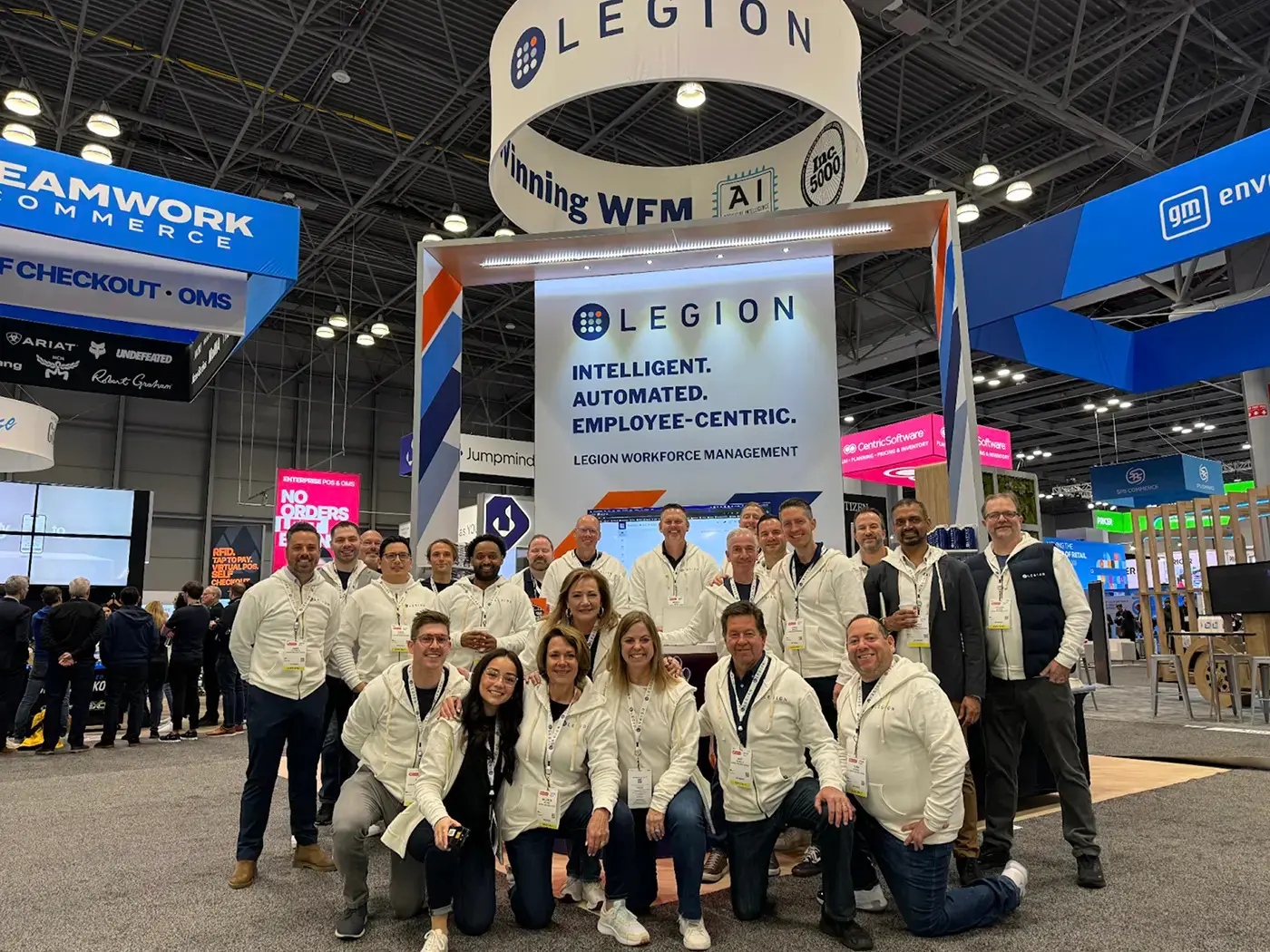
The Client Profile: Legion Technologies
Client: Legion Technologies
Industry: Enterprise Software | Workforce Management Technology
Headquarters: Redwood City, California
Technology: Workato, Legion API, Workday HCM
Engagement Focus: Custom API integration, HR data synchronization, workforce demand integration, Workato connector development, and workflow automation
Legion Technologies is an enterprise workforce management software company specializing in AI-powered demand forecasting, labor optimization, employee scheduling, and workforce engagement.
Its cloud-based Legion Workforce Management (WFM) platform helps organizations align workforce capacity with business demand, automate scheduling activities, and improve labor efficiency across distributed operations.
Serving industries such as retail, hospitality, healthcare, and distribution, Legion enables businesses to manage complex workforce requirements while supporting more efficient labor planning and employee experiences.
As enterprise organizations increasingly relied on connected human capital management (HCM) and workforce management applications, Legion recognized the importance of integrating its platform with existing HR technology environments.
To support both internal integration requirements and an enterprise customer's Workday environment, Legion engaged Quandary Consulting Group to develop custom integration capabilities using Workato.
The engagement focused on connecting Legion's API with Workday, establishing structured HR and demand data integrations, and developing reusable automation components to support enterprise workforce management.
The Challenges
Disconnected Workforce Management and HR Systems Created Integration Complexity
Enterprise workforce management depends on accurate, accessible information flowing between human resources, labor planning, demand forecasting, and employee scheduling systems.
For Legion, integrating its AI-powered workforce management platform with enterprise HR environments was essential to supporting customers with established human capital management infrastructure.
However, connecting specialized workforce management applications with systems such as Workday can require custom API development, data transformation, field mapping, and workflow orchestration.
Without standardized integration capabilities, organizations may rely on manual data transfers, custom scripts, or disconnected processes to coordinate employee and workforce information.
Legion needed an integration approach that could connect its workforce management platform with an enterprise customer's existing Workday instance while creating reusable capabilities for future integration requirements.
Key Integration Challenges
1. Connecting Legion's Workforce Management API with Workday
Legion needed a reliable integration framework connecting its workforce management platform with Workday's human capital management environment.
The integration required an understanding of both systems' data structures, API requirements, and operational dependencies.
Without a consistent integration layer, exchanging information between workforce management and HR systems could require additional technical development and maintenance.
2. Supporting Workforce Demand and HR Data Integration
The initial engagement scope included two distinct integration areas: workforce demand integration and HR integration.
These workflows required different data structures, transformation rules, and integration logic. A flexible architecture was needed to accommodate both integration requirements without creating unnecessary complexity.
3. Mapping Data Between Different Enterprise Applications
Legion and Workday maintained different data models and application structures. Integrating the platforms required data parsing, transformation, and field mapping to support consistent information exchange.
Without properly defined mappings, differences in data formats and field requirements could create synchronization errors and additional troubleshooting.
4. Reducing Dependence on Custom Point-to-Point Integrations
Developing and maintaining separate integrations for every customer environment can increase implementation effort and technical complexity.
Legion needed reusable integration components that could support its immediate customer requirements while providing a foundation for future integrations.
5. Supporting Enterprise Customer Integration Requirements
Legion's customer already operated within a Workday environment.
The integration therefore needed to connect with existing enterprise technology rather than require the customer to replace established HR systems.
This required an approach capable of accommodating customer-specific data structures and integration requirements.
6. Establishing Documentation for Ongoing Integration Support
Custom integrations require clear technical documentation to support troubleshooting, maintenance, and future enhancements.
Legion needed documented integration components and data mappings that could be understood and maintained beyond the initial development engagement.
The Need for a Scalable Workato Integration Architecture
Legion required an integration solution capable of connecting its workforce management API with Workday while supporting multiple enterprise data workflows.
The objective was to simplify HR and demand data integration, reduce custom development requirements, and establish reusable integration components that could support future customer implementations.
By leveraging Workato, Legion could build on an integration platform designed to orchestrate data exchange between enterprise applications without relying exclusively on custom point-to-point code.
The Solutions
Custom Workato Connectors and Integration Recipes for Legion and Workday
Quandary Consulting Group was engaged to develop custom Workato integration capabilities connecting the Legion workforce management platform with an enterprise customer's existing Workday environment.
The engagement centered on creating a Legion connector within Workato, developing integration recipes, and establishing the data parsing and mapping logic required to support workforce demand and HR data exchange.
The integration architecture was designed to connect Legion's API with Workday while accommodating customer-specific requirements.
Custom Legion API Connector Development in Workato
Quandary's scope included building a custom Legion connector within the Workato platform.
The connector was intended to provide a structured interface between Legion's API and Workato automation workflows.
Rather than requiring separate API code for every integration process, the connector approach was designed to make Legion's application capabilities available through reusable Workato components.
This established a foundation for developing and maintaining integrations as customer requirements evolved.
Workforce Demand Integration
A primary component of the engagement involved supporting demand-related data integration.
Legion's workforce management platform uses demand forecasting to help organizations align staffing levels with anticipated operational needs.
The planned Workato integration is intended to support the movement and mapping of relevant demand data between Legion and the customer's connected enterprise environment.
This integration capability helps reduced reliance on manual data transfers and provide a more consistent foundation for workforce planning workflows.
The specific demand data objects, transfer direction, and synchronization frequency were subject to final customer requirements.
Workday HR Data Integration
Quandary's scope also included developing HR integration capabilities connecting Legion with the customer's Workday instance.
Workday served as an existing enterprise human capital management platform, making compatibility with its data structures and integration requirements a central consideration.
The integration was intended to support structured exchange of relevant HR information between the connected applications.
Depending on the final customer specifications, potential integration data could include employee identifiers, organizational assignments, employment status, and other workforce-related records.
These specific fields require validation against the completed implementation.
Data Parsing, Transformation, and Field Mapping
Quandary's engagement included data parsing and mapping between Legion and the customer's Workday environment.
Because the two applications use different data models, integration logic was needed to translate information into formats compatible with the receiving system.
The data mapping work was intended to establish consistency between relevant records and reduce the need for manual transformation.
This provided an important technical foundation for reliable enterprise application integration.
Workato Recipe Development and Workflow Orchestration
In addition to connector development, Quandary was engaged to create Workato recipes for one of Legion's customers.
Workato recipes define how connected applications exchange data and execute automated integration steps.
These recipes were intended to coordinate the required integration processes between Legion and the customer's Workday environment.
The architecture also allowed for custom recipes or connectors if existing Workday connector capabilities could not meet the customer's requirements.
This approach balanced the use of existing integration capabilities with the flexibility to address more specialized enterprise needs.
Technical Documentation and Integration Maintainability
The engagement included documentation to support the integration components.
Documenting connector behavior, data mappings, and workflow requirements are intended to help Legion maintain and extend the integration as customer needs changed.
The resulting technical foundation was designed to support ongoing integration management and future enhancements without requiring each integration to be designed entirely from the beginning.
The Results
Faster Workforce Integrations and Greater Value for Legion's Enterprise Customers
Quandary's custom Workato integration framework enables Legion to deliver a more connected, efficient workforce management experience for enterprise customers using Workday.
By automating HR and workforce demand data exchange between Legion and Workday, the solution reduces manual data entry, minimizes integration complexity, and improves the consistency and accessibility of workforce information across connected systems.
For Legion's customers, this creates several key benefits:
- Faster Implementation: Streamlined integration processes help customers connect Legion with their existing Workday environment more efficiently.
- Reduced Administrative Work: Automated data exchange reduces repetitive manual processes and the need to maintain information across disconnected applications.
- Improved Workforce Data Accuracy: Standardized data mapping and integration workflows help maintain consistent employee and workforce information.
- Better Workforce Planning: More accessible HR and demand data supports informed staffing, scheduling, and labor planning decisions.
- Lower Integration Complexity: Customers can leverage existing enterprise systems without costly replacements or extensive custom development.
The broader customer benefit is a more seamless connection between HR systems and workforce management operations, allowing organizations to maximize their existing technology investments while supporting more efficient workforce planning and day-to-day operations.
For Legion, the reusable integration architecture also provides a scalable foundation for onboarding future enterprise customers and accommodating evolving integration requirements.
60% Reduction in Manual HR Data Transfer Activities
Automated HR data integration reduced manual data transfers, repetitive data entry, and administrative reconciliation by an estimated 60%.
By allowing approved information to move between connected systems through defined Workato workflows, enterprise teams spent less time manually transferring records and correcting inconsistent data.
50% Faster Integration Development for Similar Customer Requirements
Reusable Workato connectors and integration recipes reduced development time for subsequent, similar customer integrations by approximately 50%.
Instead of recreating foundational API connections and data transformation logic, integration teams were now able to reuse and adapt existing Workato recipes, connectors, or components.
This helped accelerate Legion's future implementation activities while reducing repeated technical development.
40% Reduction in Integration Maintenance Effort
Standardized Workato recipes, documented data mappings, and reusable connector components reduced routine integration maintenance effort by an estimated 40%.
A more consistent integration architecture simplified troubleshooting, reduce duplicated development work, and improve the maintainability of connected enterprise applications.
70% Faster Workforce Data Availability
Automated integration workflows reduced the time required to make updated workforce information available across connected applications by an estimated 70%, compared with manual or scheduled file-transfer processes.
Faster data exchanges helped reduce the delay between HR record updates and their availability to downstream workforce management workflows.
35% Fewer Data Mapping and Synchronization Errors
Structured data transformation and mapping rules reduced integration-related data inconsistencies by an estimated 35%.
By applying consistent mapping logic across recurring transactions, Legion reduced errors caused by manual formatting, inconsistent field definitions, and repeated data entry.
Greater Reusability for Future Enterprise Integrations
The custom connector architecture was designed to provide Legion with reusable integration components that support repeated customer requirements.
Rather than treating every enterprise integration as an entirely separate development project, Quandary built upon Legion's existing Workato connectors, recipes, and documented mapping logic.
This created a more scalable approach to supporting workforce management integrations as enterprise customer demand expanded.
A Scalable Foundation for Connected Workforce Management
Quandary designed and implemented a custom, reusable integration framework connecting Legion's workforce management platform with Workday's HR environment, creating a scalable foundation for enterprise workforce data integration.
Through custom Workato connector development, data mapping, and automated recipe orchestration, Quandary streamlined integration processes, reduced technical complexity, and enabled more consistent data exchange between workforce management and HR systems.
The solution supported faster customer integrations, reduced administrative overhead, and improved access to workforce data. More importantly, it provided Legion with a reusable integration architecture that could be adapted and extended to support future enterprise customers and evolving business requirements.
By leveraging Workato, Legion gained a flexible technical foundation for scaling workforce management integrations without replacing existing enterprise applications or rebuilding integrations from scratch.
Our Latest Projects


Services
Industries
© 2026 Quandary Consulting Group 2026. All Rights Reserved.
Privacy Policy