Artificial Intelligence (AI)
AI-Driven Procurement Solutions to Consider in 2026

TL;DR
- AI-driven procurement is transforming procurement from a transactional, cost-focused function into a strategic, data-driven capability that can optimize spend, improve sourcing decisions, strengthen supplier relationships, identify risk earlier, and increase enterprise resilience.
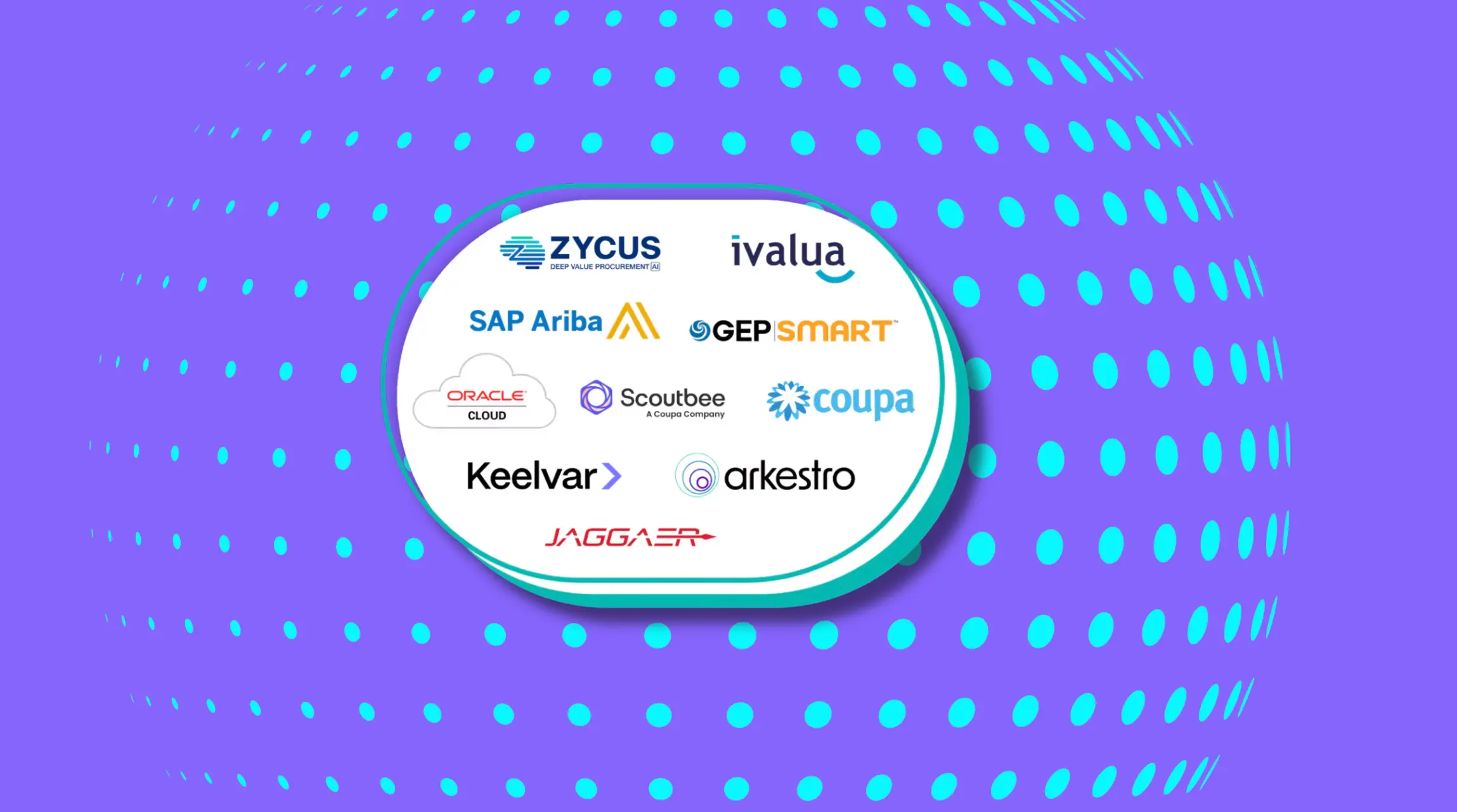
- The leading AI procurement platforms to consider in 2026 include Coupa, SAP Ariba, GEP SMART, Ivalua, JAGGAER, Zycus, Oracle Procurement Cloud, Keelvar, Arkestro, and Scoutbee. The right solution depends on your ERP ecosystem, industry, AI maturity, integration requirements, procurement priorities, and total cost of ownership.
- Choosing an AI procurement platform should go beyond comparing features. Organizations should evaluate ERP compatibility, AI maturity, speed to value, API and integration capabilities, supplier networks, user adoption, scalability, risk intelligence, and the platform's roadmap toward predictive and autonomous procurement.
- The strongest procurement technology strategy may not be a single platform. Organizations can combine a core source-to-pay solution with specialized AI technologies for autonomous sourcing, supplier discovery, predictive negotiations, supplier risk management, and tail-spend automation—connected through a unified data and integration architecture.
- The future of procurement is moving from reactive to predictive and increasingly autonomous operations. Organizations that combine AI with connected systems, high-quality data, redesigned workflows, strong governance, and human oversight will be better positioned to continuously optimize spend, anticipate supplier risk, and turn procurement into a strategic value engine.
Procurement is undergoing one of the most significant transformations in its history. What was once a transactional, cost-focused function is rapidly evolving into a strategic, data-driven capability powered by artificial intelligence.
Leading organizations are no longer asking if they should adopt AI in procurement—they are asking how fast they can scale it. This shift is not theoretical. Global enterprises leveraging AI-enabled procurement platforms are already achieving 10–20% cost savings, faster cycle times, and reduced supplier risk exposure.
How to Choose the Right AI-Driven Procurement Platform
Selecting an AI-driven procurement platform in 2026 is no longer a traditional technology decision—it is a strategic operating model choice that will directly impact cost structure, supplier relationships, and enterprise agility.
While many organizations still evaluate tools based on feature checklists, leading procurement teams are shifting toward a more sophisticated approach: selecting platforms based on how well they enable intelligent decision-making at scale.
Below are the four key priorities procurement leaders should focus on to successfully build AI-driven procurement ecosystems in 2026.
1. ERP Compatibility and Ecosystem Alignment
The first—and often most critical—consideration is how well the procurement platform integrates into your existing enterprise ecosystem.
Organizations running SAP environments will naturally gravitate toward SAP Ariba, while those in Oracle ecosystems may find Oracle Procurement Cloud more seamless. However, many modern platforms like Coupa, GEP, and Ivalua position themselves as ERP-agnostic, offering more flexibility across heterogeneous environments.
In 2026, this decision is not just about integration—it is about data fluidity. Procurement platforms must:
- Seamlessly ingest financial, supplier, and operational data
- Enable real-time synchronization across systems
- Support API-first architectures
Choose a platform that minimizes friction with your core systems while enabling future interoperability—not locking you into a rigid ecosystem.
2. Speed to Value vs. Depth of Customization
A critical tradeoff in procurement technology selection is balancing rapid deployment with long-term flexibility.
Platforms like Coupa and GEP SMART are often favored for their faster time to value, offering pre-configured workflows and best practices that accelerate implementation. In contrast, platforms like Ivalua and JAGGAER provide deep configurability, allowing organizations to tailor procurement processes to highly specific requirements.
In 2026, leading organizations are increasingly asking:
- How quickly can we realize measurable ROI?
- How much customization do we actually need versus want?
Over-customization remains one of the most common causes of failed implementations. Prioritize platforms that deliver 80% of your needs out-of-the-box, while allowing targeted customization where it truly drives competitive advantage.
3. AI Maturity vs. Feature Breadth
Not all “AI-powered” procurement platforms are created equal. Many legacy platforms have retrofitted AI capabilities—embedding machine learning into existing workflows—while newer entrants are building AI-native architectures designed for predictive and autonomous decision-making from the ground up.
In 2026, buyers must look beyond marketing claims and evaluate:
- Is AI embedded across the workflow or limited to isolated features?
- Does the platform provide predictive and prescriptive insights, or just descriptive analytics?
- How transparent and explainable are AI-driven
Select platforms where AI is a core capability driving decisions, not just an add-on feature.
4. Industry Specialization and Use Case Alignment
Procurement is not one-size-fits-all, and platform effectiveness often depends on industry context; for example:
- Manufacturing organizations benefit from JAGGAER’s direct procurement capabilities
- Financial services firms may prioritize risk and compliance features
- Retail and CPG companies often focus on supplier agility and demand forecasting
In 2026, platforms that offer industry-specific data models, benchmarks, and workflows are becoming increasingly valuable. Additionally, organizations should align platform selection with their highest-value use cases, such as:
- Supplier risk management
- Strategic sourcing optimization
- Tail spend automation
Choose a platform that aligns not just with your industry—but with your specific procurement priorities and maturity level.
The Top Selection Criteria for AI Procurement in 2026
Beyond the foundational considerations above, leading organizations are using a more advanced set of criteria to guide decisions.
Decision Intelligence Capability: Does the platform improve decision-making, not just process execution? Can it recommend actions, not just report data?
Data Network Effects: Does the platform leverage external or community data (e.g., pricing benchmarks, supplier performance) and does it improve over time as more data is ingested?
Autonomous Capability Roadmap: Does the vendor have a clear path toward autonomous procurement and are there real use cases already in production (not just roadmap slides)?
User Experience and Adoption: Is the platform intuitive enough for widespread adoption and does it support guided buying and conversational interfaces?
Integration and API Maturity: Does it support modern, API-first integration and can it easily connect to suppliers, third-party data sources, and internal systems?
Supplier Network Strength: Does the platform provide access to a robust supplier ecosystem and does it also enable real-time supplier collaboration?
Risk and Resilience Capabilities: Can it proactively identify and mitigate supplier risk and does it incorporate ESG, geopolitical, and financial risk signals?
Total Cost of Ownership (TCO): Beyond licensing, what are the costs of implementation, integration, and maintenance and how does cost scale over time?
Scalability and Global Readiness: Can the platform support multi-region operations, currencies, and compliance requirements and is it built for enterprise-scale deployment?
Vendor Innovation Trajectory: Is the vendor investing heavily in AI and innovation and are they leading or following the market?
2026 Top 10 AI-Driven Procurement Platforms
1. Coupa (Best Overall)
Coupa is widely considered the market leader in AI-driven procurement because of its community intelligence model, which leverages trillions of dollars in anonymized spend data to generate predictive insights and recommendations.
This scale of data gives Coupa a unique advantage in benchmarking pricing, identifying savings opportunities, and recommending optimal suppliers—capabilities that directly underpin its strong AI-driven value proposition.
Organizations choose Coupa not just for procurement execution, but for its ability to continuously optimize spend decisions using real-world data across thousands of companies. However, this sophistication comes at a cost: implementation complexity and pricing can be barriers, particularly for mid-sized organizations.
Additionally, while Coupa offers broad capabilities, some organizations report challenges with usability and customization, especially when tailoring workflows to highly specific procurement models.
Coupa Pros:
- Industry-leading AI-powered spend insights
- Massive supplier network
- Strong community intelligence data
Coupa Cons:
- Expensive for mid-market
- Complex implementation
- Limited deep customization
2. SAP Ariba (Best for SAP Ecosystems)
SAP Ariba earns its position due to its deep integration within the SAP ecosystem and one of the largest supplier networks globally, making it especially powerful for enterprises already standardized on SAP. It provides end-to-end procurement capabilities—from sourcing to supplier collaboration—while embedding analytics and AI-driven insights into spend visibility and compliance tracking.
Ariba’s strength lies in its ability to connect buyers and suppliers at scale, enabling digital supply chain collaboration that is difficult to replicate with standalone tools.
However, this breadth introduces complexity: implementations are often lengthy, and the user experience can feel less intuitive compared to newer platforms. Additionally, total cost of ownership can be high, particularly when layered with broader SAP infrastructure dependencies.
SAP Arbia Pros:
- Seamless SAP integration
- Large supplier network
- Strong sourcing and contract management
SAP Arbia Cons:
- Complex UX
- Long deployment timelines
- High total cost of ownership
3. GEP SMART (Best End-to-End AI Platform)
GEP SMART stands out as a native AI-first procurement platform designed to unify sourcing, procurement, and spend analytics in a single environment. It is particularly strong in spend visibility and analytics, enabling organizations to gain a holistic view of procurement activity and identify savings opportunities across categories.
Many organizations select GEP SMART because it strikes a balance between functionality, usability, and innovation—offering robust features without the legacy constraints of older systems. Its mobile-first design and modern UX also appeal to organizations looking to drive adoption across procurement teams.
That said, integration with existing ERP systems can be challenging, and the platform still requires a certain level of procurement maturity to fully leverage its capabilities.
GEP SMART Pros:
- Native AI across S2P lifecycle
- Strong analytics and UX
- Mobile-first design
GET SMART Cons:
- Requires transformation mindset
- Implementation effort
- Need a high level procurement maturity
- Less brand recognition than SAP/Coupa
4. Ivalua (Best for Flexibility)
Ivalua is often selected by organizations that require high configurability and control over procurement processes, particularly in complex or highly regulated industries. Its platform is designed to be modular and adaptable, allowing organizations to tailor workflows, supplier management processes, and sourcing strategies to very specific business needs.
This flexibility is a key differentiator, especially compared to more standardized platforms like Coupa or SAP Ariba. However, that same flexibility introduces complexity—implementations tend to be longer, and organizations often need strong internal expertise or external partners to configure the system effectively. Additionally, while powerful, the user interface can lag behind more modern, UX-focused competitors.
Ivalua Pros:
- Highly configurable platform (aka flexibility)
- Strong supplier collaboration
- End-to-end procurement lifecycle coverage
Ivalua Cons:
- Longer implementation time
- Requires internal expertise
- UI less intuitive
5. JAGGAER (Best for Direct Procurement)
JAGGAER is particularly strong in direct procurement and manufacturing-heavy environments, where supply chain complexity and supplier collaboration are critical. Its AI capabilities focus on supplier performance, risk management, and category-specific sourcing strategies, making it a preferred choice in industries such as automotive, aerospace, and life sciences.
The platform’s depth in supplier management allows organizations to manage highly technical and strategic supplier relationships effectively. However, its interface is often viewed as less intuitive, and integration with broader enterprise systems can require significant effort. Additionally, the platform’s strength in direct procurement can make it less compelling for organizations focused primarily on indirect spend.
JAGGER Pros:
- Strong in manufacturing and direct spend
- Advanced supplier management
- Deep category capabilities
JAGGER Cons:
- UI can feel dated
- Complex integrations
- Heavy configuration required
6. Zycus (Best for Cognitive Procurement)
Zycus differentiates itself through its focus on cognitive procurement, leveraging AI and machine learning to automate decision-making across procurement processes. Its platform includes advanced capabilities such as autonomous sourcing, AI-powered contract analysis, and intelligent spend classification.
Organizations often choose Zycus for its innovation in AI-driven automation, particularly when aiming to reduce manual intervention in procurement workflows.
However, the platform’s advanced capabilities come with a steep learning curve, and implementation can be complex. Additionally, it is typically better suited for large enterprises, making it less accessible for smaller organizations.
Zycus Pros:
- Strong AI/ML capabilities
- Best for Cognitive Procurement
- Autonomous procurement features
- Good for large enterprises
Zycus Cons:
- Steep learning curve
- Implementation complexity
- Best for large scale enterprises only (limited SMB fit)
7. Oracle Procurement Cloud (Best for Oracle Ecosystems)
Oracle Procurement Cloud is a natural choice for organizations already operating within the Oracle ERP ecosystem, offering seamless integration and scalability across enterprise functions. Its embedded AI capabilities provide predictive analytics, supplier recommendations, and process automation within a broader financial and supply chain framework.
This tight integration enables organizations to manage procurement as part of a unified enterprise platform, rather than a standalone function. However, this ecosystem dependency can also be a limitation, as organizations may find it difficult to integrate with non-Oracle systems. Additionally, licensing costs and user experience challenges are common concerns raised by procurement teams.
Oracle Procurement Cloud Pros:
- Strong ERP integration
- Scalable enterprise solution
- Embedded AI analytics
Oracle Procurement Cloud Cons:
- Oracle ecosystem dependency
- UX challenges
- Costly licensing
8. Keelvar (Best for Autonomous Sourcing)
Keelvar is a specialized AI sourcing platform focused on optimization and automation of sourcing events, particularly in complex categories like logistics. Its strength lies in its ability to run scenario-based sourcing events, allowing procurement teams to evaluate multiple supplier combinations and cost structures in real time. This makes it particularly valuable for organizations seeking to move toward autonomous sourcing and advanced decision optimization.
However, Keelvar is not a full source-to-pay suite, meaning it must be integrated with other procurement systems. As a result, it is best positioned as a complementary tool rather than a standalone platform.
Keelvar Pros:
- AI-powered sourcing optimization
- Scenario modeling
- Strong analytics
Keelvar Cons:
- Not a full source-to-pay suite
- Requires integration
- Niche use case focus
9. Arkestro (Best for Predictive Procurement)
Arkestro is a newer entrant focused on predictive procurement, using AI to recommend sourcing strategies and optimize negotiations before events even begin. Its platform analyzes historical procurement data to suggest pricing targets, supplier strategies, and negotiation tactics—effectively augmenting procurement teams with data-driven insights.
Organizations that prioritize speed to value and quick ROI often find Arkestro compelling due to its targeted use cases and relatively fast deployment. However, its narrower scope means it lacks the breadth of full procurement suites, and it relies heavily on the quality of underlying data to deliver accurate predictions.
Arkestro Pros:
- Predictive procurement engine
- Negotiation optimization
- Fast ROI
- Arkestro Cons:
- Limited enterprise breadth
- Requires data maturity
- Smaller vendor ecosystem
10. Scoutbee (Best for Supplier Discovery)
Scoutbee specializes in AI-driven supplier discovery and risk intelligence, helping organizations identify new suppliers and assess risk across global supply chains.
Its AI engine scans vast datasets to uncover suppliers that meet specific criteria, making it particularly valuable in times of disruption or when diversifying supply bases. This capability has become increasingly important as organizations seek to build more resilient supply chains.
However, Scoutbee is not a full procurement platform and is best used alongside broader S2P solutions. Its value is therefore highest as an augmentation tool rather than a core system of record.
- Scoutbee Pros:
- AI-driven supplier discovery
- Strong risk insights
- Easy to deploy
Scoutbee Cons:
- Not full procurement suite
- Limited sourcing execution
- Complementary tool only
- Coupla acquired Scoutbee in October 2025
PLEASE NOTE: Coupla acquired Scoutbee in October 2025 with plans to keep Scoutbee as a standalone product under the Coupla portfolio. However, in early January 2026, we have started seeing Scoutbee + Coupla co-branding hitting the market, which makes some experts believe that Scoutbee is being positioned as part of a broader procurement/value story of Coupla. As of February 2026, there has been NO formal announcement from either Scoutbee (or Coupla) on the Scoutbee's brand future.
So, How to Choose the Right Platform?
Selecting the right AI-driven procurement platform is no longer a tactical IT decision—it is a strategic investment that will shape how procurement operates for the next decade. Organizations that approach this decision thoughtfully are far more likely to unlock long-term value, while those that treat it as a feature comparison exercise often end up with underutilized systems and fragmented processes.
When evaluating procurement technology in 2026, leaders must focus on a set of critical dimensions that go beyond surface-level functionality.
1. ERP Compatibility (SAP vs. Oracle vs. Agnostic)
One of the most important considerations is how well the procurement platform integrates with your existing enterprise resource planning (ERP) environment.
For organizations operating within SAP ecosystems, solutions like SAP Ariba often provide the most seamless integration, enabling tighter alignment between procurement, finance, and supply chain processes. Similarly, organizations standardized on Oracle may benefit from Oracle Procurement Cloud due to its native connectivity and shared data architecture.
However, many modern procurement platforms—such as Coupa, GEP SMART, and Ivalua—are designed to be ERP-agnostic, offering flexibility across diverse system landscapes. This is particularly important for organizations with multiple ERPs or those undergoing digital transformation.
In 2026, the conversation has evolved beyond simple integration. Leading organizations are prioritizing real-time data interoperability, ensuring that procurement platforms can:
- Continuously synchronize financial, supplier, and operational data
- Support API-first architectures
- Enable seamless connectivity with third-party tools and data providers
Ultimately, the goal is not just integration—but the creation of a connected, intelligent data ecosystem that enables better decision-making across the enterprise.
3. Speed to Value vs. Customization
Another critical tradeoff organizations must evaluate is the balance between rapid deployment and long-term flexibility. Platforms such as Coupa and GEP SMART are often favored for their ability to deliver faster time to value, leveraging pre-configured workflows, embedded best practices, and intuitive user experiences. These solutions allow organizations to quickly standardize procurement processes and begin realizing ROI within months rather than years.
Conversely, platforms like Ivalua and JAGGAER offer a high degree of customization and configurability, enabling organizations to tailor procurement processes to highly specific operational or regulatory requirements. This flexibility is particularly valuable in complex industries, but it often comes with longer implementation timelines and increased reliance on internal expertise or external partners.
In practice, many organizations overestimate their need for customization, leading to unnecessary complexity and delayed value realization. The most effective approach is to:
- Adopt standard processes where possible
- Customize selectively where it creates measurable differentiation
- Focus on accelerating adoption rather than perfecting design
In 2026, speed to value is increasingly a competitive advantage, particularly in volatile supply chain environments.
3. AI Maturity vs. Feature Breadth
As AI becomes central to procurement transformation, organizations must carefully assess the true maturity of AI capabilities within each platform. Many legacy platforms have introduced AI as an extension of existing functionality, embedding machine learning into analytics or automation features. While valuable, these capabilities are often limited to incremental improvements rather than transformational change.
In contrast, newer and more advanced platforms are being built with AI at their core, enabling predictive, prescriptive, and increasingly autonomous procurement processes. When evaluating AI maturity, organizations should consider:
- Whether AI is embedded across the full procurement lifecycle or isolated to specific modules
- The platform’s ability to generate actionable recommendations, not just insights
- The transparency and explainability of AI-driven decisions
- The extent to which AI improves over time through data learning
Feature breadth is still important, particularly for organizations seeking end-to-end solutions. However, in 2026, depth of intelligence is becoming more valuable than breadth of functionality.
Organizations that prioritize AI maturity are better positioned to move from: Reactive procurement → Predictive procurement → Autonomous procurement
4. Industry Specialization
Procurement requirements vary significantly by industry, and platform effectiveness often depends on how well it aligns with industry-specific needs and complexities; for example:
- Manufacturing organizations require deep capabilities in direct procurement, supplier collaboration, and production planning
- Healthcare organizations must prioritize compliance, traceability, and supplier risk management
- Retail and consumer goods companies focus heavily on demand forecasting, supplier agility, and cost optimization
Platforms like JAGGAER excel in manufacturing environments, while others may be better suited for indirect procurement or services-based industries.
In addition, leading platforms are increasingly embedding industry-specific data models, benchmarks, and workflows, enabling faster implementation and more relevant insights. Organizations should also align platform selection with their highest-value use cases, such as:
- Strategic sourcing optimization
- Supplier risk intelligence
- Tail spend automation
- Contract lifecycle management
Selecting a platform without considering industry context often results in capability gaps and lower adoption.
5. The Shift Toward AI-Native Procurement Platforms
A defining trend in 2026 is the divergence between legacy platforms embedding AI and AI-native platforms designed from the ground up. Legacy providers have made significant progress integrating AI into existing systems, but they are often constrained by historical architectures. In contrast, AI-native platforms are designed to:
- Continuously learn from data
- Automate complex decision-making
- Enable real-time optimization across procurement processes
This shift is not just technological—it represents a fundamental change in how procurement operates. Organizations must decide whether they want to:
- Incrementally enhance existing processes or fundamentally transform procurement into an intelligent, autonomous function
6. Procurement’s New Mandate
Procurement is no longer defined by its ability to negotiate savings or process transactions efficiently. While cost management remains important, it is now only one component of a much broader and more strategic mandate.
In today’s environment, procurement is expected to serve as a critical driver of enterprise resilience, agility, and competitive advantage.
7. From Cost Center to Strategic Value Engine
Modern procurement functions are increasingly responsible for:
- Resilience: Organizations must anticipate and respond to supply chain disruptions in real time, leveraging AI-driven insights to identify risks before they materialize and to rapidly shift sourcing strategies when needed.
- Agility: Procurement must enable the business to move quickly—whether entering new markets, launching new products, or responding to demand fluctuations. This requires flexible supplier networks and data-driven decision-making.
- Risk Intelligence: Beyond traditional supplier risk, procurement now plays a central role in monitoring geopolitical, financial, and ESG risks, ensuring compliance while protecting the organization’s reputation and operations.
- Strategic Value Creation: Procurement is increasingly expected to contribute to innovation, sustainability, and long-term value creation by partnering closely with suppliers and influencing enterprise strategy.
AI is the Enabler and Transformation as the Differentiator
Artificial intelligence is the technology that makes this expanded mandate possible. It enables procurement teams to process vast amounts of data, generate predictive insights, and automate complex decisions at a scale that was previously unattainable. However, technology alone is not enough. The organizations that succeed in this transformation are those that:
- Redesign their operating models
- Invest in data quality and governance
- Upskill their workforce
- Embed AI into everyday decision-making
In contrast, organizations that simply layer AI onto existing processes risk digitizing inefficiencies rather than eliminating them.
The Future of Procurement: From Automation to Intelligent Operations
The future of procurement extends far beyond digitizing purchase orders or automating approvals. Procurement is evolving into a connected, data-driven, and increasingly intelligent business function capable of continuously analyzing information, identifying opportunities, anticipating risk, and coordinating actions across the enterprise.
As AI, intelligent automation, data orchestration, and agentic technologies mature, leading procurement organizations will move from reactive processes to proactive decision-making.
Instead of waiting for teams to identify problems, future procurement ecosystems will continuously analyze supplier performance, contracts, spend, market conditions, inventory, purchasing activity, and operational data to determine where action may be required.
The most advanced procurement organizations will increasingly be able to:
- Continuously optimize enterprise spend by identifying purchasing patterns, contract leakage, duplicate spending, consolidation opportunities, and potential savings in near real time.
- Dynamically manage supplier ecosystems using centralized supplier data, automated performance monitoring, intelligent scorecards, and workflows that adapt as supplier performance and business requirements change.
- Predict and mitigate procurement risk earlier by analyzing supplier performance, financial indicators, compliance data, operational trends, and other risk signals before they develop into significant disruptions.
- Automate routine procurement decisions and workflows while routing exceptions, high-value transactions, and sensitive decisions to the appropriate human stakeholders for review.
- Connect procurement across the enterprise by orchestrating data and workflows between ERP, finance, contract management, supplier management, inventory, operations, and other critical business systems.
- Use AI agents to coordinate multi-step procurement activities, such as gathering information, analyzing documents, monitoring supplier requirements, identifying exceptions, initiating workflows, and preparing recommendations for procurement teams.
- Turn procurement data into strategic intelligence by giving leaders greater visibility into spend, supplier performance, contract utilization, risk exposure, operational dependencies, and emerging opportunities.
- Act as strategic advisors to the business, allowing procurement professionals to spend less time coordinating transactions and more time improving supplier strategy, managing risk, negotiating value, enabling innovation, and supporting long-term business objectives.
This does not mean removing people from procurement. It means changing where their expertise creates the most value.
The future is a human + AI operating model in which automation manages repetitive execution, AI helps interpret increasingly complex information, connected systems coordinate actions, and procurement professionals maintain governance and decision authority over the areas that matter most; and, this future does not require organizations to replace their entire procurement technology stack overnight.
The foundation starts with clean and connected data, integrated systems, standardized processes, intelligent automation, strong AI governance, and clearly defined human oversight. Organizations can modernize one high-value workflow at a time and gradually build toward a more autonomous procurement environment.
The shift is already underway. The organizations building these capabilities today are laying the foundation for procurement functions that are faster, more resilient, more predictive, and significantly more strategic to the business.
Build What’s Next with Quandary Consulting Group
At Quandary Consulting Group, we believe procurement transformation is not about implementing another piece of software. It is about building a connected, intelligent, and resilient procurement operation that can adapt as your business, suppliers, technology, and market conditions change.
That requires more than choosing the right platform, it requires understanding how people, processes, systems, data, automation, and AI need to work together to deliver measurable business outcomes.
That is where Quandary is different.
We do not simply develop a procurement transformation strategy and hand over a roadmap. We work alongside your teams to design, build, integrate, automate, deploy, and continuously improve the solutions behind it. Our approach combines strategic consulting with deep technical expertise and hands-on implementation experience, helping organizations move from transformation plans to operational results.
Our teams work across procurement and enterprise technology ecosystems, including platforms such as SAP Ariba and SAP S/4HANA, Oracle Procurement Cloud, Coupa, GEP SMART, Ivalua, and emerging AI-enabled procurement technologies, as well as the ERP, finance, contract management, supplier management, and operational systems surrounding them.
But the platform is only part of the equation, Quandary helps organizations connect those technologies through enterprise integration, intelligent automation, data engineering and orchestration, low-code application development, and AI. That means we can modernize the processes between systems—not just the systems themselves.
Whether you need to automate supplier onboarding, improve procure-to-pay workflows, connect fragmented procurement data, modernize approval processes, strengthen supplier risk management, introduce AI agents, or create better visibility into spend and performance, we design solutions around your existing technology environment and operating model and you do not necessarily have to rip and replace the technology you already have.
We can help you identify where your current systems are creating value, where gaps and manual processes remain, and where integration, automation, better data, or AI can extend those investments.
The result is not simply a more modern procurement technology stack. It is a procurement function designed to be more connected, efficient, visible, resilient, intelligent, and ready for what comes next.
Strategy defines where procurement needs to go and Quandary helps you build the systems, integrations, data foundation, automation, and AI capabilities to get there.
Why Organizations Choose Quandary
Organizations partner with Quandary because we bridge the gap between strategy, technology, and execution. We work closely with you to help with:
- Define the right AI-driven procurement strategy aligned to your business goals
- Select and implement the right technology stack—without over-engineering or over-investing
- Clean, structure, and activate your data to unlock real AI value
- Redesign procurement processes and operating models for speed, intelligence, and scalability
- Drive adoption across your organization, ensuring tools are actually used—not just implemented.
The future of procurement will be defined by organizations that can move faster, make better decisions, and adapt in real time. That future is powered by AI—but will be delivered through the right strategy, the right technology, and the right partner - Quandary Consulting Group is that partner.
Top FAQs About AI-Driven Procurement Solutions
What is an AI-driven procurement solution?
An AI-driven procurement solution is software that uses artificial intelligence to automate procurement workflows, analyze spending, evaluate suppliers, predict risks, and recommend purchasing decisions.
Unlike basic procurement automation, AI-driven platforms can identify patterns, generate predictive insights, optimize sourcing events, and help teams make faster, data-informed decisions across the source-to-pay lifecycle.
What are the best AI procurement platforms in 2026?
Leading AI procurement platforms in 2026 include Coupa, SAP Ariba, GEP SMART, Ivalua, JAGGAER, Zycus, Oracle Procurement Cloud, Keelvar, Arkestro, and Scoutbee. The best solution depends on the organization’s ERP environment, industry, procurement maturity, budget, integration needs, and priority use cases. No single platform is the right choice for every company.
How should a company choose an AI procurement platform?
A company should evaluate AI procurement platforms based on ERP compatibility, AI maturity, implementation speed, customization, user experience, supplier network, integration capabilities, security, scalability, and total cost of ownership. The selection process should begin with specific business outcomes—such as reducing supplier risk or optimizing sourcing—rather than a generic feature checklist.
What procurement processes can AI automate?
AI can automate spend classification, supplier discovery, sourcing-event design, bid analysis, contract review, purchase approvals, invoice processing, three-way matching, demand forecasting, tail-spend management, and supplier-risk monitoring. More advanced platforms can also recommend negotiation targets, model sourcing scenarios, identify savings opportunities, and initiate actions within established procurement controls.
What are the business benefits of AI in procurement?
AI can help procurement teams reduce costs, shorten sourcing cycles, improve spend visibility, strengthen supplier relationships, and identify risks earlier. It also reduces repetitive administrative work and gives procurement professionals more time for strategic planning. The greatest benefits occur when organizations combine AI technology with reliable data, redesigned workflows, clear governance, and strong user adoption.
What is the difference between procurement automation and AI-driven procurement?
Procurement automation follows predefined rules to complete repetitive tasks, such as routing approvals or matching invoices. AI-driven procurement analyzes data, detects patterns, predicts outcomes, and recommends or executes decisions. Automation improves process efficiency, while AI adds intelligence that can improve sourcing strategies, supplier selection, risk management, negotiations, and spending decisions.
What is an AI-native procurement platform?
An AI-native procurement platform is designed with artificial intelligence at the core of its architecture rather than adding AI features to an older system. AI-native platforms are typically built to learn continuously from procurement data, generate predictive or prescriptive recommendations, and automate increasingly complex decisions. Buyers should still verify whether advertised AI capabilities are proven in real production environments.
What is autonomous procurement?
Autonomous procurement is an advanced operating model in which AI systems can analyze needs, recommend suppliers, optimize sourcing decisions, and execute approved procurement activities with limited manual intervention. Human professionals continue to establish objectives, policies, permissions, and escalation rules. Most organizations will adopt autonomous procurement gradually, beginning with controlled, low-risk, and repeatable use cases.
How can businesses evaluate the AI maturity of procurement software?
Businesses should determine whether AI is embedded throughout the procurement lifecycle or limited to isolated features. They should also assess whether the platform provides descriptive, predictive, or prescriptive insights; explains its recommendations; learns from new data; and has proven AI use cases in production. A clear product roadmap and measurable customer outcomes are stronger indicators than broad “AI-powered” marketing claims.
How does AI improve supplier risk management?
AI improves supplier risk management by continuously analyzing internal and external data for financial, operational, geopolitical, compliance, cybersecurity, and ESG risks. It can identify warning signals earlier, score suppliers by risk level, recommend alternatives, and alert teams when conditions change. These capabilities help procurement leaders respond to disruptions before they significantly affect operations.
Should companies choose one procurement platform or an ecosystem of tools?
Many organizations benefit from an ecosystem that combines a core source-to-pay platform with specialized AI tools. For example, a company might use a broad platform for purchasing and supplier management while adding targeted solutions for autonomous sourcing, predictive negotiations, or supplier discovery. The right architecture depends on integration capacity, data quality, business priorities, and the complexity of the procurement function.
How important is ERP integration when selecting procurement software?
ERP integration is essential because procurement platforms depend on accurate financial, supplier, contract, and operational data. Organizations using SAP or Oracle may prefer procurement tools within those ecosystems, while companies with multiple ERPs may need an ERP-agnostic platform. Buyers should prioritize real-time synchronization, mature APIs, reliable data exchange, and compatibility with future technology investments.
What is the total cost of ownership of an AI procurement platform?
The total cost of ownership includes software licensing, implementation, integration, data preparation, customization, training, maintenance, support, and change management. Companies should also consider the cost of internal resources and future system upgrades. Evaluating total cost—not just subscription pricing—provides a more accurate comparison of procurement platforms and their potential return on investment.
How can a company measure ROI from AI procurement software?
Companies can measure AI procurement ROI by tracking realized savings, sourcing cycle time, invoice processing costs, contract compliance, supplier performance, risk reduction, user adoption, and the percentage of spend under management. Establishing baseline metrics before implementation makes it possible to compare improvements and determine whether the platform is delivering measurable business value.
What data is needed for AI-driven procurement?
AI-driven procurement requires accurate, accessible, and consistently structured data from purchasing, finance, contracts, suppliers, inventory, and operational systems. Historical pricing, transaction, supplier-performance, and sourcing data can improve recommendations. Before implementing AI, organizations should address duplicate records, inconsistent categories, missing information, unclear ownership, and disconnected data sources.
What are the biggest risks of implementing AI in procurement?
Key risks include poor data quality, inaccurate recommendations, unclear decision accountability, integration problems, low employee adoption, security concerns, excessive customization, and overreliance on automation. Organizations can reduce these risks by establishing AI governance, maintaining human oversight for high-impact decisions, monitoring system performance, and deploying AI through controlled, measurable use cases.
How long does it take to implement an AI procurement platform?
Implementation time depends on the platform, procurement scope, system integrations, data quality, customization, and organizational readiness. Focused AI tools may deliver value relatively quickly, while enterprise-wide source-to-pay transformations can take considerably longer. Companies can accelerate results by using standard workflows, limiting unnecessary customization, cleaning data early, and deploying the platform in phases.
Can small and midsize businesses use AI procurement software?
Yes. Small and midsize businesses can use targeted AI procurement tools to automate invoices, analyze spending, manage suppliers, or improve sourcing decisions. They may not need the complexity or cost of a full enterprise source-to-pay suite. A modular solution that integrates with existing systems and addresses a specific high-value problem can provide a faster and more practical return.