Business Transformation
The Future of Workflows: How to Eliminate Bottlenecks and Scale Efficiently


As organizations grow, their operating models become increasingly complex. What may begin as a set of straightforward processes often evolves into a highly interconnected network of workflows spanning functions, systems, and stakeholders. This complexity, if not actively managed, can inhibit scalability, reduce efficiency, and constrain business performance.
To operate effectively at scale, organizations must develop a clear understanding of their workflows and implement targeted strategies to optimize them. This requires more than incremental cost reduction or isolated efficiency gains—it demands a disciplined, enterprise-wide approach to process design and improvement.
Defining Workflows
Within any organization, work is executed through a combination of tasks and workflows.
A task represents a discrete unit of work completed by an individual. In contrast, a workflow is a structured sequence of interdependent tasks that collectively deliver a specific outcome, often on a recurring basis and frequently involving the movement of data across systems.
In early-stage organizations, workflows are typically linear and relatively simple. However, as the organization grows, workflows tend to become more complex, branching across teams and systems to form an interconnected operational ecosystem.
Common examples of business workflows include:
- Employee onboarding
- Invoicing and billing
- Supply chain management
- Purchase approvals
- Vendor management
- IT change management
- Marketing and content operations
- Inbound and Outbound sales lifecycle
- Web development
- Sales prospecting
- Customer onboarding and lifecycle management
The Importance of Understanding Workflows
A lack of visibility into workflows significantly limits an organization’s ability to identify inefficiencies, mitigate risks, and scale effectively.
Without a clear understanding of how work is executed, organizations are unable to map processes, diagnose bottlenecks, or implement meaningful improvements. This often results in declining margins, despite revenue growth, as operational complexity introduces hidden costs and inefficiencies.
Establishing transparency into workflows is therefore a foundational step toward improving performance, enabling scalability, and sustaining long-term growth.
How Organizations Typically Manage Workflows
In smaller organizations, workflow management is often informal and manual. Individual contributors or managers oversee processes, track progress, and validate outputs with limited system support.
As organizations scale, however, workflows become more complex, and legacy approaches to process management frequently persist. Manual processes and fragmented systems are often extended beyond their intended use, resulting in inefficiencies and operational strain.
For example, organizations may continue to rely on spreadsheets or email-based processes to manage increasingly complex activities such as employee training, financial tracking, or approvals. This creates a disproportionate dependency on individuals to manage workflows, increasing the risk of errors, delays, and scalability constraints.
Types of Workflows
Workflows vary in structure and complexity depending on the nature of the underlying business process. Broadly, they can be categorized into three primary types:
Case Workflows
- Case workflows are dynamic and event-driven, often lacking a clearly defined starting point. They require data collection and iterative decision-making, as seen in processes such as insurance claims or customer issue resolution.
Project Workflows
- Project workflows are structured but variable, with defined stages that guide execution from initiation to completion. While governance frameworks exist, each project may differ in scope, stakeholders, and deliverables.
Process Workflows
- Process workflows are standardized, repeatable, and predictable. Common examples include HR, procurement, and finance operations. These workflows are well-suited for optimization through automation and system integration.
Understanding the distinction between workflows and tasks is critical. Workflows operate within a broader system and are inherently data-driven, whereas tasks are discrete and largely independent activities.
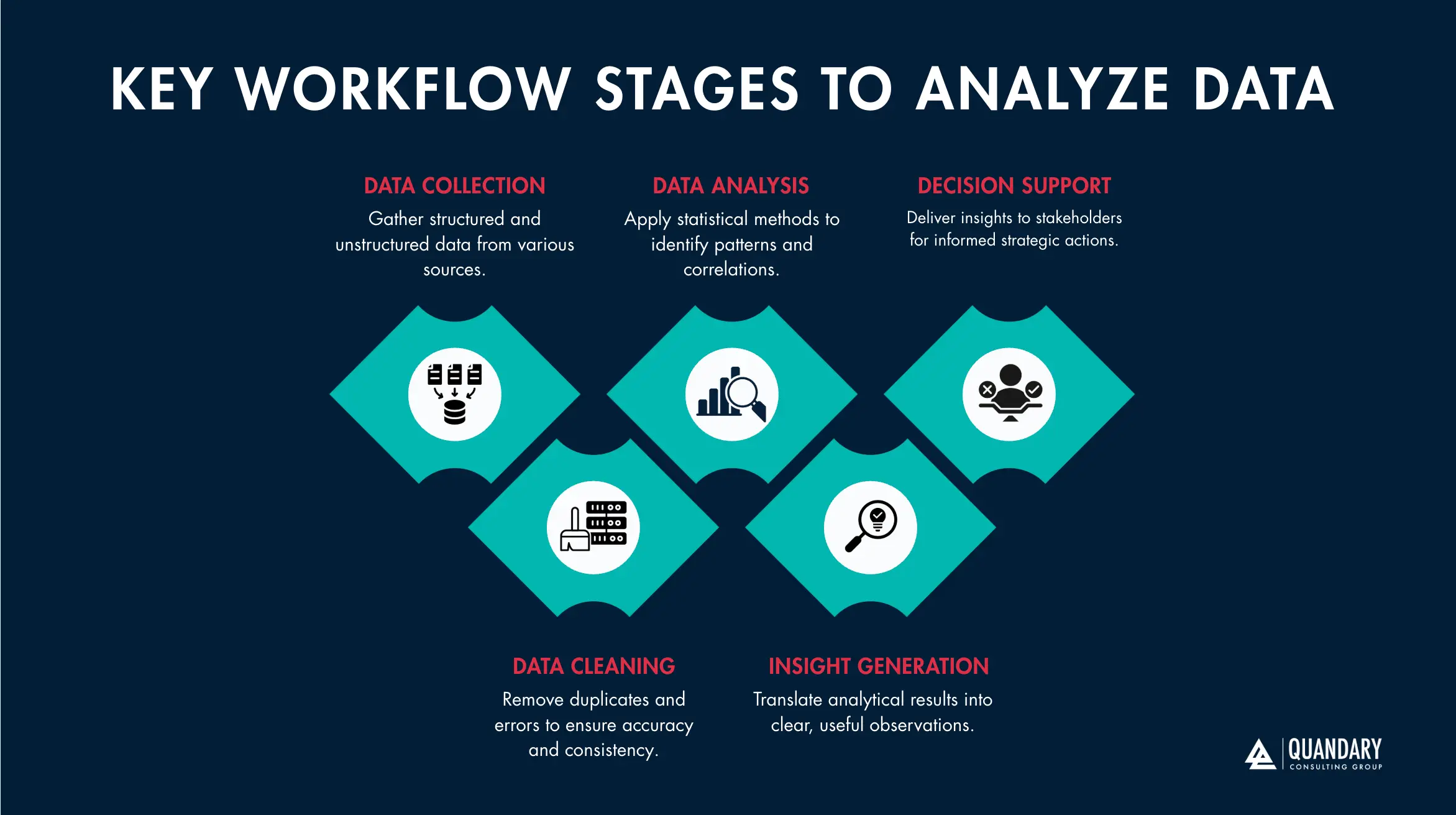
How Processes and Workflows Work Together
- Workflows Bring Processes to Life
Workflows translate high-level processes into clear, actionable steps. They outline how tasks move from one stage to the next, ensuring the right actions are completed in the proper sequence by the appropriate people or systems. - Processes Set the Foundation
Processes establish the overall structure and objectives, defining what needs to be accomplished. Workflows then provide the detailed path for execution. Without a solid process in place, workflows can become fragmented and ineffective. - Driving Efficiency and Consistency
Well-defined processes supported by effective workflows improve operational efficiency and consistency. Workflows help ensure tasks are executed in a structured, repeatable way, minimizing errors and reducing delays. - Enabling Continuous Improvement
The relationship between processes and workflows supports ongoing optimization. By tracking workflow performance through metrics and KPIs, organizations can identify opportunities to refine processes and enhance efficiency. - Supporting Adaptability
Workflows offer the flexibility to adjust as processes evolve. As business needs or market conditions change, workflows can be updated to reflect new requirements without disrupting overall operations.
Illustrative Workflow Examples
To contextualize workflow structures, consider the following representative examples:
Inventory Management
- An inventory management workflow typically includes monitoring stock levels, initiating replenishment, securing approvals, engaging vendors, receiving and validating goods, and updating inventory records. This process is supported by interconnected activities such as demand forecasting, purchase order management, and data analysis.
Employee Onboarding
- Employee onboarding spans multiple functions, beginning with workforce planning and recruitment, followed by candidate evaluation and hiring. Post-hire activities include documentation, training, system access provisioning, and integration into the organization. This workflow requires coordination across HR, hiring managers, and IT.
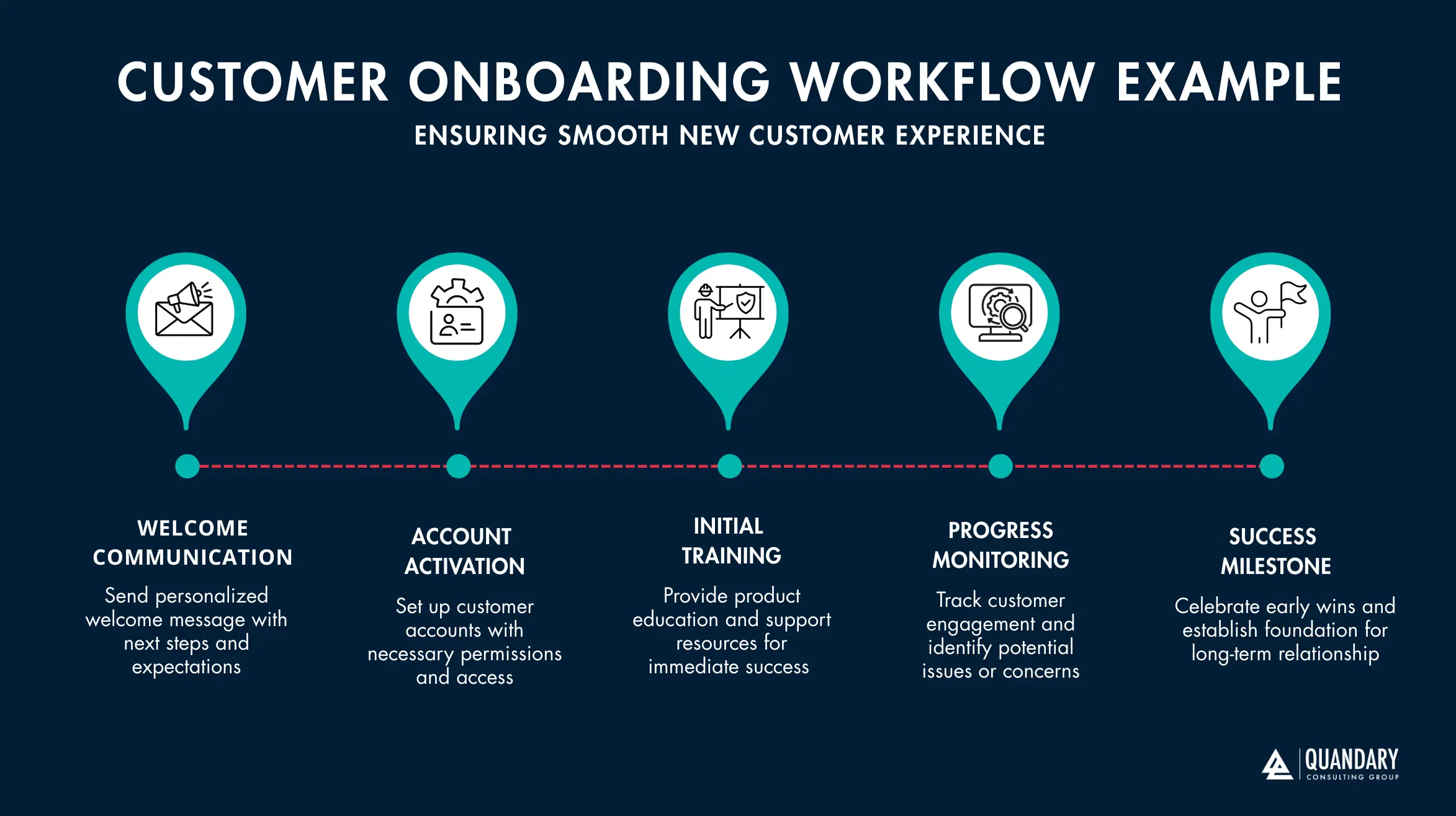
Customer Onboarding
- Customer onboarding focuses on driving adoption and long-term value realization. It includes initial engagement, product setup, user education, ongoing support, performance reporting, and identification of upsell or cross-sell opportunities. Effective onboarding is critical to reducing churn and maximizing customer lifetime value.
What Is Workflow Optimization?
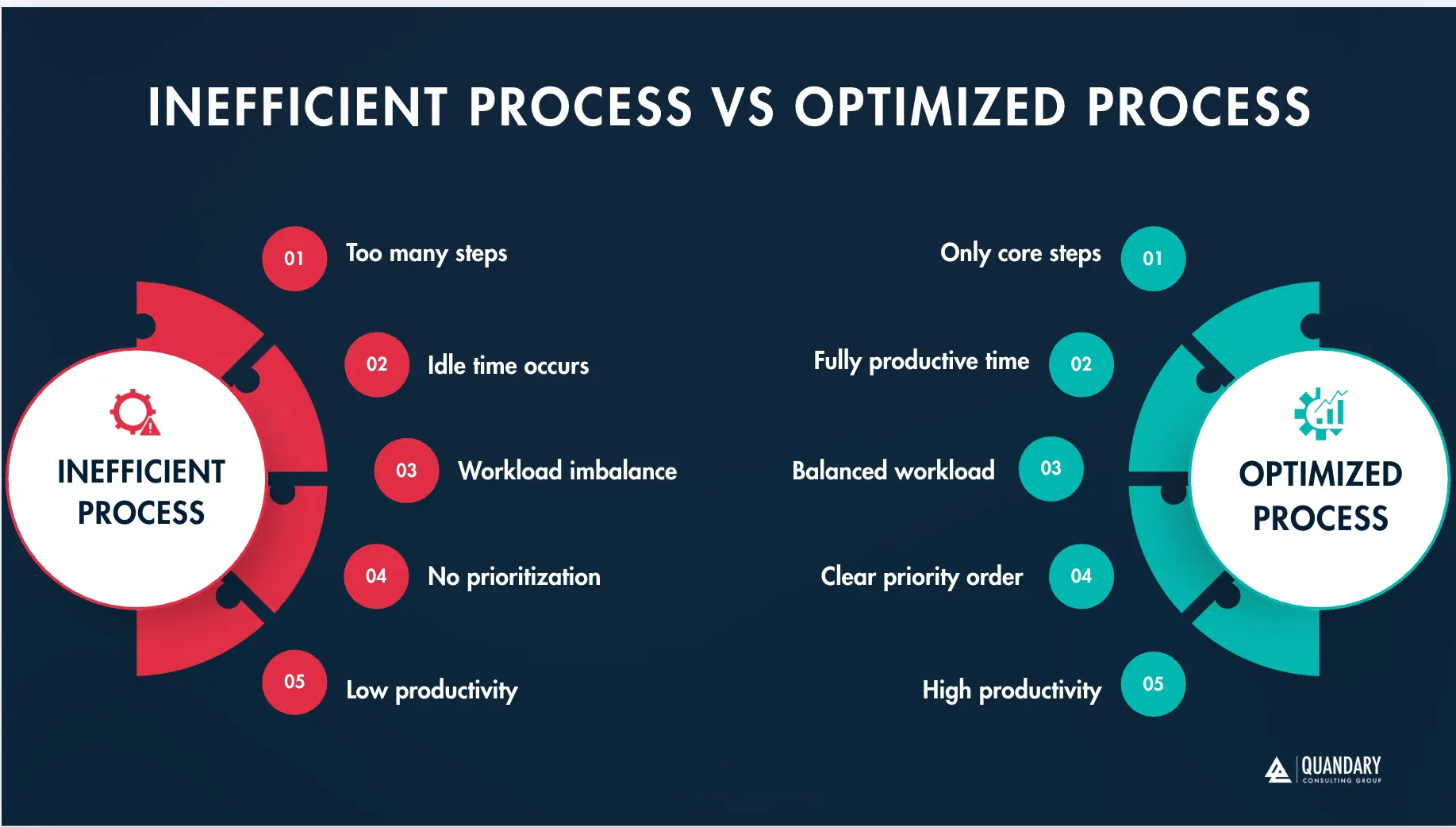
Workflow optimization, also referred to as process optimization, involves redesigning workflows to improve efficiency, reduce risk, and enhance scalability. This is typically achieved through automation, system integration, and the elimination of unnecessary manual intervention.
Manual touch points within workflows often introduce delays, errors, and bottlenecks. Activities such as manual approvals, data entry, and information retrieval consume time and limit throughput.
By contrast, optimized workflows leverage technology to manage data movement and execution, enabling employees to focus on higher-value activities such as analysis, decision-making, and customer engagement. The result is a more efficient, scalable, and resilient operating model.
Real-World Impact of Workflow Optimization
Organizations that successfully optimize workflows can achieve significant operational and financial benefits. Representative outcomes include:
- Work order automation reducing weekly administrative effort from dozens of hours to minutes through system integration and intelligent task routing
- Accounting process automation eliminating manual data entry and reducing processing time to a fraction of prior levels
- Procurement transformation decreasing payment cycle times from months to days while improving data accuracy and vendor experience
- Communication automation centralizing and streamlining stakeholder engagement, reducing reliance on fragmented email-based processes
- CRM modernization enabling personalized customer interactions while reducing administrative workload and improving data visibility
These examples demonstrate how targeted automation and integration can unlock substantial efficiency gains and improve overall business performance.
Key Metrics that Signal the Need for Change or Optimization
Determining whether a process (or workflow) needs review, modification, and/or improvement is essential for maintaining efficiency. Here are several key indicators that will suggest a need for change within your company or department:
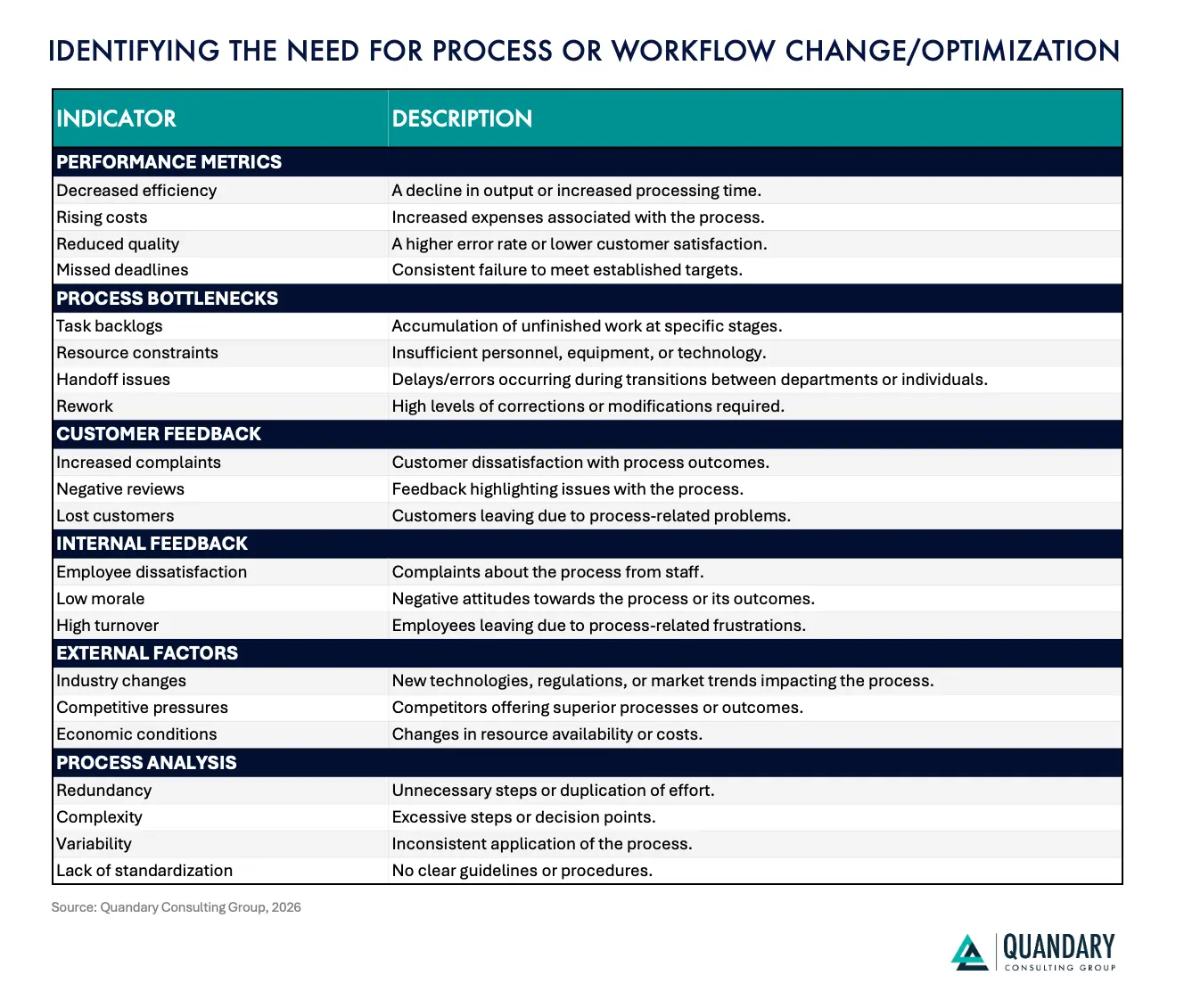
By systematically assessing these indicators, organizations can pinpoint opportunities to refine processes and workflows, leading to improved performance, lower costs, better customer experiences, and stronger employee morale.
Key Benefits of Workflow Optimization Management
Organizations that invest in workflow optimization can realize a range of strategic and operational benefits:
- Reduced inefficiencies through the identification and elimination of redundant steps and process bottlenecks
- Waste reduction by removing duplicate efforts and improving resource utilization
- Enhanced customer experience through faster response times and more consistent service delivery
- Improved data visibility by integrating systems and breaking down data silos
- Increased agility by enabling faster adaptation to changing market conditions and business requirements
Key Challenges in Workflow Optimization Management
One of the primary challenges in workflow management is the reliance on human intervention for repetitive, low-value tasks.
While employees excel at strategic thinking, problem-solving, and relationship management, they are not optimized for repetitive data handling or administrative processes. Excessive manual effort in workflows leads to inefficiencies, employee dissatisfaction, and increased risk of errors.
Each manual touchpoint introduces potential delays and bottlenecks. Over time, these inefficiencies compound, resulting in slower operations, degraded customer experience, and reduced organizational agility.
Five Essential Techniques for Effective Workflow Optimization
1. Anchor Processes in Master Data for Accuracy and Control
One of the most common opportunities for workflow optimization lies in standardizing data inputs through integration with master data systems. Consider the purchase requisition process—a seemingly straightforward workflow that often becomes inefficient due to manual data entry and lack of visibility into budget constraints.
In many organizations, procurement teams are required to re-enter requisition details—such as item descriptions, quantities, vendor information, and departmental data—into downstream systems. This redundancy introduces both inefficiencies and a heightened risk of human error.
A more effective approach is to design workflows that are directly linked to centralized master data repositories. By doing so:
- Users can select from pre-approved vendors and standardized item catalogs
- Key fields are auto-populated, reducing manual input
- Budget data (monthly or quarterly) can be surfaced in real time
This enables requestors and approvers to make informed decisions, ensuring that requisitions align with financial constraints before they are submitted or approved. The result is a more controlled, transparent, and error-resistant process.
2. Introduce Conditional Logic to Handle Process Variability
Not all workflows are linear, and attempting to design a “one-size-fits-all” process often leads to inefficiencies. High-performing organizations address this by embedding conditional logic into their workflows.
Conditional steps and branching allow workflows to dynamically adapt based on predefined criteria, such as cost thresholds, risk levels, or business context. For example:
- A high-budget marketing campaign may require executive (VP-level) approval
- Smaller initiatives, such as blog promotions, can bypass this step
Similarly, workflows can branch into parallel paths to accommodate different use cases within a unified framework. For instance, content creation processes for blog posts and landing pages may share initial and final steps but diverge in execution phases.
By incorporating conditional logic, organizations can:
- Reduce unnecessary approvals
- Improve process speed without compromising governance
- Maintain flexibility while avoiding process fragmentation
3. Integrate Workflows Across the Enterprise Technology Ecosystem
Workflow optimization does not occur in isolation. Most enterprise processes span multiple systems—including finance, HR, procurement, and CRM platforms. As such, integration is a critical enabler of end-to-end efficiency.
Modern workflow platforms, such as Quickbase, Pipefy, and Kissflow, enable organizations to connect workflows with external applications through APIs or integration tools like Zapier, Quickbase, or Workato. This allows for seamless data exchange and automation of downstream activities.
For example:
- A completed purchase order can automatically trigger invoice creation in QuickBooks
- Employee onboarding workflows can integrate with HR systems, like Monday, to provision access and resources
By integrating workflows across systems, organizations can:
- Eliminate manual handoffs between departments
- Ensure data consistency across platforms
- Accelerate cycle times and reduce operational friction
Ultimately, this creates a unified digital ecosystem where people, processes, and data operate in synchrony.
4. Modularize Workflows to Enhance Scalability
A common pitfall in process design is the tendency to create overly complex, end-to-end workflows that attempt to capture the entire lifecycle of an operation. While this may seem efficient in theory, it often results in rigid and difficult-to-maintain systems.
A more scalable approach is to modularize workflows into discrete, manageable components. For example, instead of a single “sales lifecycle” workflow, organizations can design separate workflows for:
- Sales quotes or Statements of Work
- Sales order processing
- Customer onboarding
These workflows can then be “dovetailed” together through triggers or events. When one workflow is completed, it automatically initiates the next.
This modular design offers several advantages:
- Greater flexibility to update or optimize individual components
- Reduced complexity and easier troubleshooting
- Improved scalability as business processes evolve
5. Replace Excessive Approvals with Strategic Notifications
Governance is essential—but excessive approvals can quickly become a bottleneck, particularly when senior stakeholders are involved in routine decisions.
A more balanced approach is to replace non-critical approval steps with notification-based workflows. Instead of requiring formal sign-off, stakeholders are kept informed through automated alerts and can intervene when necessary.
For example:
- Senior leaders receive notifications at key milestones
- They retain visibility without becoming a gating factor
This shift enables organizations to:
- Maintain oversight while improving process velocity
- Reduce delays caused by approval backlogs
- Empower teams to operate more autonomously
By strategically redesigning approval mechanisms, organizations can strike the right balance between control and efficiency.
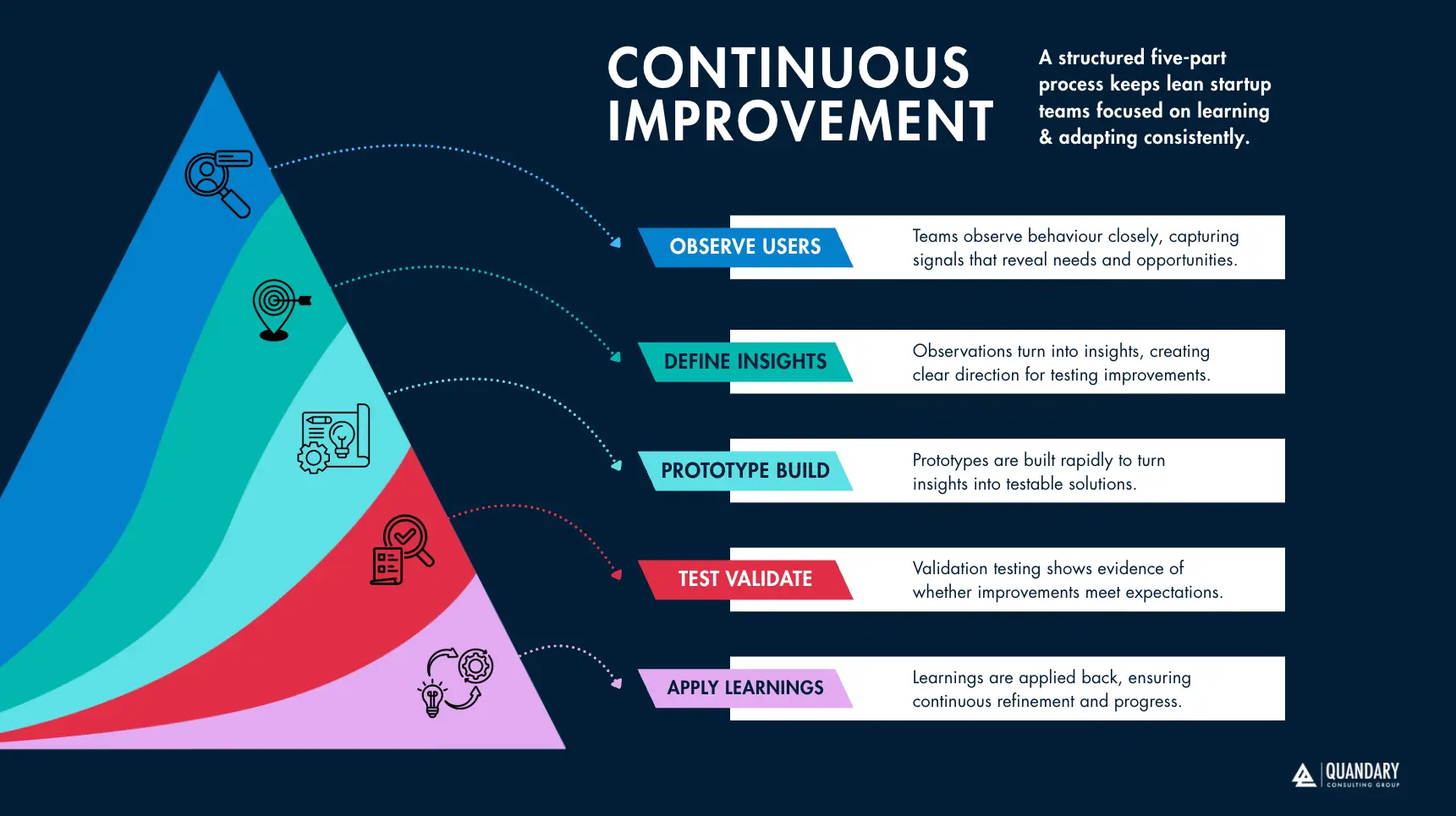
Next Steps: Embedding Continuous Workflow Optimization
Workflow optimization is not a one-time initiative—it is an ongoing discipline. As organizations grow and evolve, so too must their processes. Even highly automated workflows require periodic reassessment to ensure they remain aligned with business objectives and operational realities.
To sustain long-term success, organizations should:
- Regularly identify and address process bottlenecks
- Leverage workflow automation platforms to enable scalability
- Continuously refine workflows based on changing requirements
By adopting a proactive approach to workflow optimization, enterprises can unlock significant value—enhancing efficiency, improving decision-making, and building a more agile and resilient operating model.
A Structured Approach to Workflow Optimization
Effective workflow optimization requires a deliberate and systematic approach. Organizations should begin by mapping existing processes to establish baseline visibility. From there, they can identify inefficiencies, prioritize high-impact opportunities, and implement automation and integration solutions.
Partnering with experienced practitioners can accelerate this process, reduce implementation risk, and ensure that solutions are aligned with strategic objectives.
Quandary Consulting Group helps organizations harness AI and intelligent automation to transform complex workflows into scalable, high-performing systems.
From identifying high-impact use cases to implementing integrated solutions, we partner with clients to reduce operational burden, enhance decision-making, and deliver measurable ROI. If you are exploring how AI can elevate your operations, our team can help you define and execute a clear, value-driven roadmap.