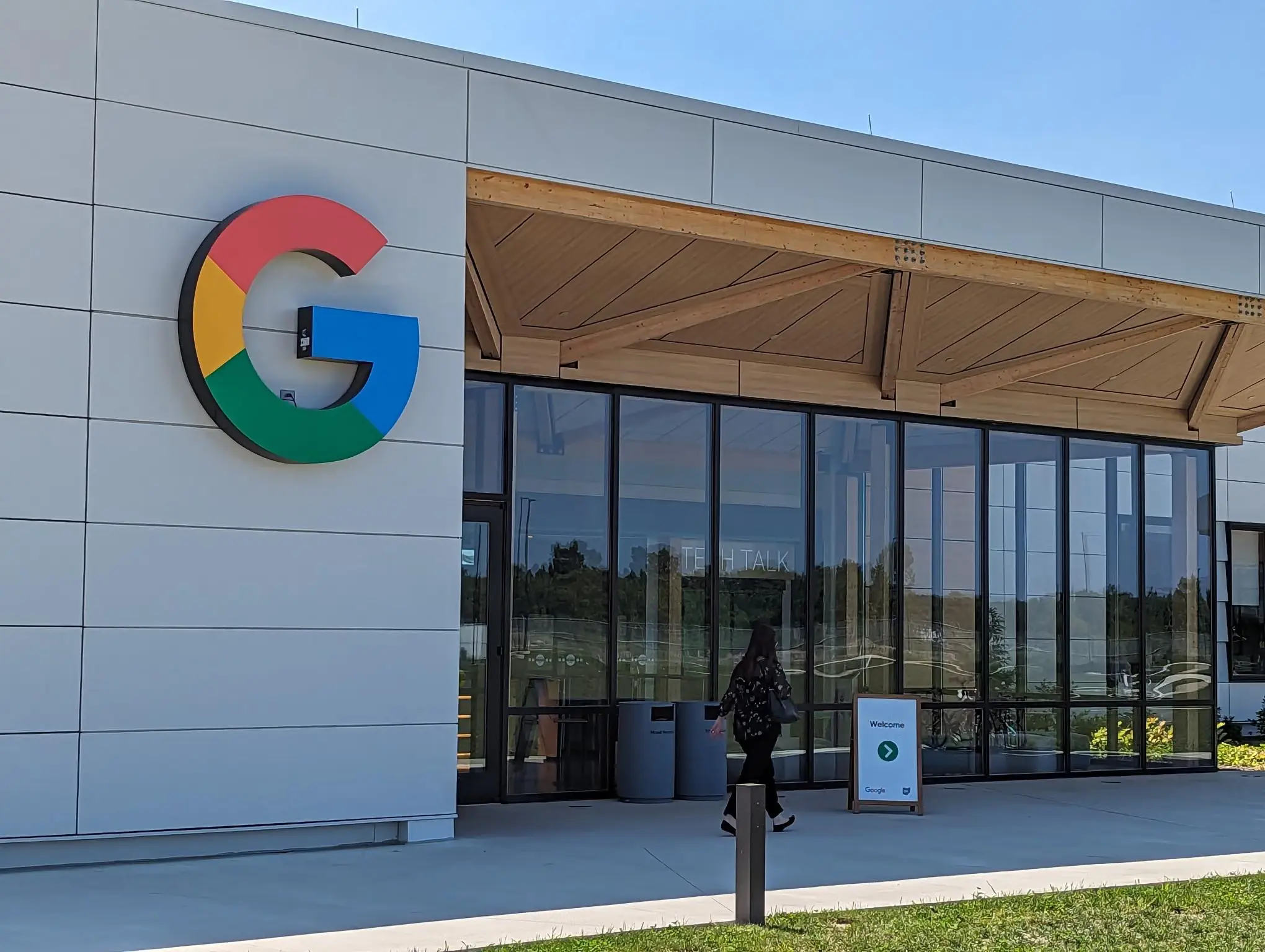
Google Modernizes Global Construction Planning Across 2,500+ Data Center Projects
The Client Profile: Google
- Industry: Technology, Cloud Infrastructure & Data Centers
- Headquarters: Mountain View, California
- Operations: Global
- Use Case: Enterprise Construction Portfolio Planning & Governance
Google is one of the world's largest technology companies, providing products and services spanning Search, Google Cloud, YouTube, Android, Workspace, Gemini, advertising, and artificial intelligence. Supporting that digital ecosystem requires an equally sophisticated physical infrastructure footprint. Google owns and operates data centers around the world that provide the computing infrastructure required to keep its products and services available around the clock.
As Google's demand for cloud computing and AI infrastructure continues to expand, the ability to effectively evaluate, prioritize, fund, and execute large-scale data center construction initiatives becomes increasingly important. For Google's infrastructure planning organization, that meant the systems behind construction portfolio management needed to operate with the same speed, visibility, governance, and scalability expected from the infrastructure itself.
The Challenge
Managing 2,500+ Global Data Center Construction Projects with Fragmented Planning Tools
Google's construction planning organization was responsible for coordinating more than 2,500 active and upcoming data center construction projects. The scale was significant but the planning infrastructure supporting these projects was not. Critical portfolio information was distributed across spreadsheets and fragmented internal tools that had become increasingly difficult to manage as project volume, stakeholder involvement, and planning complexity grew.
More than 800 stakeholders required access to construction portfolio information, but the existing environment lacked a centralized framework for determining project readiness, strategic priority, budget alignment, approvals, and ownership and the result was an increasingly difficult portfolio management environment. Google also needed to determine not simply whether a construction project could move forward, but whether it should move forward—and whether it represented the best use of available resources.
Fragmented Planning Created Enterprise-Level Risk
Without a centralized construction portfolio management platform, Google faced several interconnected challenges:
- No single source of truth across 2,500+ construction initiatives
- Limited real-time visibility into project readiness and prioritization
- Spreadsheet version-control issues across teams and stakeholders
- Limited controls governing who could edit or approve critical information
- Inconsistent project evaluation and prioritization
- Limited ability to forecast upcoming construction requirements
- Difficulty aligning project priorities with regional and global budgets
- Slow system changes that could take 9–12 months
- Increased risk of allocating capital and resources to lower-priority projects while higher-value initiatives waited
The problem extended far beyond administrative efficiency and this affected Google's ability to make timely decisions about construction priorities, capital allocation, project readiness, resource deployment, and infrastructure growth. When portfolio information is fragmented, leadership can struggle to answer fundamental questions quickly:
- Which projects are truly ready?
- Which initiatives are most strategically important?
- Which projects have appropriate funding?
- Which initiatives should advance now?
- Which should wait?
- And which should not move forward at all?
Google needed a scalable system capable of turning those questions into a repeatable, governed decision-making process.
The Solutions
Quandary Built Google a Centralized Construction Portfolio Management Platform in Quickbase
Quandary Consulting Group designed and developed a custom Quickbase construction portfolio management application around Google's existing planning methodology. The objective was not simply to digitize spreadsheets, it was to create an enterprise planning environment capable of helping Google evaluate thousands of projects consistently, control access to critical portfolio data, adapt quickly to changing business requirements, and provide leadership with real-time visibility into the global construction pipeline.
The new platform established a centralized operational layer across Google's construction planning process and instead of relying on disconnected spreadsheets, teams could work from a governed environment where project information, readiness, priorities, approvals, ownership, and budget considerations could be evaluated together.
Turning Google's Planning Standards into Digital Workflows
Quandary began by mapping Google's existing construction planning processes, spreadsheet structures, decision criteria, governance requirements, and stakeholder workflows. Those requirements were translated into structured Quickbase workflows that could enforce consistency without making the planning organization less agile. The platform incorporated:
- Project readiness criteria
- Strategic prioritization
- Budget alignment
- Regional planning requirements
- Role-based permissions
- Approval workflows
- Planning deadlines
- Portfolio-level reporting
- Project ownership
- Enterprise data governance
This created a repeatable framework for determining which construction projects should move forward and gave decision-makers a clearer view of the tradeoffs across the portfolio.
Creating a Standardized Framework for Construction Prioritization
One of the most important improvements was the ability to evaluate projects using consistent planning criteria. Google's teams could categorize and prioritize initiatives using defined readiness and priority structures, including R1–R5 readiness tiers and P0–P4 strategic priorities, while considering available funding and regional requirements.
Instead of project prioritization depending on disconnected spreadsheets, individual interpretations, or incomplete information, teams gained a common framework for evaluating construction initiatives. The platform helped stakeholders determine whether projects were:
- Ready to proceed.
- Strategically aligned.
- Operationally supportable.
- Achievable within the required timeframe.
- Aligned with available funding.
- Appropriate within regional budget constraints.
That structure helped turn thousands of individual construction projects into a manageable enterprise portfolio.
Establishing Role-Based Governance Across 800+ Users
Managing information across hundreds of stakeholders required more than centralized data - it required control. Quandary implemented role-based permissions and approval logic so that the appropriate users could create, modify, review, and approve project information while protecting critical portfolio data from conflicting or unauthorized changes. Permissions could also align with planning deadlines, helping lock down information when required and creating greater confidence in the accuracy of portfolio reporting and for more than 800 users, the platform provided a common environment without sacrificing governance.
This strengthened:
- Data integrity
- Approval accountability
- Portfolio consistency
- Change control
- Planning discipline
- Leadership confidence
Google gained both accessibility and control—two capabilities that are often difficult to achieve simultaneously in large enterprise planning environments.
Replacing 9–12 Month Change Cycles with Low-Code Agility
One of the largest returns came from changing how quickly Google's planning technology itself could evolve. Previously, changes to the planning environment could require 9–12 months and that created an enormous disconnect between the speed of the business and the speed of the technology supporting it.
Quandary used Quickbase's low-code architecture and an agile development methodology to fundamentally change that dynamic and instead of waiting months for system modifications, the planning organization could respond to changing requirements in days and, in some cases, minutes. Quandary also worked through rapid development cycles with frequent stakeholder feedback, allowing forms, workflows, dashboards, permissions, reporting logic, and prioritization rules to evolve alongside Google's operational needs.
The return was more than faster application development and Google gained a planning platform capable of changing at the speed of the portfolio it was designed to manage.
Connecting Construction Planning Without Creating Another Technology Silo
The Quickbase platform was architected to work with Google's existing project intake environment while retaining the flexibility to operate independently when necessary. That approach gave Google a modular planning layer rather than another rigid application. Information could move between intake and portfolio planning processes while the construction organization retained the flexibility required to evolve its workflows over time and the result was a scalable foundation capable of supporting future changes in project volume, planning criteria, reporting requirements, governance, and capital allocation.
The Results
From Spreadsheet-Based Planning to Real-Time Control of 2,500+ Construction Projects
The transformation fundamentally changed how Google's planning organization could manage its global construction portfolio.
- More than 2,500 active and upcoming projects could now be evaluated through a centralized environment.
- More than 800 stakeholders could operate from a governed source of truth.
Leadership could see project readiness, strategic priority, approval status, ownership, and funding information without waiting for fragmented spreadsheets to be manually reconciled and the technology supporting the planning organization could evolve in days or minutes rather than requiring changes that previously took as long as a year.
The impact became especially clear during Google's annual planning cycle. For the first time in the organization's history, the global planning cycle was completed without a single escalation and that result represented more than smoother administration. It demonstrated that standardized workflows, transparent decision criteria, controlled access, and real-time portfolio visibility could remove significant friction from an extraordinarily complex global planning process.
Key Business Returns Delivered to Google
9–12 Months → Days or Minutes
Changes that previously could require up to a year could now be implemented in days and, for some requirements, minutes. That improvement gave Google's construction planning organization the agility to respond to new priorities, requirements, and portfolio conditions without waiting through lengthy technology change cycles.
2,500+ Projects → One Governed Portfolio
Google gained centralized visibility across more than 2,500 construction initiatives, replacing fragmented project information with a single portfolio management environment. Leadership and project stakeholders could evaluate the broader portfolio rather than making decisions from isolated spreadsheets or incomplete project views.
800+ Users → One Controlled Planning Environment
More than 800 stakeholders gained access to the platform while role-based permissions, approval logic, and deadline-driven controls protected critical planning data. The solution allowed Google to expand access while strengthening governance.
Zero Escalations and a Historic Global Planning Outcome
Google completed its annual global portfolio planning cycle without a single escalation for the first time in the organization's history. Clear workflows, standardized criteria, better visibility, and defined ownership gave teams the information and structure required to move through planning without the escalation patterns created by the previous fragmented environment.
Real-Time Decision Support for faster Decisions About Where Construction Resources Should Go
Portfolio managers could see which projects were ready, strategically aligned, approved, and appropriately funded. That allowed Google to make more informed decisions about which projects should advance, pause, receive investment, or be declined and rather than spending valuable planning time reconciling information, teams could focus on making better portfolio decisions.
Stronger Capital Allocation for Better Alignment Between Funding and Project Readiness
Standardized readiness, priority, and budget criteria gave leadership a stronger framework for directing capital toward projects positioned to deliver the greatest strategic value. The platform did not simply make project tracking easier, it improved the quality and timeliness of the information used to make capital-planning decisions—helping reduce the risk of funding lower-priority initiatives while higher-impact projects remained stalled.
The Business Impact
Google Gained More Than a Project Management Application
The most important return from the engagement was not simply the replacement of spreadsheets. Google gained a scalable operating model for global construction portfolio management and the new environment connected project data, people, governance, approvals, priorities, budgets, and planning standards within one system. That gave the organization the ability to:
- Make construction portfolio decisions using real-time information
- Prioritize thousands of projects against consistent criteria
- Strengthen governance across hundreds of users
- Respond faster when planning requirements change
- Improve confidence in project and portfolio data
- Reduce administrative friction during annual planning
- Better align construction activity with strategic objectives
- Improve visibility into where capital is being allocated
- Scale planning processes alongside Google's expanding infrastructure needs
For an organization managing thousands of infrastructure initiatives, those improvements create compounding value.
- Faster system changes improve responsiveness
- Better data improves decisions
- Better prioritization improves capital allocation
- Stronger governance reduces operational risk
The most important part, the centralized portfolio visibility allows leadership to make decisions based on the entire construction pipeline rather than disconnected pieces of it.
Our Latest Projects


Services
Industries


© 2026 Quandary Consulting Group 2026. All Rights Reserved.
Privacy Policy