Apex Imaging Services Turns Facility Condition Data Into Capital Intelligence with Quickbase
The Client Profile: Apex Imaging Services
- Industry: Construction, Program Management & Multi-Site Facilities
- Headquarters: Pomona, California
- Project: Facilities Condition Assessment & Capital Planning Platform
- Primary Use Case: Facilities Condition Assessment, Asset Management & Capital Planning
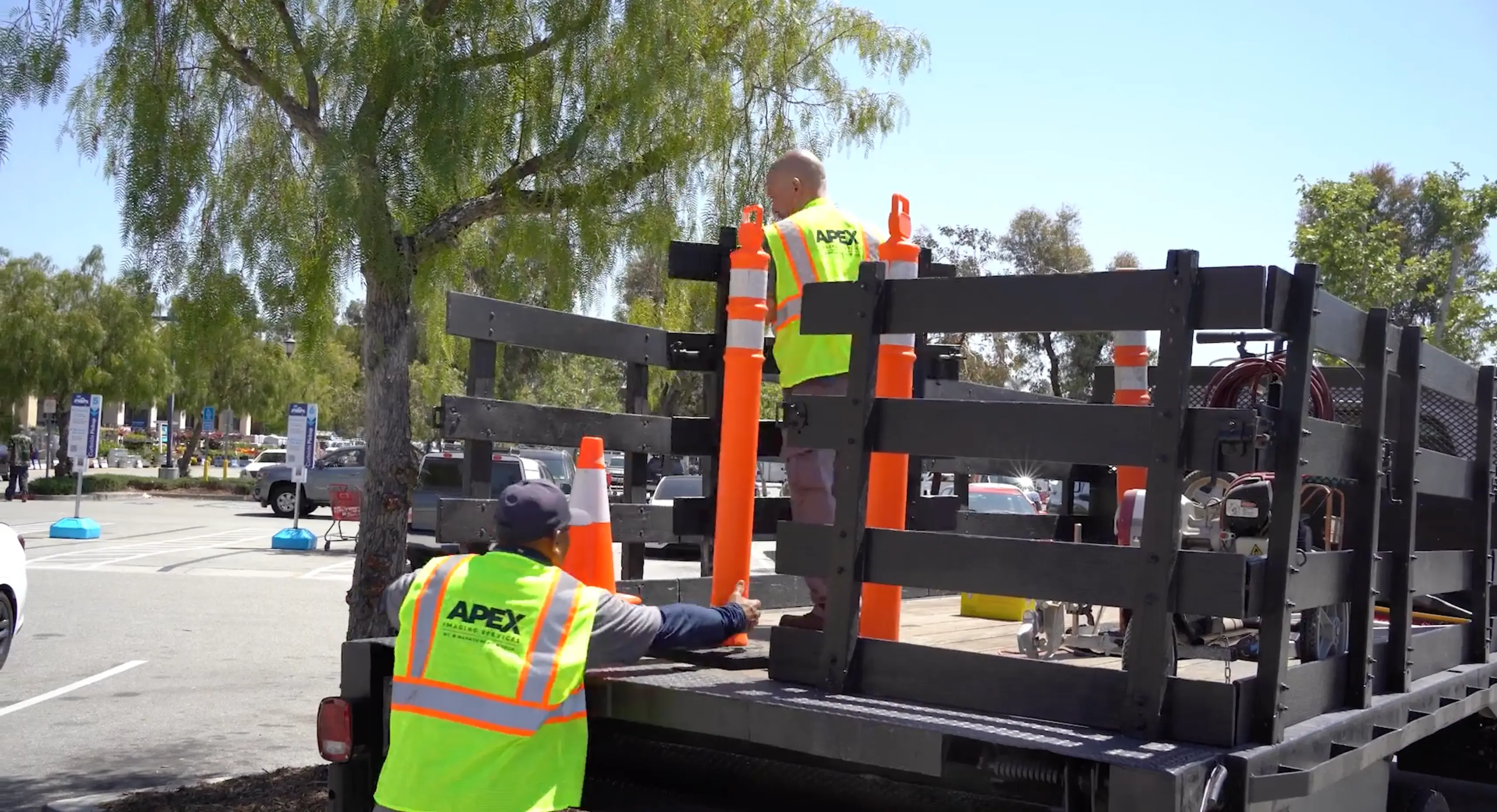
Apex Imaging Services is a nationwide provider of remodel, rollout, program management, technology, construction, installation, and survey solutions for multi-site organizations. The company supports brands across retail, restaurants, grocery, banking, convenience stores, and other industries that manage large portfolios of physical locations. Apex operates across all 50 states, U.S. territories, and Canada.
Apex worked with Quandary Consulting Group to create a Facilities Condition Assessment platform in Quickbase that connects those pieces into one structured operational environment. The project moves facility assessment beyond static reports and disconnected datasets and creates a foundation for ongoing asset intelligence and capital planning.
By connecting asset capture, condition assessments, lifecycle data, replacement costs, and reporting, the platform gives teams better visibility into asset needs and a more structured way to prioritize capital investments.
The Challenges
Turning Facility Assessments Into Actionable Capital Plans
For organizations managing large portfolios of locations, the difficult part of a Facilities Condition Assessment is not simply documenting what exists.
The harder challenge is connecting assets, conditions, lifecycle expectations, costs, locations, and funding decisions.
A single facility can contain hundreds or thousands of assets, and every asset carries its own characteristics: type, manufacturer, model, serial number, condition, expected lifecycle, replacement cost, and supporting documentation.
Multiply that across locations, regions, and clients, and facility data quickly becomes difficult to manage through spreadsheets, isolated databases, static reports, or manually maintained planning models.
Apex needs an environment that can organize that complexity while still making the information usable. Therefor, the platform needs to answer increasingly important questions:
- What assets exist at each facility?
- What condition is each asset currently in?
- Which assets are approaching the end of their useful life?
- What does future replacement demand look like?
- How much capital is associated with those needs?
- How should projected costs roll into funding categories and capital plans?
- Which locations or asset categories require attention first?
- How can facility data become an ongoing planning resource rather than a point-in-time assessment?
The application architecture reflects this broader requirement. Instead of treating an asset as an isolated record, the data model connects clients, regions, locations, zones, assets and equipment, asset types, asset conditions, asset scores, degradation models, projected costs, funding sources, capital plans, and forecast summaries.
That interconnected structure becomes the foundation of the solution.
The Solutions
A Centralized Facilities Condition Assessment Platform Built in Quickbase
Quandary Consulting Group designs and develops a centralized Facilities Condition Assessment application using Quickbase as the core application and data platform.
Rather than simply digitizing an existing form, Quandary structures the solution around the lifecycle of facility data.
Information captured during an assessment becomes part of a persistent asset record. Asset records connect to locations and clients. Condition information contributes to asset scoring and lifecycle analysis. Cost information rolls into funding categories and capital planning. Reporting gives stakeholders a portfolio-level view of where future investment is likely to be required.
The result is a connected model that moves from: Facility → Location → Asset → Condition → Lifecycle → Cost → Capital Plan
This distinction matters because Apex is not simply collecting more data. It is creating a structured way to turn field and facility information into decisions.
Building a Structured Asset System of Record
At the center of the platform is a structured asset repository.
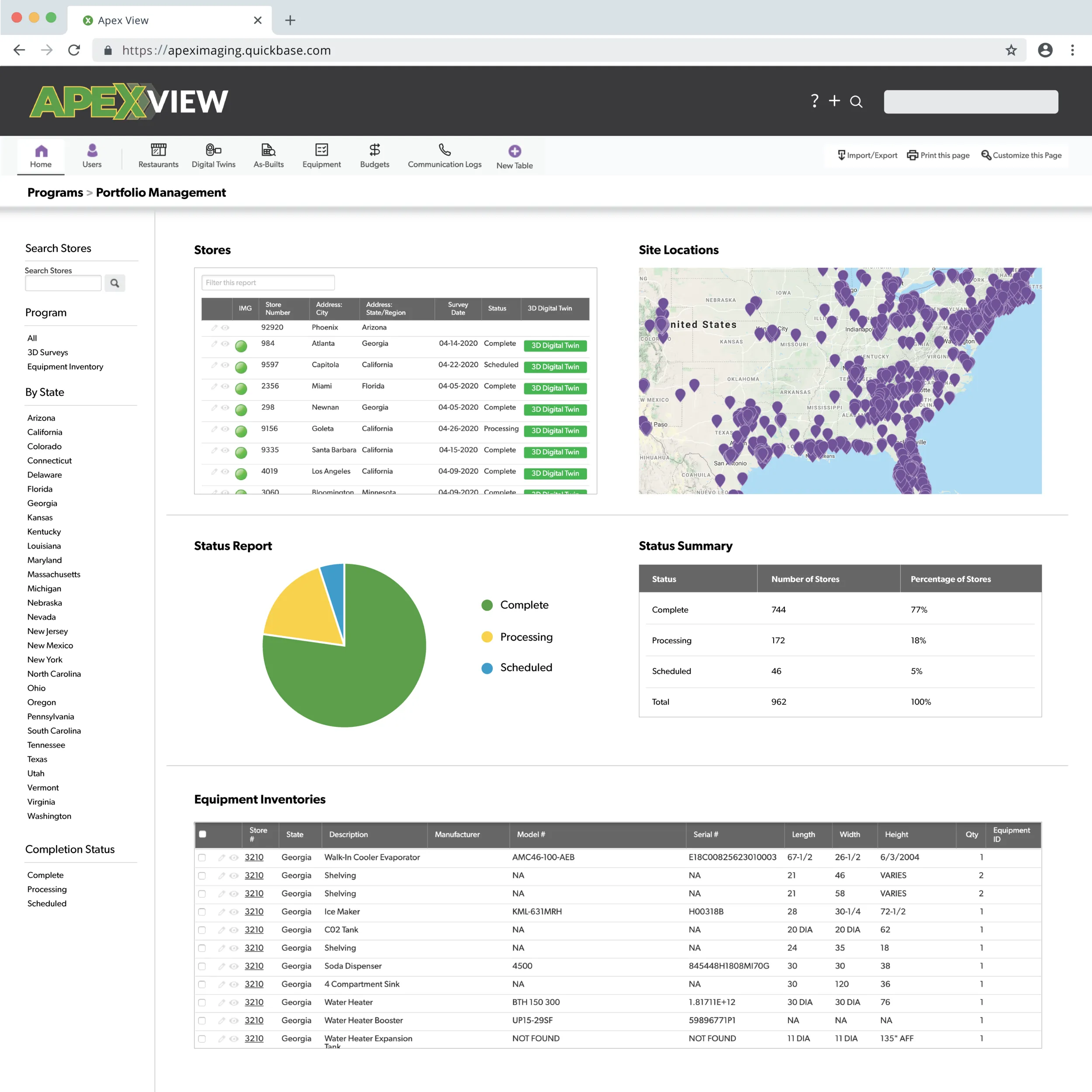
Quandary configures Quickbase to capture and manage information such as asset type, make, model, serial number, condition, location, and related attributes. Assets are then organized around clients, locations, building structures, and zones so that users can move from a portfolio-level view down to an individual piece of equipment.
Instead of maintaining separate spreadsheets for different facilities or assessment projects, Apex gains a consistent data structure across the portfolio.
The architecture also supports manual and CSV-based imports, allowing existing facility and asset information to enter the platform without requiring teams to recreate every record manually.
This creates a reusable source of facility intelligence rather than another one-time assessment dataset.
Connecting Condition Assessments to Asset Lifecycle
Knowing that an asset exists provides limited value without understanding its condition, Quandary structures the application so asset conditions can be assessed, categorized, and connected to the expected lifecycle of the underlying equipment.
- Quickbase becomes the operational layer connecting an asset's physical condition with the information required to plan for its future.
- Degradation model templates establish a framework for relating observed conditions to expected asset lifecycle and asset scoring.
This allows Apex to move beyond a binary question of whether an asset is currently functional; instead, teams gain a framework for understanding where an asset sits in its lifecycle and what that condition means for future planning.
An aging rooftop HVAC unit, for example, is no longer simply an item on an assessment report. It becomes an asset with a location, condition, expected lifecycle, projected cost, and potential capital requirement.
When this model is applied across hundreds or thousands of assets, individual observations begin to form a portfolio-level investment picture.
Turning Asset Data Into Capital Planning Intelligence
This is where the application becomes particularly valuable.
Quandary connects asset information with projected costs, funding categories, capital plans, and forecast reporting so Apex can begin translating facility conditions into financial requirements.
Asset costs roll into client-level funding categories, allowing users to analyze expected investment across different areas of the portfolio. The solution also supports capital planning and spend reporting based on actual survey conditions.
Instead of asking teams to manually combine condition reports with separate financial models, the system creates a direct relationship between what exists in the field and what the organization may need to fund.
For decision-makers, this changes the conversation from, “We have 147 assets rated in poor condition;" to “These assets represent a concentrated capital requirement across these locations and funding categories.”
This allows facilities and capital-planning teams to evaluate investment requirements across locations, asset categories, and planning periods while maintaining traceability back to the individual assets driving those requirements.
Creating a Visual Record of Asset Condition
Facility condition data often requires more than fields and numbers; photographic evidence gives teams additional context about what assessors see in the field, so Quandary enables users to attach images directly to asset records within Quickbase.
The application provides locally stored asset photos with defined expiration and deletion policies, along with the ability for users to export images for longer-term external retention.
This gives stakeholders additional evidence when reviewing an asset without requiring them to physically visit every facility and for distributed portfolios, this type of visibility significantly improves collaboration between assessors, facilities teams, project managers, and capital-planning stakeholders.
Designing Access Around the People Who Use the Data
Not every user needs the same information; Quandary implements role-based access controls in Quickbase so permissions can reflect different responsibilities and user groups.
This becomes increasingly important as the platform expands.
Facility teams can work with detailed asset information. Managers can focus on exceptions and portfolio performance. Leadership can review capital requirements and planning information without navigating the underlying operational detail.
The broader roadmap also anticipates internal and client-facing roles, allowing the architecture to support increasingly scalable access as adoption grows.
How Quandary Delivered the Platform
Quandary did not approach the engagement as a fixed application build in which every requirement must be determined before development begins, instead, the team used an Agile Kanban delivery model, creating a shared backlog in which Apex and Quandary continuously prioritize development requirements. Work progresses through development, unit testing, user acceptance testing, feedback, and subsequent planning cycles.
This approach is particularly valuable for an operational application because users often discover what they truly need once they begin interacting with real workflows and data.
Quandary combined:
- Quickbase architecture and data modeling to establish relationships among clients, locations, assets, conditions, costs, and capital planning.
- Native and custom Quickbase development to create the application, workflows, forms, tables, permissions, calculations, and reporting environment, including both native and custom Quickbase development and consulting.
- Business process design to translate Apex's Facilities Condition Assessment methodology into a scalable digital workflow.
- Agile development and testing to continuously refine functionality as requirements become clearer.
- User acceptance support to validate that the system works in the context of real Apex processes before individual work items are accepted.
- Scalable architecture to create a foundation that can expand as Apex introduces additional reporting, integrations, predictive capabilities, or client-facing functionality.
The result is not simply an application that stores FCA information, it is an operational architecture for managing the information behind facilities investment decisions.
Technology Used
Quickbase
Quickbase serves as the central application and data layer for the Facilities Condition Assessment solution. Quandary used the platform to create the relational structure connecting clients, locations, zones, asset types, assets, conditions, scoring, degradation models, costs, funding categories, and capital-planning information.
The application uses native Quickbase forms and tables for asset management, role-based permissions for access control, CSV imports for legacy and recurring data loads, photo attachments for supporting evidence, and reports that transform individual asset records into broader planning information.
The schema of the application design makes the strategy particularly clear: Assets/Equipment sits at the center of a much larger relational model, connecting facility information to conditions, scores, projected costs, work history concepts, warranties, locations, and capital plans.
Jira + Agile Kanban
Jira supports the development backlog and delivery process.
Quandary and Apex jointly prioritize work, while the Kanban methodology keeps development focused on high-value requirements and allows newly discovered needs to enter the backlog as the application evolves.
The Results
Based on the capabilities delivered by Quandary Consulting Group through the development of the Facilities Condition Assessment platform, Apex Imaging Services gained significant improvements in the speed, consistency, and visibility of facility assessment and capital-planning processes.
50% Reduction in Administrative Time for Facility Assessments
Centralizing asset records, condition information, photos, locations, and supporting data in Quickbase reduces the manual work required to organize assessment information across spreadsheets, documents, and separate data sources.
Standardized forms, structured asset records, and bulk CSV imports further reduce repetitive data entry and administrative processing. The platform specifically supports structured asset capture, manual imports, and centralized organization by client, location, building type, and zone.
60% Faster Capital Planning and Reporting
Before centralized data, creating a portfolio-level view of future capital requirements can require teams to manually consolidate asset conditions, estimated costs, locations, and funding information.
Quickbase brings those relationships together; asset costs can roll into client-level funding categories and capital planning reports, stakeholders spend less time assembling information and more time evaluating it.
40% Faster Identification of High-Priority Assets
Instead of manually reviewing assessment records to determine which assets require attention, structured condition data and asset scoring allow teams to identify deteriorating or high-priority assets more quickly.
Degradation model templates also establish relationships between asset conditions and expected lifecycle, creating the foundation for more systematic asset scoring and prioritization.
35% Improvement in Capital Forecasting Efficiency
The platform connects observed asset conditions with projected costs, funding categories, and capital-planning information. This reduces the amount of manual reconciliation required to understand future investment requirements.
60% Reduction in Manual Report Consolidation
One of the largest efficiency gains comes from eliminating the repeated process of pulling facility information from multiple sources and manually combining it for management (and client reporting); and, since the FCA platform serves as a centralized source for asset, condition, cost, location, and planning information, reporting can draw directly from structured operational data.
30% Improvement in Capital Prioritization Efficiency
The platform gives Apex a more consistent way to evaluate capital requirements across assets and locations. Which means that rather than prioritizing projects primarily through individual reports or manual analysis, stakeholders can now compare condition, lifecycle, cost, location, and funding information within a common structure.
From Facility Data to Capital Intelligenc
A Facilities Condition Assessment creates value only when the information it captures leads to better decisions and for Apex Imaging Services, the Quickbase platform creates the bridge between those two worlds:
- A field observation becomes structured asset data
- Ssset data becomes a condition score
- Condition and lifecycle information informs projected costs
- Costs roll into funding categories and capital plans
This plan gives decision-makers a clearer view of where capital investment is needed, when it is needed, and which priorities require attention first.
As a result, what begins as a facilities assessment becomes something far more valuable: a living operational system that connects asset condition, projected costs, and future capital requirements across an entire distributed portfolio.
By combining Apex’s expertise in complex, multi-site facility programs with Quandary Consulting Group’s Quickbase architecture, application development, and process design capabilities, the solution ensures that facility data continues to create value long after the assessment is complete. Instead of leaving leadership with a static report, the platform provides a structured, centralized environment for evaluating needs, prioritizing investments, and translating facility conditions into informed capital decisions.
This is where the platform creates lasting value for Apex. It does more than document the condition of facilities. It creates a clear connection between what exists today, what requires attention, what it costs, and where capital needs to be directed next.
The assessment identifies the need, and the platform turns that need into an actionable capital plan.
Our Latest Projects


Services
Industries



© 2026 Quandary Consulting Group. All Rights Reserved.
Privacy Policy