Automation
12 Strategic Steps to Automate Business Processes Workflows


Every business relies on workflows: Customer onboarding, invoice approvals, employee onboarding, supply chain coordination, and customer support all operate through interconnected processes. As organizations grow, these workflows become increasingly complex.
Manual processes eventually become a major barrier to growth.
Businesses relying on manual workflows often experience:
- Operational inefficiencies
- High labor costs
- Slower customer response times
- Increased risk of human error
- Poor scalability
Automation has become a critical capability for modern organizations. Studies show that 86% of companies implementing automation report productivity gains, while 59% report measurable cost reductions.
Research also suggests up to 45% of business activities can be automated using current technologies, representing one of the largest productivity opportunities in modern organizations.
What Is Workflow Automation?
Workflow automation refers to the use of technology to execute business processes with minimal manual intervention. Automation platforms connect systems, orchestrate tasks, and apply decision rules to automatically move work through a process.
Modern workflow automation typically includes technologies, such as the following:
- Robotic Process Automation (RPA)
- Low-code/no-code application platforms
- Quickbase, Zoho, and OutSystems are great examples
- Artificial intelligence and machine learning
- Integration platforms (iPaaS)
- Workato is a great iPass example
- Business process management tools
- Event-driven automation systems
These tools eliminate repetitive work by enabling systems to communicate and execute tasks automatically.
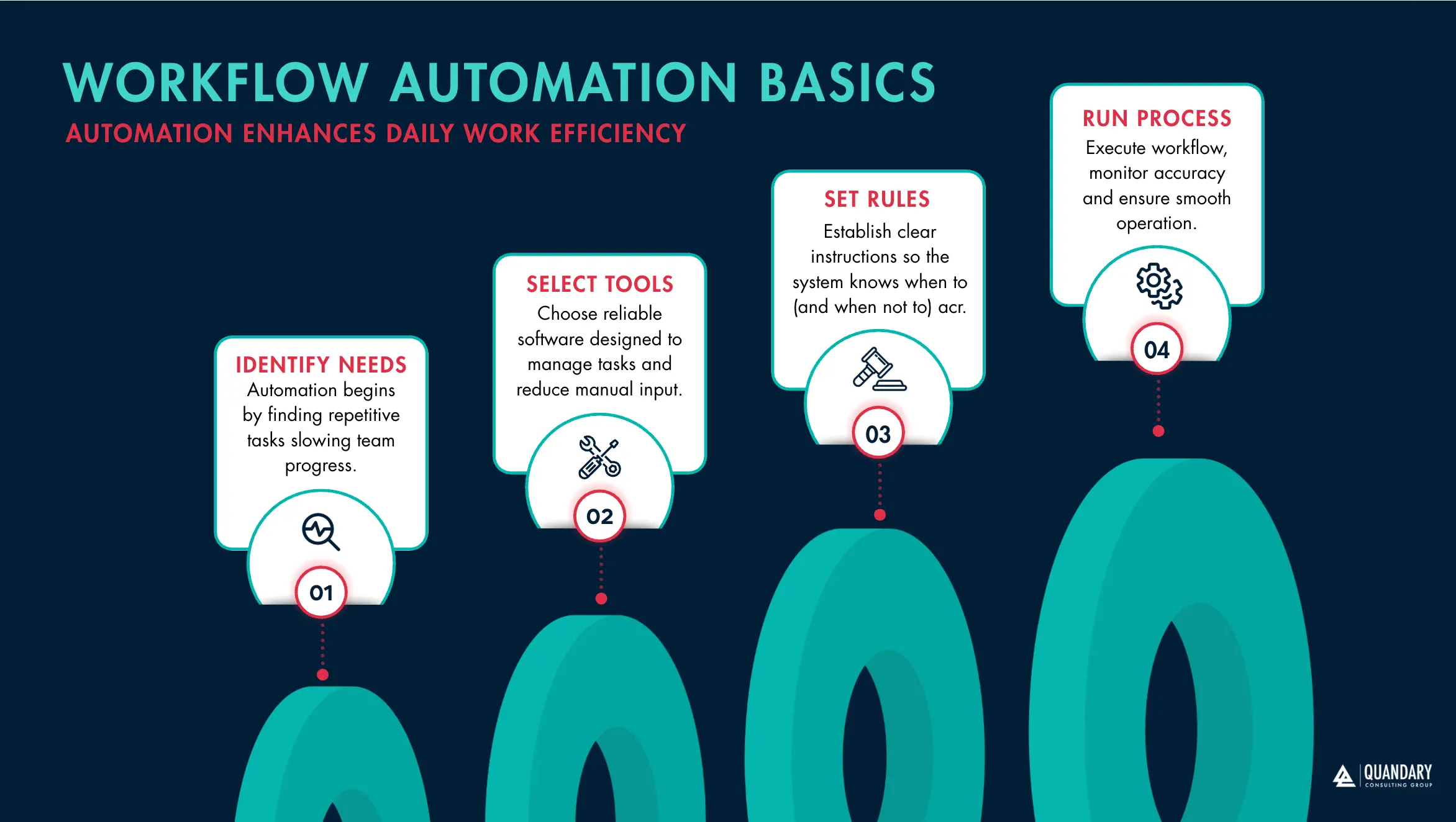
- Automation technologies have grown rapidly in adoption. By 2026, over 68% of organizations have automated more than half of their repetitive workflows, reflecting a massive shift toward digital operations.
- The global workflow automation market is projected to reach $26 billion in 2026, demonstrating the accelerating investment in operational automation technologies.
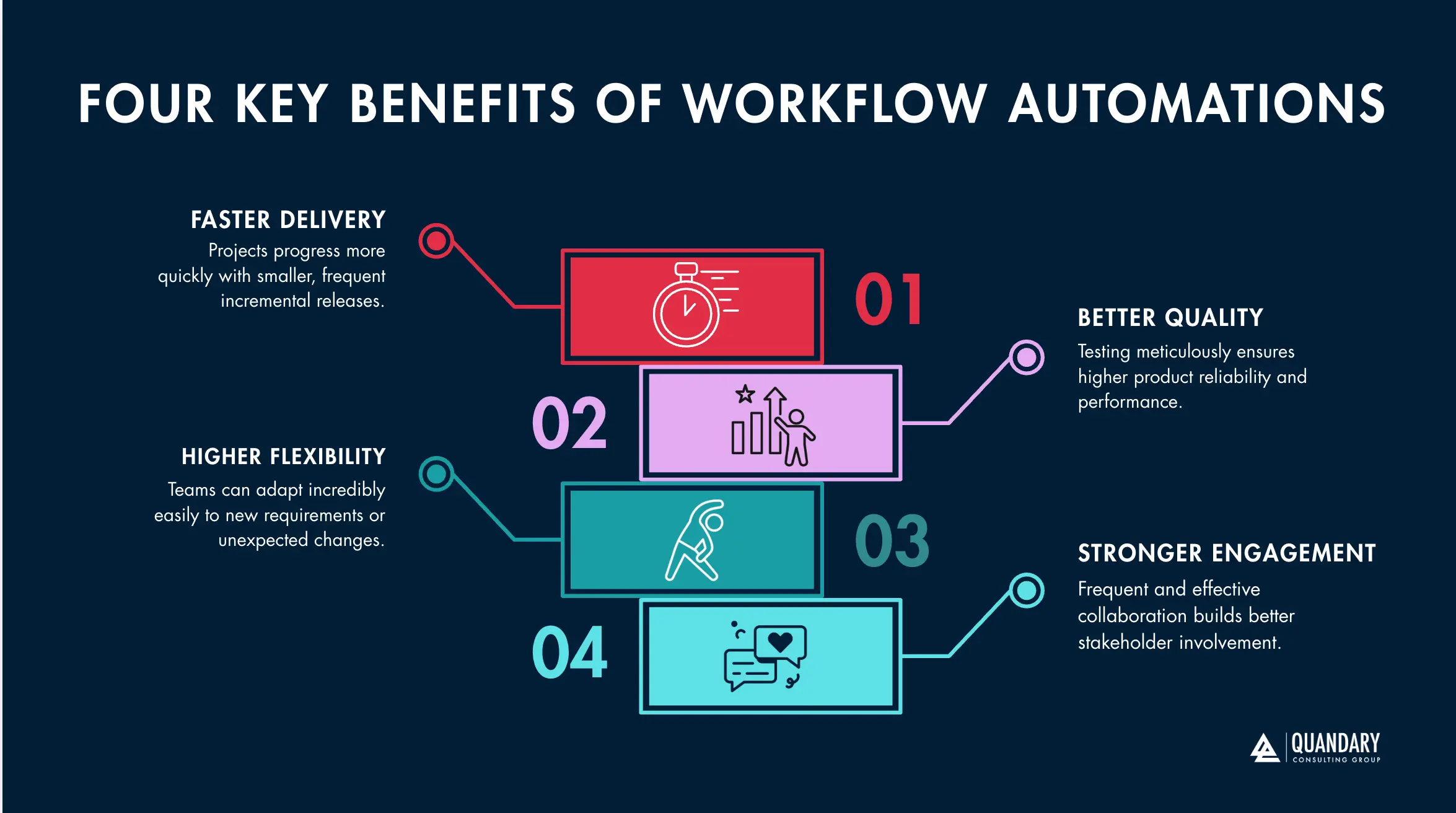
The Business Benefits of Workflow Automation
Organizations that implement automation strategically often achieve measurable improvements across operations.
Common key benefits include:
- Increased Productivity: Automated workflows execute tasks instantly, eliminating delays caused by manual handoffs.
- Reduced Operational Costs: Automation reduces administrative work, allowing teams to focus on higher-value tasks.
- Improved Accuracy: Automated systems significantly reduce human error in repetitive tasks.
- Faster Customer Experiences: Automation shortens response times, improves onboarding speed, and enhances service delivery.
- Stronger Compliance and Auditability: Automation platforms create digital audit trails that simplify regulatory reporting.
Automation has become a key driver of productivity growth globally. Some economic studies estimate automation could increase productivity growth by 0.8–1.4% annually worldwide.
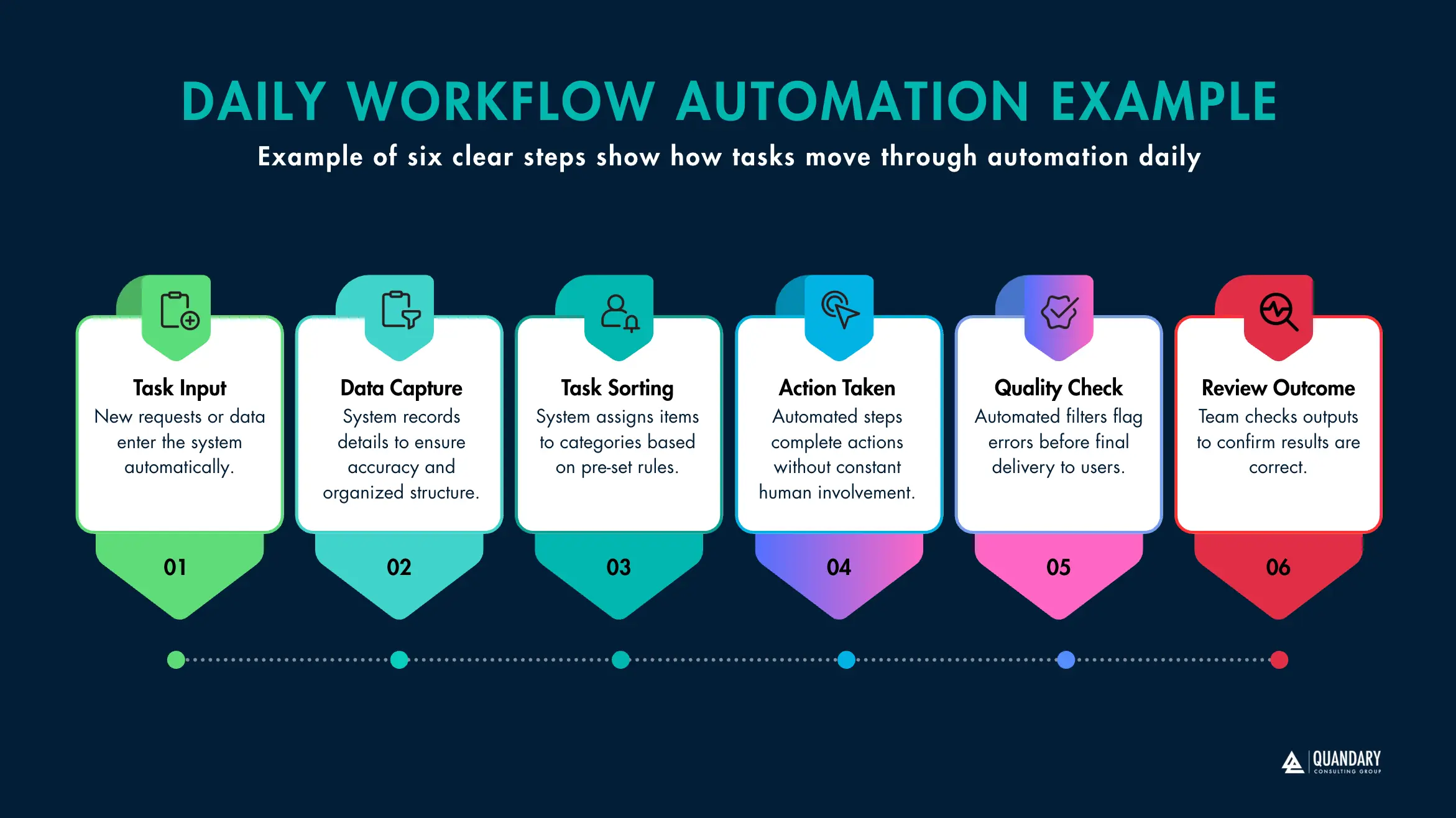
BEFORE STARTING: We recommend creating a process map in Lucid Chart; or you can download FREE pre-built industry-specific Process Map Templates (from Smartsheet), visit: https://www.smartsheet.com/content/process-map-templates#simple-process-map-template to help keep your automation business process journey on track.
12 Strategic Steps to Automate Workflows in Your Business
Automation success requires a structured approach. The following steps represent a proven framework used by many organizations implementing process automation initiatives.
Step 1: Map Your Business Workflows
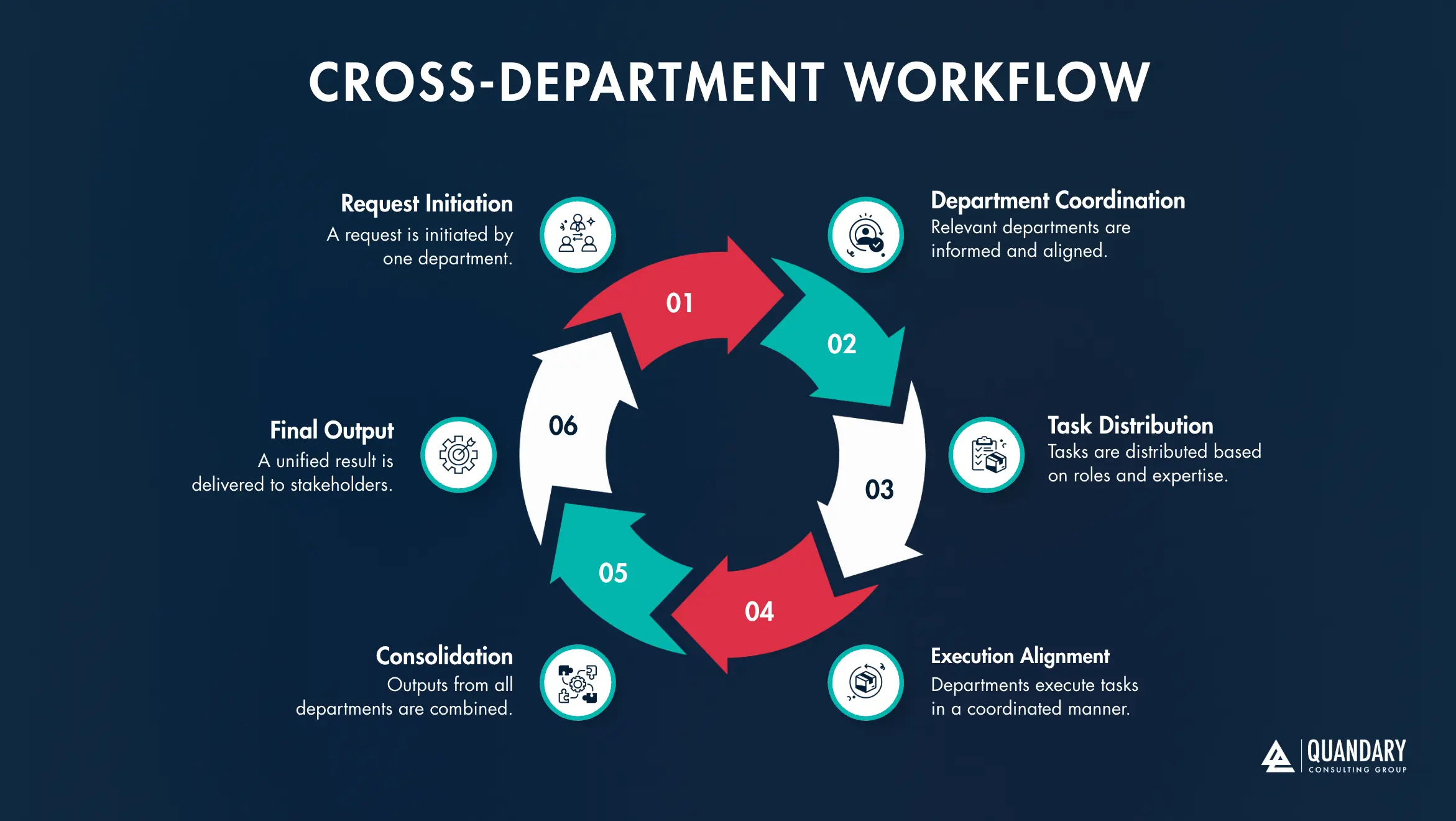
Organizations must understand their current processes before attempting automation. Process mapping allows teams to visualize how work flows across systems, departments, and stakeholders.
Effective process mapping identifies:
- Process bottlenecks
- Redundant steps
- Manual handoffs
- Approval delays
- Data silos
Modern organizations increasingly use process mining software to automatically discover workflows from system data. Mapping workflows ensures automation is applied to processes that deliver the highest return on investment.
Step 2: Define Clear Automation Objectives
Automation initiatives should be guided by measurable business goals.
Examples of strong automation objectives include:
- Reduce invoice processing time by 70%
- Cut customer onboarding time from five days to one day
- Reduce manual data entry by 80%
- Increase order fulfillment accuracy to 99%
Organizations that define measurable outcomes are significantly more likely to realize value from automation initiatives. Customer experience improvements should also be a primary objective. Automation allows organizations to deliver faster service, reduce delays, and improve reliability.
Step 3: Prioritize Automation Opportunities Strategically
Not every process should be automated immediately.
Organizations should prioritize processes based on several criteria:
- Operational impact
- Frequency of execution
- Complexity
- Implementation cost
- Expected ROI
High-value automation candidates typically involve:
- Repetitive administrative work
- Rule-based decision making
- High transaction volume
- Multi-system data transfers
Common early automation use cases include:
- Invoice processing
- Employee onboarding
- Customer support ticket routing
- Sales lead management
- Procurement approvals
Step 4: Consider the Impact on Employees
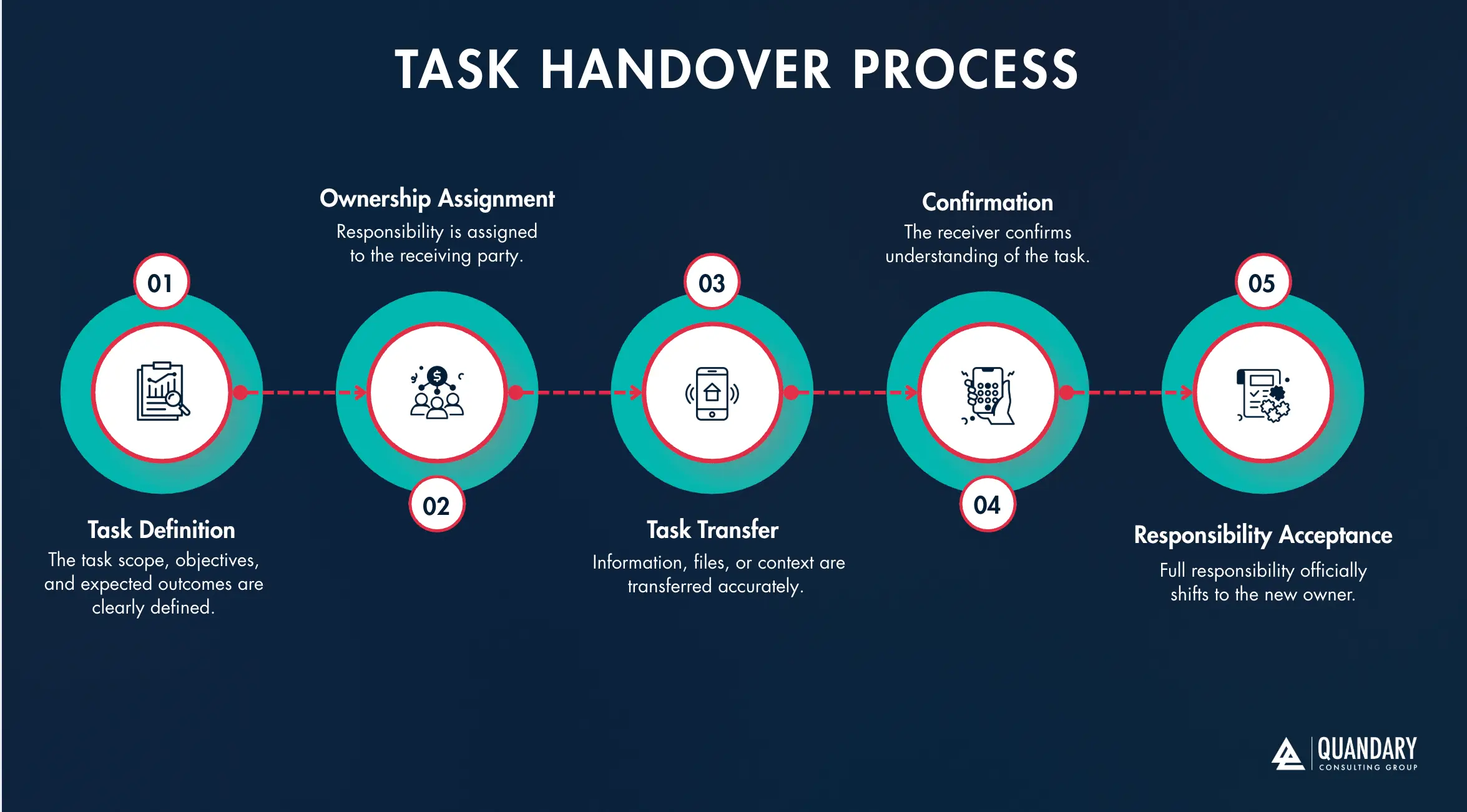
Automation initiatives often create uncertainty among employees. Successful organizations position automation as work augmentation rather than workforce replacement.
Automation should remove repetitive work such as:
- Data entry
- Document routing
- Manual reporting
- System updates
Employees can then focus on higher-value work including customer engagement, innovation, and strategic initiatives. Employee adoption is one of the most important success factors in automation programs.
Step 5: Redesign Processes Before Automating Them
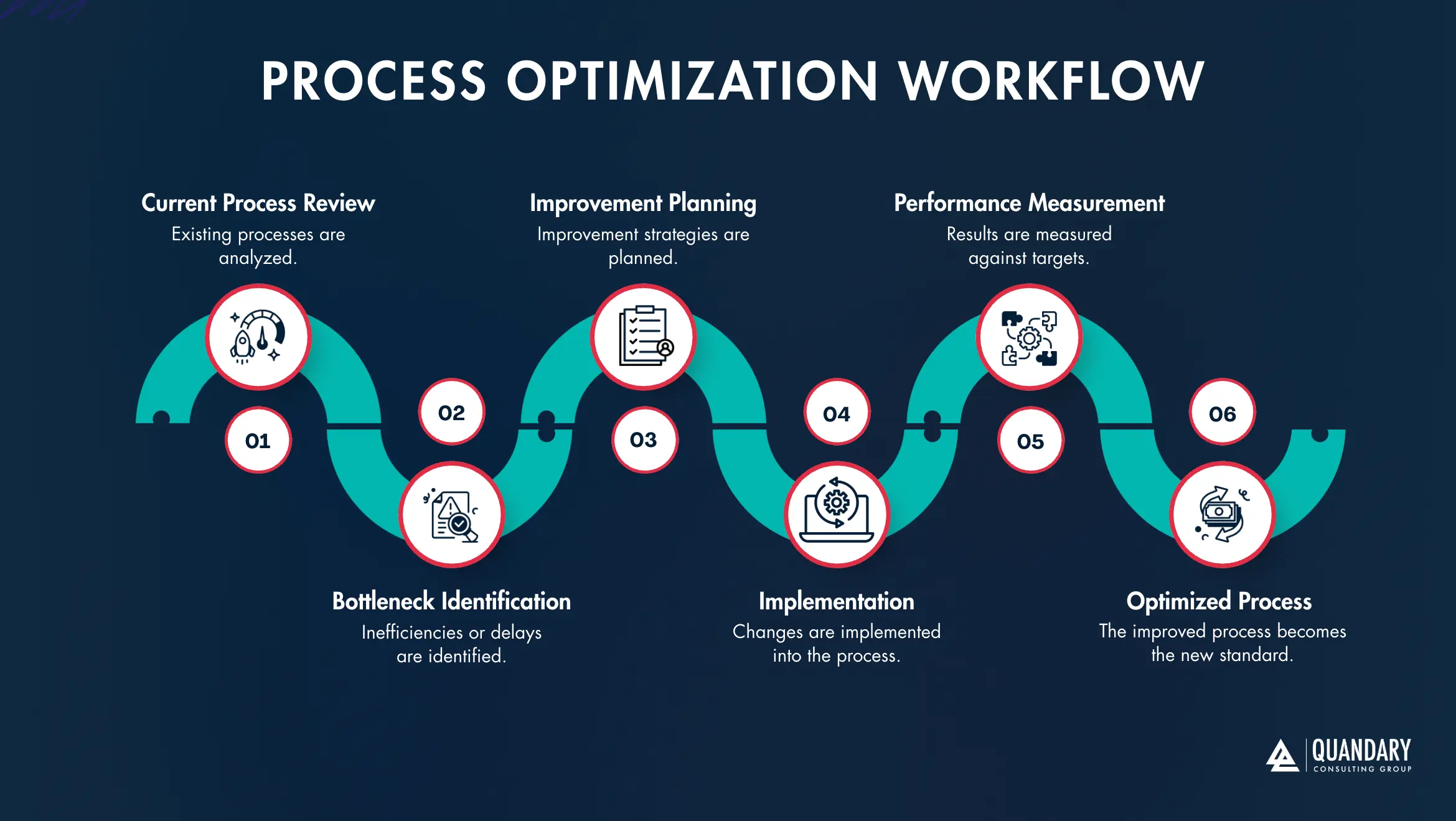
Automation magnifies the effectiveness of existing workflows. Poorly designed workflows will remain inefficient even after automation.
Organizations should review processes to eliminate:
- Unnecessary approvals
- Duplicate data entry
- Outdated procedures
- Disconnected systems
Many companies implement business process reengineering before automation. Optimizing processes first ensures automation produces meaningful improvements.
Step 6: Develop an Automation Workflow Strategy
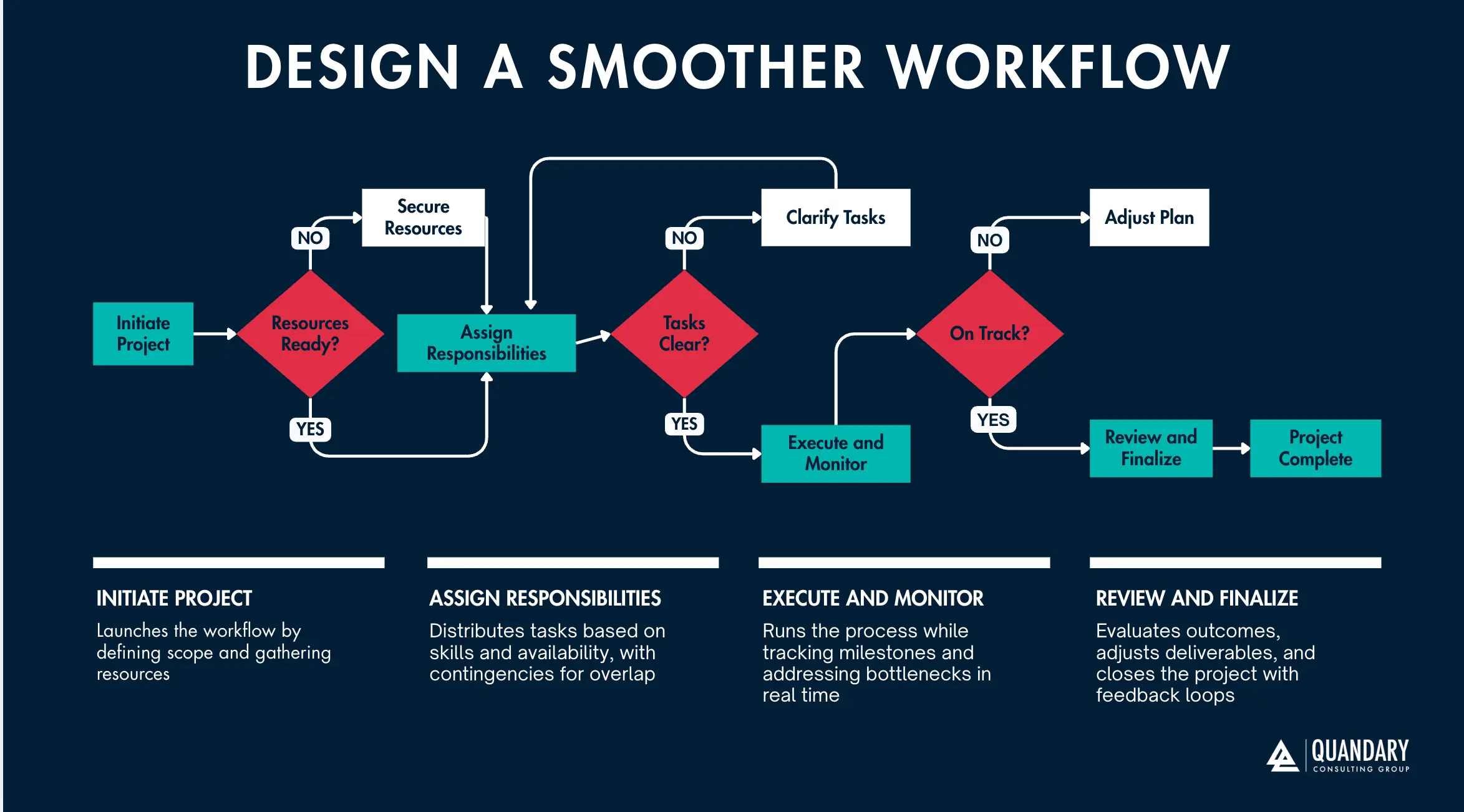
Automation initiatives require a long-term strategy. Organizations without an automation roadmap often create fragmented solutions that require constant rework.
An effective automation strategy typically includes:
- Automation roadmap
- Governance framework
- Platform architecture
- Security and compliance policies
- Change management plan
- ROI measurement strategy
Strategic planning ensures automation initiatives align with broader digital transformation goals.
Step 7: Communicate the Automation Vision
Transparent communication helps employees understand the purpose of automation.
Leadership teams should clearly explain:
- Why automation is being implemented?
- How workflows will change?
- What benefits employees will experience?
Organizations that involve employees in the automation process often experience higher adoption rates. Training programs and internal champions can accelerate adoption significantly.
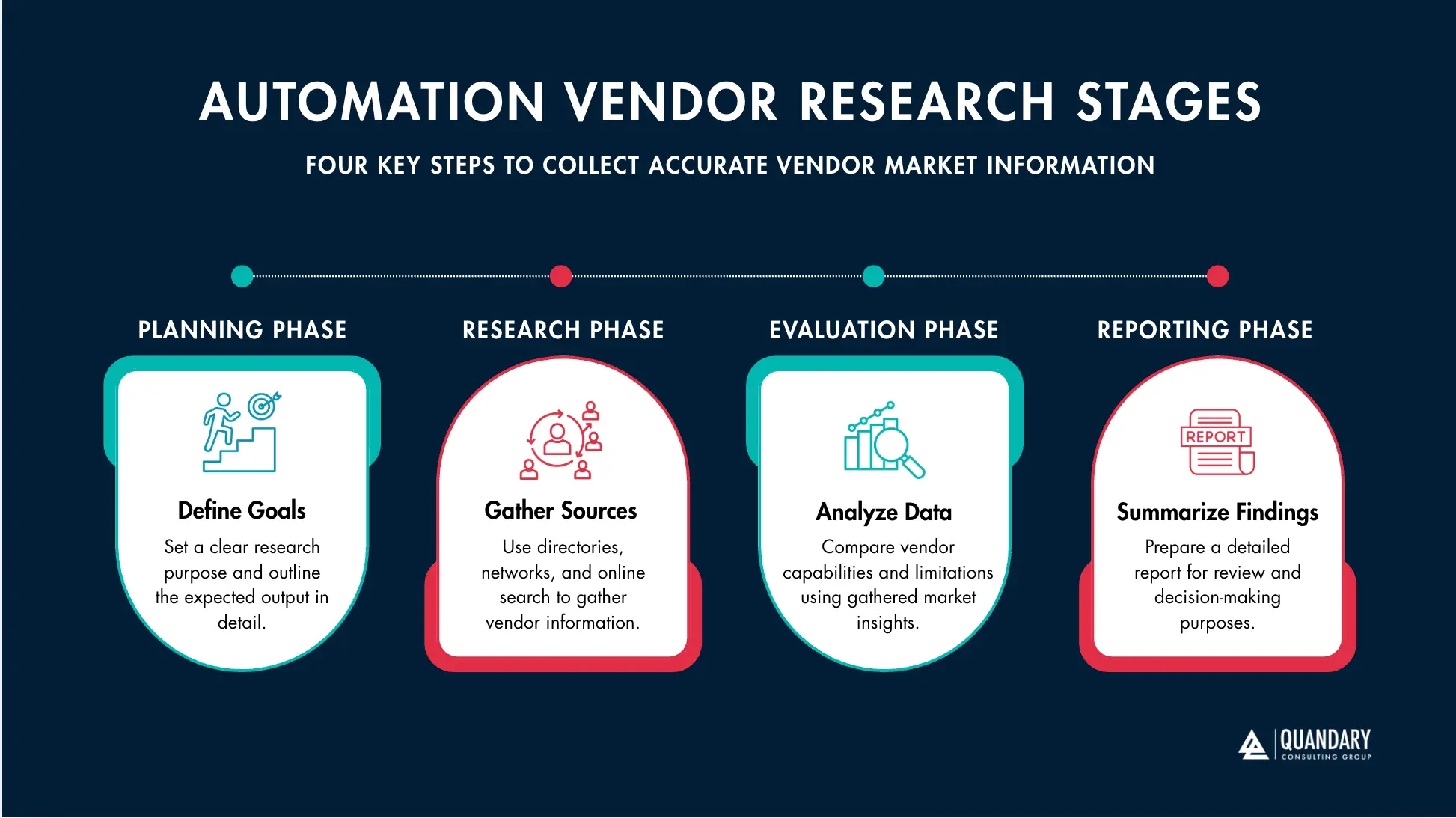
Step 8: Choose the Right Workflow Automation Platform
The automation vendor software landscape has expanded significantly.
Organizations should evaluate platforms based on 5 key metrics:
- Integration capabilities
- Scalability
- Security compliance
- Development flexibility
- Vendor ecosystem
Leading automation technologies now combine:
- Low-code application development
- AI-driven automation
- Robotic Process Automation (RPA)
- Workflow Orchestration Tools
Selecting the right platform ensures automation solutions remain scalable as the organization grows.
Step 9: Use Low-Code Platforms to Accelerate Automation
Low-code platforms have become one of the most powerful tools for workflow automation.
These platforms allow organizations to build applications using visual development environments rather than traditional coding. Low-code adoption has increased dramatically in recent years.
- Industry forecasts suggest 70% of new applications will be built using low-code or no-code technologies, reflecting a major shift in how business software is developed.
- By 2026, 75% of enterprise applications are expected to rely on low-code technologies, highlighting the growing importance of these platforms.
Low-code platforms enable organizations to build solutions faster while reducing reliance on specialized developers.
QUICK TIP: Looking for a great low-code platform? Check out, Quickbase, Mendix, or SmartSheet; each platform, offers their form of a single-user account for free for (aka, sometimes referred to as, 'builder accounts').
Step 10: Test Automation Before Deployment
Automation systems must be tested thoroughly before full implementation. Testing ensures that workflows function correctly under different conditions.
Organizations should validate:
- System integrations
- Data accuracy
- Exception handling
- Security permissions
- Performance under high workloads
Baseline metrics should also be captured before automation begins. These metrics allow organizations to measure improvements once automation is deployed.
Step 11: Deploy Automated Workflows
Automation deployment should occur in phases.
Organizations often begin with:
- Pilot programs
- Department-level deployments
- Limited workflow automation
Gradual rollout reduces risk while allowing teams to refine automation processes. Many organizations establish automation centers of excellence to oversee deployment and governance.
Step 12: Monitor Performance and Continuously Improve
Automation requires continuous monitoring.
Organizations should track metrics such as:
- Process completion time
- Error rates
- Employee productivity
- Cost per transaction
- Customer satisfaction scores
Automation is not a one-time project. Processes evolve as businesses grow, meaning automation must evolve as well; continuous improvement ensures automation systems continue delivering value.
Automation Is the Future of Scalable Business Operations
Automation has become a foundational capability for organizations that want to scale efficiently. Companies that continue relying on manual processes face increasing operational costs and slower service delivery.
Organizations that invest in automation gain the ability to:
- Scale operations efficiently
- Improve employee productivity
- Enhance customer experiences
- Increase operational resilience
Automation is no longer simply an IT initiative. It is a strategic capability that defines how modern businesses operate.
Partner with Workflow Automation Experts
Automation initiatives can be complex—especially for growing organizations managing evolving systems, data, and processes. Successfully implementing automation requires more than technology; it requires the right strategy, governance, and expertise to deliver measurable results.
Automation consultants help organizations:
- Identify high-impact automation opportunities across the business
- Redesign and optimize business processes for efficiency and scalability
- Implement and integrate automation platforms within existing systems
- Develop long-term automation roadmaps aligned to business goals
- Measure ROI and continuously improve automation performance
External expertise can significantly accelerate implementation while helping organizations avoid common automation pitfalls such as fragmented workflows, poor governance, or underutilized technology.
Why Organizations Choose Quandary Consulting Group as Their Automation Partner
As a trusted consulting partner, Quandary Consulting Group helps organizations turn automation strategy into measurable outcomes. Our team brings deep platform expertise and a business-first approach to workflow automation.
At Quandary, our consultant practice:
- Combining strategy and execution – From opportunity assessment to full implementation, we guide organizations through the entire automation lifecycle.
- Bring deep platform expertise – Our consultants have extensive experience implementing and optimizing leading automation and enterprise workflow platforms.
- Focus on scalable process design – We help organizations redesign workflows that are sustainable, efficient, and ready for growth.
- Deliver measurable business value – Every automation initiative is aligned to clear ROI, operational efficiency, and improved user experience.
Ready to Accelerate Your Automation Strategy?
Partner with Quandary to design, implement, and scale intelligent workflow automation across your organization.
Schedule a Discovery Call with a Quandary Consulting Group Workflow Automation Consultant today to start building smarter, more efficient business processes.